Affiliate Marketing TikTok Shop: The Ultimate Guide
affiliate marketing tiktok shoptiktok shop affiliatecreator marketingsocial commercetiktok for business
Affiliate marketing on TikTok Shop is a whole different ballgame. Essentially, creators get paid a commission for promoting products right inside the app. It turns viral videos into a live storefront, letting brands tap into the trust creators have built with their audience to drive sales—all without anyone ever having to leave their "For You" page. This isn't just a small shift; it's completely changing how e-commerce works by closing that gap between seeing something cool and buying it.
Why Affiliate Marketing on TikTok Shop Is a Game Changer
Remember the old way? You'd watch a YouTube video or read a blog post, and the creator would tell you to go find a link, click it, and get sent to a totally different website. It was clunky and slow. That process was full of friction, and at every step, potential customers would just give up and scroll away.
TikTok Shop gets rid of all that.
Picture a creator unboxing a new gadget. Instead of saying, "check the link in my bio," they just tag the product in the video. A little orange shopping cart icon pops up. Anyone watching can tap it, see the price, add it to their cart, and buy it in seconds. The video doesn't even stop playing. This ridiculously smooth path from entertainment to purchase is exactly why it's so effective.
What makes it all work is an algorithm that's built for discovery. The "For You" page is a master at not just showing you videos you'll like, but also products you're likely to buy, all presented by creators you already follow and trust. It's a powerful mix of genuine connection and impulse buying.
The New Rules of Social Commerce
On TikTok, real reactions and authentic use cases crush polished ads every single time. A creator's genuine excitement about a product is far more convincing than a big-budget commercial because it feels like a recommendation from a friend. This completely flips the script on the typical brand-affiliate relationship.
- Authenticity Over Aesthetics: Raw, unfiltered videos often get more traction than perfectly produced content.
- Speed of Conversion: The entire buying process is cut down from minutes to a few seconds.
- Data-Rich Environment: Brands get immediate, clear feedback on which creators and which types of videos are actually moving the needle.
This infographic really drives home the difference between the old way and how TikTok Shop operates.
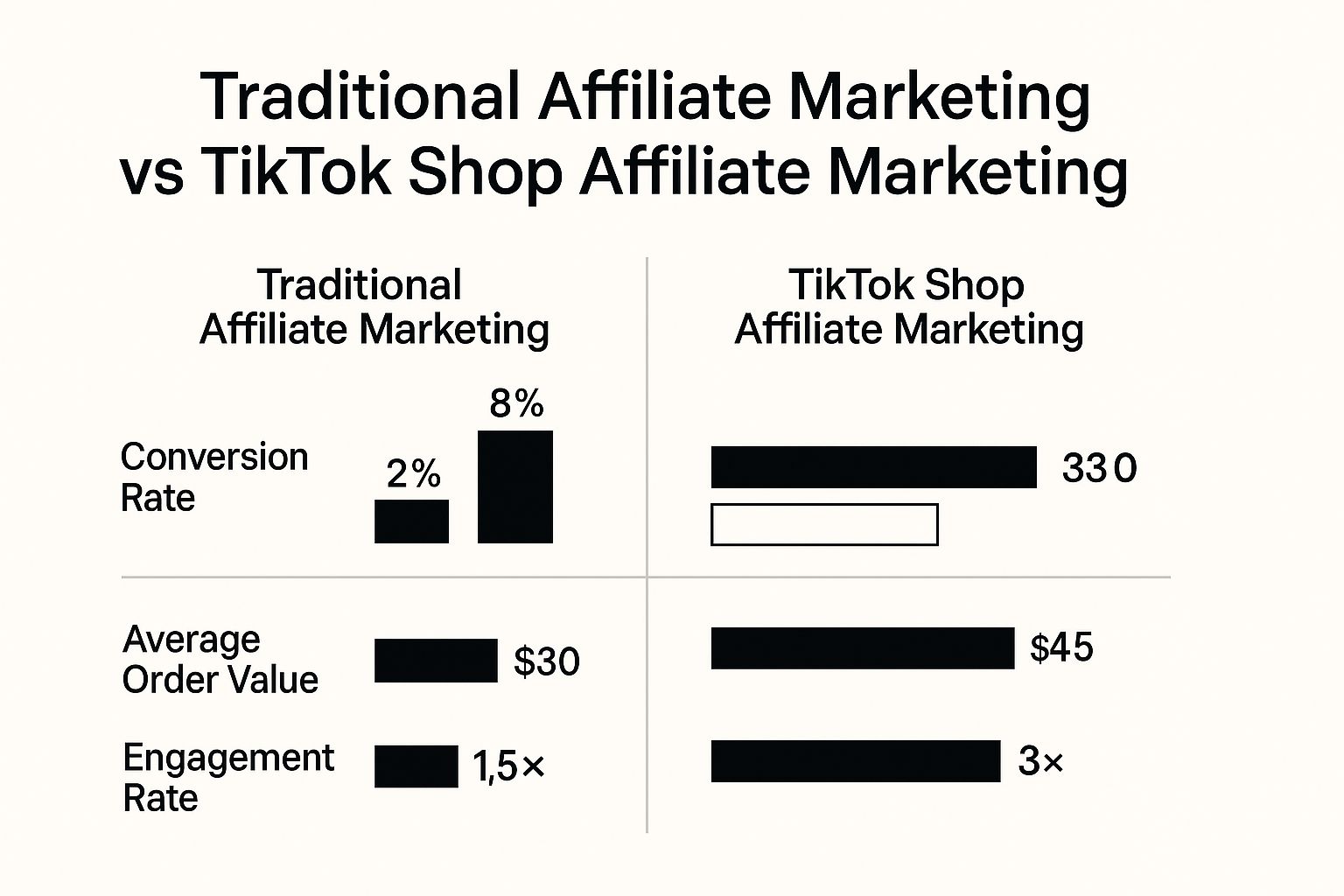
The numbers don't lie. The integrated model on TikTok Shop consistently delivers higher conversion rates, better engagement, and bigger order values.
The platform isn't just another sales channel; it’s a culture engine. Products don't just get sold here—they become trends. This is where brands can find explosive growth if they team up with the right creators.
In fact, TikTok is now responsible for nearly 29.6% of all affiliate marketing activities online. Affiliate links on the platform have an average 5.2% engagement rate, which is a staggering 160% higher than what you see on Instagram.
The difference is even more dramatic for smaller creators. Their engagement can be an unbelievable 1570% higher than creators of a similar size on Instagram, making TikTok a goldmine for brands looking to partner with micro-influencers. You can dig into more data on TikTok's affiliate dominance if you're curious.
Getting Your House in Order for Affiliate Success

Before you even dream of onboarding creators, your TikTok Shop itself needs to be a well-oiled conversion machine. Think about it from the creator's perspective: they won't risk their credibility by sending their audience to a sloppy, unconvincing storefront. Your shop is where their hard work pays off (for both of you!), so it has to seal the deal.
This all starts with your product listings. They need to be more than just specs on a page; they have to be compelling sales pitches. Use high-impact visuals—I'm talking crisp photos from every angle and short, dynamic videos that show your product in action. Your descriptions should tell a story, solving a problem or fulfilling a desire, not just rattling off features.
Then there's pricing. It’s a delicate balance. You need to be competitive enough to entice shoppers, but you also have to protect your margins so you can offer commissions that actually motivate creators. If your commissions are an afterthought because your pricing is too tight, you’ll find it nearly impossible to attract top-tier talent.
Architecting Your Affiliate Program
With your shop polished and ready for traffic, it's time to design the actual affiliate program. The centerpiece of this is your commission structure. This isn’t a one-size-fits-all decision; the right model really hinges on your specific products, margins, and what you're trying to achieve.
A well-structured commission plan is your best tool for attracting and motivating the right partners. It signals what you value and rewards the behavior you want to see.
Affiliate Commission Structures for TikTok Shop
Here's a breakdown of the most common models I've seen work well on the platform. Choosing the right one can make or break your program's momentum.
| Commission Model | How It Works | Best For | Potential Downside |
|---|---|---|---|
| Flat-Rate Percentage | A fixed percentage (e.g., 15%) is paid on every sale generated. Simple and predictable. | Brands seeking simplicity and clarity. Great for products with consistent margins. | May not motivate top performers to push harder once they hit a comfortable level. |
| Tiered Commissions | Commission rates increase as creators hit specific sales milestones (e.g., 10% for 1-50 sales, 15% for 51-100). | Encouraging high performance and rewarding your most valuable affiliates. | Can be more complex to track and manage without the right automation tools. |
| Product-Specific Rates | Different commission rates are set for different products or categories. | Promoting new launches with higher rates or balancing low-margin bestsellers. | Can confuse creators if not communicated clearly. Requires more setup. |
Ultimately, the best structure is one that aligns with your business goals and feels like a true partnership for the creator.
Setting up a compelling offer is non-negotiable. The affiliate marketing space is projected to swell to $31.7 billion by 2031, with brands reporting an average ROI of $15 for every dollar invested. To get your piece of the pie, your program must be competitive.
Finally, you need to think about management. As your program takes off, trying to manually track commissions, performance, and payments becomes a nightmare. This is where tools built specifically for TikTok Shop sellers become indispensable. For instance, you can see how HiveHQ’s suite automates these critical functions, handling everything from outreach to payouts. This frees you up to focus on the human side of the business: building solid, lasting relationships with your creators.
Find and Partner With the Right Creators

Let’s be honest: your TikTok Shop affiliate program lives or dies based on the creators you bring on board. You could have the best product in the world, but if the wrong person promotes it, you’ll hear crickets. The magic happens when an authentic creator turns a little-known product into the next viral must-have.
This isn’t about chasing the biggest follower counts. It’s about finding a genuine connection. Your ideal partner is someone whose audience is your target customer. They create content that feels like a natural home for your product and have built a community that hangs on their every word. You're looking for a true advocate, not just a billboard.
Working the Creator Marketplace
The official TikTok Creator Marketplace is your ground zero. It’s a solid tool, letting you slice and dice the creator pool by niche, audience demographics, location, and follower count. But the real pros know how to go deeper than a basic search.
Forget sorting by followers. Instead, focus on engagement rates and average video views. I’ve seen it time and again: a creator with 50,000 hyper-engaged followers will outperform someone with 500,000 who are just passively scrolling.
Here’s what I look for:
- Comment Quality: Dive into the comments section. Are people asking genuine questions about the products? Is the vibe positive and conversational, or is it filled with bots and generic "nice video" comments?
- Past Brand Deals: Check out their previous collaborations. Did the sponsored content feel shoehorned in, or was it a seamless part of their regular feed? A track record of authentic-feeling partnerships is a massive green flag.
This vetting stage is your filter against wasted time and money. It takes effort, but skipping it is a mistake you’ll only make once.
Finding the right creators is part art, part science. You need the data to spot potential, but you also need that gut feeling to recognize a real brand fit. The ultimate goal is a partnership that feels like a natural discovery for their audience.
Discovery and Outreach That Actually Works
While the marketplace is a great start, the best creators are often found out in the wild. Start acting like a regular user. Search hashtags and keywords that orbit your product and industry. Who’s already making amazing content in your space without getting paid for it? Those are your potential superstars.
Once you have a shortlist, it's time for outreach. Generic, copy-pasted DMs are the fastest way to get ignored. Creators get flooded with them daily. Your message needs to cut through the noise by being personal, professional, and straight to the point.
Every single outreach message I send includes these four things:
- A Genuine Compliment: Mention a specific video you loved and why it caught your eye.
- A Quick Intro: Briefly explain who you are and what your brand is all about.
- The "What's In It For Me": Clearly lay out the commission rate, free products, or whatever the deal is. No games.
- An Easy Next Step: Make it effortless to reply. A simple "Are you open to hearing more?" works wonders.
If you want to really master this process, our guide on how to find TikTok affiliate creators who can drive real sales is a great next step. Building a roster of top-tier affiliates is all about blending smart tool usage with old-fashioned research and great communication.
Launching and Managing Your Affiliate Campaigns

So you've found a solid roster of creators. The real work is just beginning. Getting your affiliate marketing TikTok Shop program off the ground and running smoothly is all about activation and relationship management. It’s what separates the programs that take off from the ones that just fizzle out.
The first step in any great collaboration is the creative brief, but that word can be a bit misleading. On TikTok, a rigid, overly detailed brief is a surefire way to get stiff, uninspired content. You're not trying to give creators a script; you're giving them guardrails. Their authenticity is their superpower, and your job is to unleash it, not box it in.
The Art of the Creative Brief
Think of your brief as a conversation starter—an insider's guide to why your product is genuinely awesome. You want to arm your creators with everything they need to get excited and create something authentic.
A great brief should nail these points:
- Key Messages: What are the one or two absolute must-knows about the product? Always focus on the benefits for the viewer, not just the features on the box.
- Content Angles: Offer a few creative starting points, but present them as suggestions, not demands. Try something like, "A 'day in the life' could be a cool angle, or maybe an unboxing that shows off the packaging..."
- Mandatory Elements: This is where you put the non-negotiables. Think FTC disclosures (like #Ad or #TikTokShopAffiliate) and making sure they use the correct product link.
- The "Do Not" List: Keep this section brief and to the point. It’s for critical guardrails, like avoiding unproven health claims or not mentioning competitors by name.
When you give creators a solid framework like this, you're setting them up for a win without micromanaging their creative process. The best content always comes from a creator who feels trusted.
Why Automation is Non-Negotiable
As you grow, managing everything manually becomes a nightmare. Trying to juggle product seeding, content approvals, and payments for dozens (or hundreds) of creators in a spreadsheet is a recipe for burnout and costly mistakes. This is where you need to bring in automation.
TikTok is a massive opportunity you can't afford to mismanage. The platform is projected to have over 1.59 billion monthly active users in 2025, and a staggering 92% of users take action after watching a video. In the U.S. alone, nearly 45.5% of TikTok users are expected to buy something on the app next year. You need a seamless operation to capture that potential.
Imagine a system that handles the tedious work for you. A tool like HiveHQ's Affiliate Bot can automatically send a welcome message, share the creative brief once a product is shipped, and nudge creators when content is due. This frees you from the administrative weeds.
This systematic approach means nothing falls through the cracks, allowing you to focus on what actually moves the needle: building genuine relationships with your top-performing creators. To see how it works, check out the HiveHQ Affiliate Bot.
Measure What Matters and Scale Your Program
Once your affiliate campaigns are up and running, the real work begins. Let’s be clear: a successful affiliate marketing TikTok Shop program isn't built on viral videos or follower counts. It’s built on profitable growth. To get there, you have to stop chasing vanity metrics and start focusing on what actually impacts your bottom line.
Forget about likes and shares for a minute. You need to get obsessed with the numbers that tell a financial story. Are your affiliate partnerships actually making you money? The only way to know for sure is to track the right things with razor-sharp precision.
Moving Beyond Vanity Metrics
The brands that absolutely crush it with affiliate marketing treat it like any other performance channel, not just a way to get their name out there. This means digging deep into the data that reveals your true return on investment.
So, what should you be tracking?
- Conversion Rate Per Creator: This is your north star. It cuts through the noise and shows you which creators are genuinely persuasive and can turn their audience into your customers.
- Average Order Value (AOV) by Creator: Some affiliates might drive a ton of small sales, while others bring in customers who spend significantly more per purchase. This is crucial for understanding who's best at promoting your higher-ticket items or upselling.
- Total Gross Merchandise Value (GMV): This gives you a bird's-eye view of the total sales volume your program is generating before any costs are taken out. It’s a great high-level health check.
- Profitability Per Sale: This is where the rubber meets the road. After you subtract the Cost of Goods Sold (COGS), commissions, and shipping, how much real profit is each affiliate sale putting in your pocket?
Trying to make sense of all this in a spreadsheet is a recipe for a headache. A clean, visual dashboard is the only sane way to go.
Tools like the HiveHQ Profit Dashboard are built for this, pulling all these critical numbers into one place you can actually understand at a glance.
With a view like this, you can instantly see which products and creators are driving real profit, letting you make smart decisions on the fly instead of waiting for a quarterly report.
From Data to Decisive Action
When you have clear performance data, scaling your program stops being a guessing game and starts being a calculated strategy. Your dashboard isn't just a report card; it's a roadmap that points you exactly where to invest your time and money for the best possible return.
The goal is to create a powerful feedback loop: Track performance, spot your top partners, double down on what’s working, and either fix or cut what isn't. This nimble approach is what separates the programs that fizzle out from the ones that achieve explosive growth.
Your data should be the driving force behind every move you make to scale up.
It really comes down to a few key actions:
- Double Down on Your Winners: Find your top 10% of creators—the ones who are most profitable—and treat them like VIPs. This is where you offer higher commission tiers, exclusive product access, or performance bonuses to keep them motivated and loyal to your brand.
- Rethink Your Commission Model: Is a flat 15% commission truly motivating everyone? Your data might reveal that a tiered structure, where you reward higher sales volumes with better rates, could be the key to unlocking more performance from your mid-tier affiliates.
- Expand With a Plan: Use your best creators as a blueprint for finding new ones. If you notice that affiliates making "problem/solution" videos have the highest AOV, you now have a clear profile. Go out and actively recruit more creators with that exact content style.
Common Questions About TikTok Shop Affiliate Marketing
Jumping into TikTok Shop affiliate marketing is exciting, but it definitely brings up a lot of questions. This space moves at lightning speed, so what worked last month isn't always the best strategy today. Let's walk through some of the most common things brands get stuck on so you can build your program with total confidence.
Probably the biggest question that stops brands in their tracks is about money: what should you actually pay these creators?
What Commission Rate Should I Offer?
Honestly, there’s no single magic number. A solid starting point for most brands is somewhere in the 10-20% range. The perfect rate for you really hinges on your product’s profit margin, what your competitors are doing, and how influential a particular creator is.
For instance, a beauty brand selling a $15 lip gloss with pretty tight margins might need to offer a higher rate, say 15%, to make it worth a creator's time. On the other hand, a company with a $200 tech gadget could offer 10%, and that would still be a very appealing payout for an affiliate.
Think about it this way:
- For lower-priced items: You'll likely need to offer a higher percentage to motivate creators to make content.
- For high-ticket products: A lower percentage can still be very lucrative. You could even explore a flat fee per sale.
- Tiered Structures: This is a great way to fire up your best partners. You could offer 15% for the first 50 sales, then bump them up to 20% once they pass that milestone.
Before you lock anything in, play around with the numbers. A good profit dashboard is your best friend here, letting you model different commission scenarios to find that sweet spot that attracts top-tier talent without killing your profitability.
How Do I Track Sales Accurately?
This is where the TikTok ecosystem really shines. The platform has a fantastic native tracking system built right in, which makes everything incredibly straightforward.
Once a creator joins your program, they can tag your products directly in their videos and livestreams. When a viewer sees that little orange shopping cart, taps it, and makes a purchase, TikTok handles the rest. The sale is automatically credited to the right creator and the exact video that drove the conversion. This completely removes the need for clunky coupon codes or old-school affiliate links, giving you clean, accurate data.
Can I Work With Affiliates Who Have Small Followings?
Not only can you, but you absolutely should. Nano-influencers (1K-10K followers) and micro-influencers (10K-100K) are often the unsung heroes of a killer affiliate marketing TikTok Shop program.
These creators usually have hyper-engaged audiences who treat their recommendations like advice from a trusted friend, not a polished advertisement. Their content just feels more real.
Don't sleep on smaller creators. Their authentic, relatable style is exactly what resonates on TikTok. Building a diverse roster of creators, including those with smaller but fiercely loyal followings, is a powerful strategy.
What Are the Biggest Mistakes to Avoid?
I see so many brands stumble over the same few hurdles. If you can sidestep these common pitfalls, you’ll be way ahead of the game.
- Writing restrictive creative briefs. Nothing kills authentic content faster than telling a creator exactly what to say and do. You’re partnering with them for their unique voice—let them use it!
- Using a one-size-fits-all approach. Your top-performing affiliates are driving the most revenue. They deserve special treatment, like higher commission rates and a direct line of communication with you.
- Forgetting the relationship. If you treat creators like they're just another cog in your marketing machine, they won't stick around. Your goal should be to build genuine, long-term brand advocates who are truly excited to promote what you sell.
At the end of the day, it all comes down to collaboration, clear communication, and mutual respect.
Ready to stop guessing and start scaling your TikTok Shop affiliate program with data-driven precision? HiveHQ provides the tools you need—from an automated Affiliate Bot to a crystal-clear Profit Dashboard—to find top creators, manage campaigns, and maximize your ROI. See how it works at https://hivehq.ai.