Build a Winning Clothing Affiliate Program from Scratch
clothing affiliate programfashion affiliate marketinginfluencer partnershipsecommerce growthcreator economy
At its core, a clothing affiliate program is a partnership. You team up with creators, influencers, and bloggers who earn a commission whenever they drive a sale for your brand. It’s a straightforward, powerful way to grow your fashion line by paying for actual results—not just eyeballs or clicks.
Why an Affiliate Program Is Your Best Growth Strategy
Let's be real: the fashion world is incredibly crowded. Traditional digital ads are getting more expensive by the day, and honestly, most customers are tuning them out. This is exactly where a creator-led affiliate program can completely change the game for your brand.
Think of it less as just another marketing channel and more as your secret weapon for building authentic social proof. When real people with real influence showcase your clothes, it creates a level of trust that a polished ad campaign could never dream of. Their endorsement feels more like a tip from a stylish friend than a corporate sales pitch.
De-Risk Your Marketing Spend
The most beautiful part of an affiliate program is the pay-for-performance model. This setup takes a massive amount of risk out of your marketing budget. Instead of dumping cash into ads and just hoping for the best, you only pay a commission when a creator's audience actually buys something.
This creates a crystal-clear link between your spending and your revenue, giving you a measurable ROI that’s often elusive with other marketing tactics. You essentially build a highly motivated, creative sales team that only gets paid when they succeed. It’s a win-win.
Harness the Power of Niche Communities
Fashion isn't one-size-fits-all; it's made up of countless subcultures and style niches. An affiliate program gives you a direct line into these dedicated communities with incredible precision. By partnering with creators who are already seen as trusted voices within these groups, you can:
- Reach hyper-targeted audiences who are genuinely interested in your specific aesthetic.
- Build instant brand credibility by getting a co-sign from a respected figure in a particular fashion scene.
- Generate authentic, high-quality content that you can then repurpose across your own marketing channels.
A well-run affiliate program does more than just sell clothes; it turns creators into true brand evangelists. They become an extension of your team, giving you priceless feedback, content, and a direct connection to your ideal customer.
The numbers don't lie. Fashion is the undisputed king of affiliate marketing, accounting for a staggering 23.27% of all affiliate programs on the planet. And it works. In 2023, affiliate links drove 16.8% of all fashion e-commerce sales, showcasing just how powerful the ROI can be. You can dig into more fashion affiliate marketing stats to see the full picture.
To put it all in perspective, here are the core advantages your brand gains when you commit to an affiliate strategy.
Key Benefits of an Affiliate Program for Fashion Brands
| Benefit | Impact on Your Clothing Brand | Example Metric |
|---|---|---|
| Cost-Effective Growth | Pay only for confirmed sales, not for clicks or impressions, ensuring a predictable and positive ROI. | Cost Per Acquisition (CPA) |
| Authentic Social Proof | Real creators and influencers lend credibility to your products, building trust with potential customers. | Conversion Rate from Affiliate Links |
| Targeted Audience Reach | Access niche communities and demographics that are perfectly aligned with your brand's aesthetic. | Engagement Rate on Creator Content |
| Scalable Sales Force | Quickly expand your reach by activating a network of creators motivated to promote your brand. | Number of Active Affiliates |
| Valuable UGC Creation | Generate a steady stream of high-quality, authentic content you can repurpose across all channels. | Volume of Repurposed UGC |
Ultimately, a well-executed affiliate program isn't just a marketing tactic; it's a sustainable engine for growth that builds brand equity and drives real revenue.
Designing a Program Creators Actually Want to Join
Let's be honest: a successful affiliate program is a partnership. If you treat it like a purely transactional deal, you'll only attract creators looking for a quick buck. To get the best on board, you need to build something that feels genuinely valuable, fair, and, frankly, exciting. A generic, copy-paste program just won't fly in the fashion world.
Before you get lost in the weeds of commission rates, you have to answer one critical question: What is the number one thing you want this program to do for your brand? Everything else flows from this.
- Want more sales, now? Your focus should be on higher commission rates and performance bonuses that light a fire under sales-focused creators.
- Need to boost brand awareness? You might reward partners for creating beautiful content or hitting engagement milestones, not just for the sales they drive.
- Trying to acquire new customers? A great tactic is offering a bigger commission bump for first-time buyers, pushing creators to tap into fresh audiences.
Nailing this down from the start keeps your program from feeling scattered. It ensures every piece of the puzzle—from your commission model to your creative briefs—is pulling in the same direction toward a clear business goal.
This is a complete shift from the old "spray and pray" ad model. Instead of sinking cash into ads with unpredictable returns, you're paying for actual results.
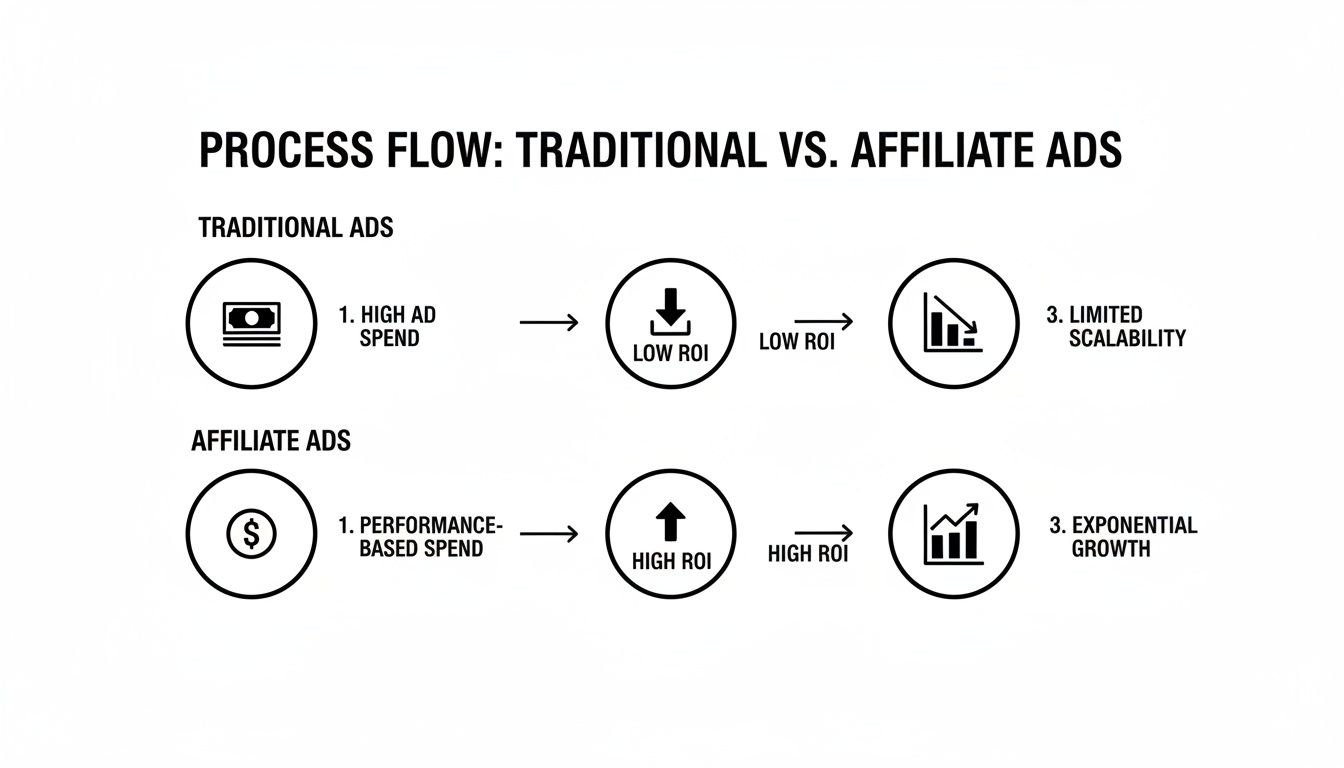
The affiliate model directly links your spending to a positive ROI, sidestepping the massive upfront costs and guesswork that often come with traditional advertising.
Crafting a Competitive Commission Structure
Your commission is the core of your offer, and it needs to be compelling. While you'll see clothing affiliate programs offering anything from 5% to 20%, the right number for you depends entirely on your own margins.
Here’s a quick back-of-the-napkin formula to figure out your maximum commission:
(Average Order Value - Cost of Goods Sold) / Average Order Value = Gross Margin %
Your commission absolutely must fall below your gross margin to stay profitable. For instance, if your average order is $100 and your cost for those goods is $40, your gross margin is 60%. That gives you plenty of breathing room to offer a very competitive 10-15% rate and still make money.
My Two Cents: Don't just look at what a competitor is offering and match it. Run your own numbers. A sustainable program that works for your business is far more valuable than one that just looks good on paper.
And don't feel locked into a simple flat percentage. You can get a lot more creative to motivate your partners.
- Tiered Commissions: This is a fantastic way to reward your top performers. Maybe a creator earns 10% on their first $1,000 in sales, but that jumps to 12% once they pass $5,000, and 15% for anything beyond. It gamifies the process and gives them a clear path to earning more.
- Lifetime Commissions: This one is a game-changer. You offer a commission on all future purchases made by a customer they refer. For creators who bring in loyal, repeat buyers, this is a massive long-term incentive that makes your program incredibly attractive.
- Hybrid Models: Why not mix it up? You could offer a smaller base commission but add a flat fee for every new email signup or a bonus for creating a specific piece of content, like a detailed review or a TikTok styling video.
Setting Fair and Motivating Program Terms
The numbers are important, but so are the rules of the game. Clear, creator-friendly terms are non-negotiable, and one of the biggest factors here is your cookie duration. This is simply how long you'll track a referral after someone clicks a creator's link.
A short cookie window—say, 24 hours—is a huge red flag for experienced creators. Nobody buys a $200 jacket instantly. People browse, think it over, and maybe come back a week later to finally make the purchase.
Offering a longer cookie duration, like 30 to 45 days, is standard for a reason. It shows you respect the creator's influence over the entire buying journey, not just that initial click. It makes them feel valued and drastically increases their earning potential, making your program far more appealing than one with a tight, restrictive window. It’s a simple change that signals you’re in this for a real partnership.
Finding Creators Who Genuinely Fit Your Brand
The right partners can completely change the game for your brand, but finding them means looking far beyond follower counts. The most successful affiliate programs are built on genuine relationships with creators whose personal style and audience are a perfect match for your own.
Chasing vanity metrics is a fast track to wasted time and a dismal ROI. Think about it: a creator with 10,000 hyper-engaged followers who truly trust their style advice will always drive more sales than an influencer with a million passive followers who aren't even in your niche. The goal here isn't just reach; it’s resonance.
Look for Your Superfans First
Honestly, your best affiliates are probably already hiding in plain sight. Before you even think about spending a dollar on discovery platforms, start by digging into your existing customer base and social media followers. These are people who have already voted for your brand with their wallets.
- Scan your customer list: Look for people with a solid social media presence or a personal blog. They’re already authentic fans, which makes their endorsement incredibly powerful.
- Check your tagged photos: Who is consistently tagging your brand in high-quality, stylish posts? These are your organic brand advocates, doing the work for free.
- Monitor brand mentions: Use social listening tools to find people talking about your brand unprompted.
Reaching out to these individuals with an invitation to your program feels like a natural next step, not a cold pitch. You're simply acknowledging their loyalty and offering to reward them for something they're already doing.
Pro Tip: Create a segment in your email list for customers with a high lifetime value or frequent order history. These are prime candidates for a personalized outreach campaign that can turn your most loyal shoppers into your highest-performing partners.
Mastering Creator Discovery on Social Platforms
Once you’ve tapped into your own community, it’s time to expand the search. Social media is a goldmine of talent if you know how to look. This isn't about broad, generic searches—it's about strategic, niche-focused digging.
Put yourself in your ideal customer's shoes. What hashtags are they following? What kind of content do they actually engage with?
- Deep-Dive into Niche Hashtags: Forget just searching
#fashionblogger. Get way more specific. Try things like#minimaliststyleinspo,#sustainablefashionfinds, or#gorpcoreaesthetic. The more niche you go, the more aligned the creators you'll uncover. - Analyze Competitors' Collaborations: See who your direct competitors (and even aspirational brands) are working with. This isn't about poaching their people. It's about understanding the creator landscape in your space. Look at the engagement on those posts—are the comments genuine? Does the audience seem to trust the recommendation?
- Explore "Similar Accounts" Features: When you find one creator who’s a perfect fit, use the platform's suggestion features (like Instagram’s "Suggested for you") to find a whole web of similar, often smaller, creators in the same niche.
Using Discovery Tools and Crafting Your Outreach
While manual searching is fantastic for finding those authentic gems, creator discovery platforms can make you much more efficient, especially as you start to scale. These tools let you filter creators by niche, engagement rate, audience demographics, and location, which can save you countless hours of scrolling.
But no matter how you find them, that first message sets the tone for the entire relationship. A generic, copy-pasted DM is the fastest way to get ignored. Personalization is absolutely non-negotiable.
Your First Message Should:
- Start with a genuine compliment: Reference a specific post or piece of content you loved. This immediately shows you've actually done your homework.
- Explain the "why": Briefly tell them why you think their specific style and audience are a perfect match for your brand. Connect the dots for them.
- Frame it as a partnership: Use words like "collaborate" and "partner" instead of just "join our program." This emphasizes mutual benefit and creative freedom.
- End with a clear, low-friction next step: Don't overwhelm them with details. Just ask if they'd be open to learning more. This invites a conversation rather than demanding a decision on the spot.
This kind of approach turns a cold pitch into a warm invitation. It shows you value them as a creative partner, not just a number, and lays the groundwork for a successful and long-lasting relationship.
Setting Your Affiliates Up for Success
Let's be real: a great affiliate is an empowered one. You can scout and recruit the most amazing creators on the planet, but if their first experience with your brand is a chaotic mess of confusing emails, you’re going to get lackluster results.
The goal here is to craft a seamless welcome that gets them genuinely hyped to promote your brand right from the start. This process kicks off the second they're approved and can truly make or break the partnership.
Building a Comprehensive Welcome Kit
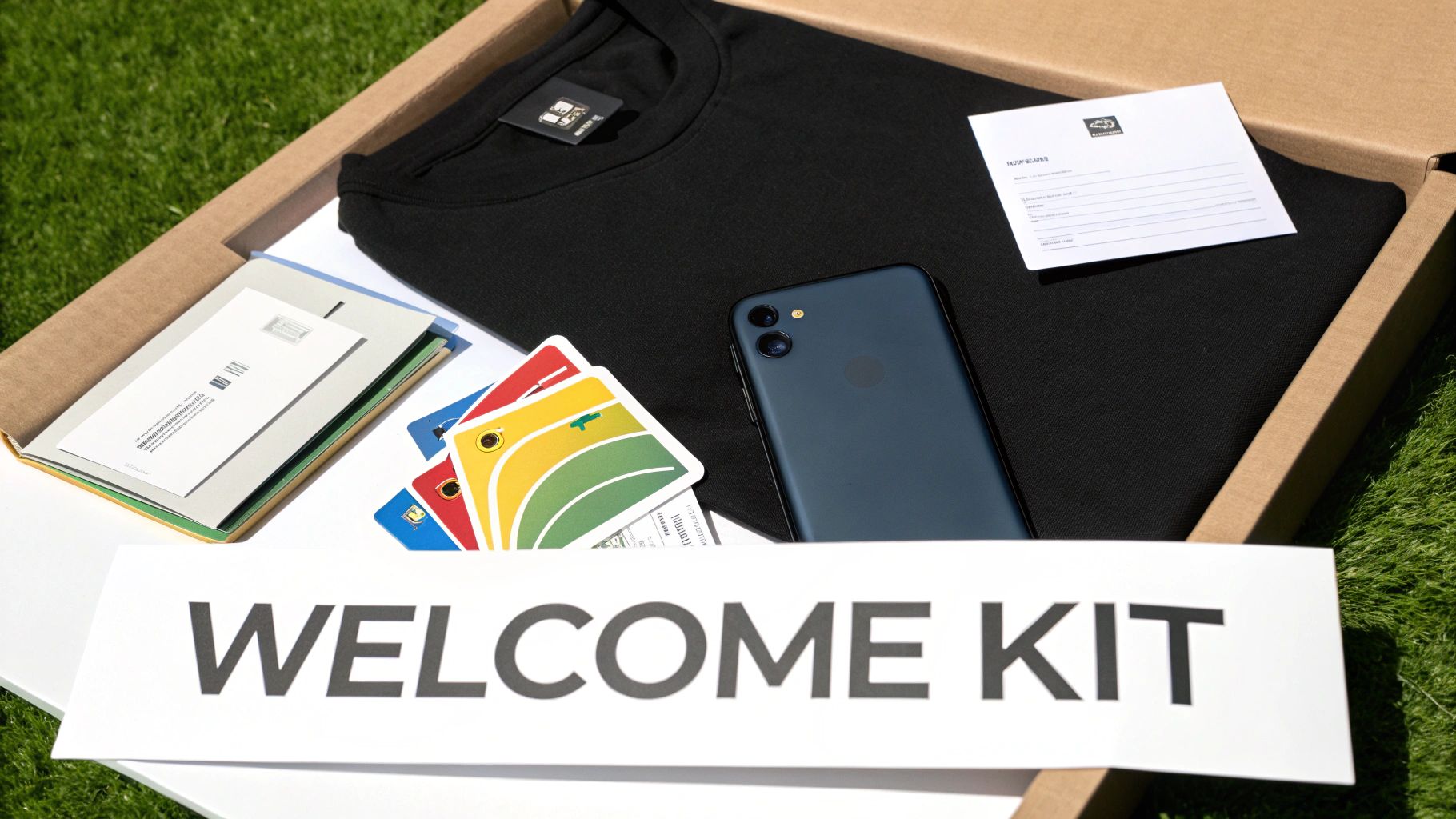
Think of the welcome kit as your affiliate's brand bible. It’s the single source of truth they can always come back to, making sure their content is consistently on-brand and effective. Ditch the scattered emails and messy docs. A polished, all-in-one kit shows you respect their time and are serious about their success.
Your welcome kit should be digital, easy to find, and packed with these essentials:
- Brand & Style Guide: This is non-negotiable. Include your logos, official color hex codes, and clear guidance on your brand's voice. Are you edgy and bold? Minimalist and sophisticated? Don't make them guess.
- Key Messaging & Product Info: Arm them with a few core talking points about your brand’s mission and what makes your products special (e.g., sustainable materials, a unique fit). It's also smart to include details on current best-sellers.
- Dashboard Walkthrough: Record a quick, simple screen-share video showing them exactly how to find their unique affiliate link, track sales, and see their earnings. This one small step will save you from a mountain of support questions down the road.
The best welcome kits I've seen feel less like a rulebook and more like an insider's guide. You're not just handing over instructions; you're equipping them with the same knowledge your internal marketing team has. This is how you turn affiliates into authentic brand storytellers.
If you're looking to really nail the fundamentals, checking out some of the best free affiliate marketing classes can give you a solid foundation and spark some new ideas for your onboarding.
Mastering the Creative Brief
Once your affiliates are settled in, the creative brief becomes your most important tool for collaboration. A bad brief is a creativity killer—it's rigid, overly prescriptive, and frankly, a bit insulting. A great brief, on the other hand, provides a clear framework that inspires creators to do their best work while still hitting your campaign goals.
The magic is in balancing direction with creative freedom. Your brief should clearly outline the "what" and the "why," but leave the "how" almost entirely up to them.
Key Elements of an Inspiring Brief:
| Element | Description | Example |
|---|---|---|
| Campaign Objective | What is the single most important goal? | Drive sales for our new summer linen collection. |
| Key Message | What's the one thing the audience must remember? | Our linen is breathable, stylish, and perfect for hot weather. |
| Mandatory Inclusions | What absolutely has to be in the content? | Mention the collection name, show the fabric in natural light. |
| Creative Suggestions | How can they bring this to life? (Ideas, not demands) | A "Style 3 Ways" video, an unboxing, or a "get ready with me." |
By suggesting angles like "styling hauls" instead of dictating exact camera shots, you give creators the guardrails they need without stifling their authenticity. This approach ensures your program generates content that feels genuine to each creator's audience, which is exactly what drives real results.
Measuring the Metrics That Actually Matter
Once your affiliate program is live, you're going to be swimming in data. It can feel like a tidal wave if you let it. But the secret to real growth isn't just watching your affiliate count go up; it's about learning to read the story your data is telling you. You have to cut through the noise and focus on what’s actually driving your business forward.
To get there, let's quickly pull back the curtain on the tech that makes this all work. When a creator joins your program, they're given a unique tracking link. When someone clicks it, a small file called a "cookie" is placed on their browser. That little cookie is your messenger, telling your system, "Hey, this sale came from Creator X!"
Understanding Attribution Models
Now, here’s where it gets interesting. A customer might click on three different affiliate links before finally buying something from your store. So, who gets the commission? That’s where attribution comes in.
Last-Click Attribution: This is the industry standard for a reason—it’s simple. The very last affiliate link a customer clicked before buying gets 100% of the credit. It’s clean, easy to track, and rewards the creators who are great at closing the deal.
First-Click Attribution: This model gives all the credit to the first affiliate link a customer ever clicked. It doesn't matter what other links they clicked later on. This is a great way to reward creators who are bringing brand-new eyes to your brand and fueling discovery.
So, which one should you choose? If you’re trying to reward the partners who push customers over the finish line, last-click is your go-to. If your main goal is new customer acquisition, first-click helps you reward the creators who are at the top of your funnel.
Moving Past Vanity Metrics
It's so easy to get a rush from seeing big numbers like thousands of link clicks or impressions. But here’s the hard truth: they don't pay the bills. These are often called "vanity metrics" because they look great on paper but don't always connect to actual revenue.
To really understand the health of your clothing affiliate program, you need to zero in on the Key Performance Indicators (KPIs) that truly matter.
The goal isn't just to track data; it's to gain insights. A high click-through rate with a low conversion rate tells a story—maybe the creator's audience isn't the right fit, or the landing page isn't compelling enough. That's an actionable insight, not just a number.
As your program matures, you'll want to get more sophisticated with your analysis. To get a better feel for where you are and where you could go, check out the different stages of the analytics maturity model—it provides a great roadmap from basic tracking to predictive insights.
Let's dig into the essential KPIs you should have on your dashboard from day one.
Essential KPIs for Your Clothing Affiliate Program
When you're looking at your program's performance, these are the metrics that will give you the clearest picture of what's working and what isn't. Think of this table as your program's health checkup.
| KPI (Key Performance Indicator) | What It Measures | Why It's Important |
|---|---|---|
| Conversion Rate (CVR) | The percentage of link clicks that result in a sale. | This is the single most important metric for measuring affiliate effectiveness. A high CVR means the creator's audience is a perfect match for your products. |
| Average Order Value (AOV) | The average dollar amount a customer spends in a single transaction from an affiliate referral. | A high AOV indicates that affiliates are driving high-value customers. You can incentivize this by offering bonuses for hitting AOV targets. |
| Click-Through Rate (CTR) | The percentage of people who see an affiliate's link and actually click on it. | While not a direct measure of sales, a strong CTR shows that a creator's content is engaging and compelling enough to spark interest in your brand. |
| Return on Ad Spend (ROAS) | The total revenue generated for every dollar spent on affiliate commissions. | This is your ultimate profitability metric. It tells you if the program is a cost-effective sales channel. For example, a 10:1 ROAS means you're making $10 for every $1 you pay in commissions. |
Keeping a close eye on these KPIs will help you make smarter decisions, from recruiting the right partners to optimizing your commission structure for maximum profitability.
Finally, a word on security. A solid affiliate platform is your best defense against fraud. You'll want to look for features that can automatically flag sketchy activity, like a bunch of sales coming from the same IP address or an unusually high return rate from a single affiliate. Coupon fraud, where affiliates share discount codes that aren't meant for them, is another common headache. By actively monitoring your data and using the tools at your disposal, you can protect your program’s integrity and make sure you're only paying for legitimate, valuable sales.
How to Scale and Optimize Your Growing Program
Getting your clothing affiliate program off the ground is a fantastic start, but it's really just the beginning. The real growth happens when you shift your focus from launch mode to scaling mode. This is where you transform a simple sales channel into a powerful, self-sustaining engine for your brand. To do that, you need to get proactive about nurturing your best creators, keeping the whole network engaged, and letting the data guide your decisions.
Your top-performing affiliates are absolute gold. Don't just pay them their standard commission and call it a day—treat them like the VIPs they are. Think of them as true brand ambassadors and create an experience that shows them how much you value their impact. It’ll motivate them to go even deeper with your brand.
- Offer Exclusive Perks: A great place to start is bumping up the commission rate for your top 10% of affiliates. It's a clear, tangible reward for their hard work.
- Grant Early Access: Let them get their hands on new collections before they drop. This makes their content feel special and gives them a head start on creating buzz.
- Provide a Direct Line: Give them a dedicated contact person for quick support. It shows you respect their time and are invested in a real partnership.
Re-Engaging and Energizing Your Creator Base
Look, not every creator is going to be a top performer from day one, and that's okay. The key is to keep your entire network active and motivated by creating moments of excitement. A stale program quickly leads to disengaged partners.
Try running seasonal campaigns or fun contests to inject some fresh energy. You could launch a competition for the "most creative styling video" with your new fall jackets, offering a cash bonus or a huge product giveaway to the winner. This kind of thing gamifies promotion, encourages incredible content, and can even bring dormant creators back into the fold.
Don’t just focus on the top sellers. Sometimes, a mid-tier affiliate with a highly engaged, niche audience just needs the right prompt to shine. A well-timed campaign can uncover hidden gems within your network.
Using Data to Double Down on What Works
Your affiliate platform is so much more than a tool for processing payments; it’s a treasure trove of insights. You should be digging into your performance data regularly to spot trends and figure out what’s actually driving sales.
Are Reels featuring your denim crushing static Instagram posts? Is there a specific creator whose audience converts at a ridiculously high rate? This is the kind of information that lets you fine-tune your strategy with surgical precision.
You can then feed these insights back to your creators, encouraging them to make more of the content you know works. You can even point them to tools that help generate high-performing copy. For more on that, our guide on AI tools for affiliate writing has some great, practical tips. By constantly learning and adapting, you’ll ensure your program doesn't just grow—it gets smarter and more efficient along the way.
Your Top Questions, Answered
Let's tackle some of the most common questions we hear from clothing brands when they're first diving into the world of affiliate programs.
What's a Good Commission Rate for Clothing Affiliates?
You'll typically see commission rates in the fashion space land somewhere between 5% and 20%. If you're just starting out, a rate in the 8-12% range is a great sweet spot. It's competitive enough to attract talented creators without wrecking your margins.
But don't just pick a number out of a hat. The right commission for your brand depends on your product costs, brand recognition, and average order value (AOV). Do the math for your own business to find a number that's both attractive to partners and sustainable for you.
Pro Tip: Kick things off with a tiered commission structure. This is a fantastic way to motivate your affiliates—as their sales numbers climb, so does their commission percentage. It's a powerful incentive that rewards your top performers and keeps them engaged.
How Do I Actually Track Sales from My Affiliates?
This is where affiliate marketing software comes in. It’s the engine that makes the whole program run smoothly. Every creator you partner with gets their own unique tracking link or discount code.
When a follower clicks that link, a small tracking file (a "cookie") is saved to their browser. If they buy something from your store within a specific time window (known as the "cookie duration"), the software automatically credits that sale to the right affiliate. This takes all the manual guesswork out of tracking and ensures everyone gets paid correctly and on time.
Should I Be Sending Free Clothes to My Fashion Affiliates?
Absolutely. In fashion, product seeding isn't just a nice-to-have; it's a core part of a successful program. Think of it as an investment in high-quality, authentic marketing content.
Sending free products empowers creators to do what they do best: create genuine try-on hauls, "get ready with me" videos, and honest reviews. Their audience trusts them, and seeing them actually wear and style your clothes is far more impactful than just sharing a link. The most successful programs almost always blend free products with a commission, creating a partnership that truly motivates creators to go the extra mile.
Ready to stop manually searching for creators and start scaling your sales on TikTok Shop? See how HiveHQ can find and recruit thousands of on-brand affiliates for you. Learn more about HiveHQ's automation tools and book a demo today.