how to create affiliate links: Quick Guide to Conversions
how to create affiliate linksaffiliate marketingaffiliate programslink generationmake money online
At its core, creating an affiliate link is pretty straightforward. You join a brand's affiliate program, pick a product you want to promote, and then use their dashboard to generate your unique URL. That special link has a tracking ID baked right in, which is how you get credit for any sales you send their way.
Why Mastering Affiliate Links Is Your First Step
Before we get into the nuts and bolts of how to create an affiliate link, we need to talk about why they are so important. An affiliate link is so much more than just a URL; it’s the very engine of your affiliate marketing business. It’s what tells the brand that a customer came from you.
Getting this right is the difference between earning commissions and just sending a company free traffic. Honestly, understanding the mechanics is non-negotiable if you want to succeed.
This isn’t some small side hustle anymore. It's a massive, fast-growing industry. In 2023 alone, U.S. affiliate marketing spending hit a staggering $9.56 billion. That number is expected to blow past $15.8 billion by 2028. This boom shows just how vital these links have become to e-commerce. You can dig deeper into these trends and explore the growth of affiliate marketing on affiliatestatistics.marketing.
The whole game of affiliate marketing is built on trust. Your audience clicks your links because they trust your recommendations. If you can master how to create and place these links ethically, you're on your way to building a real, sustainable income.
This infographic breaks down some of the key drivers behind affiliate marketing’s explosive growth, from brand adoption to mobile traffic.
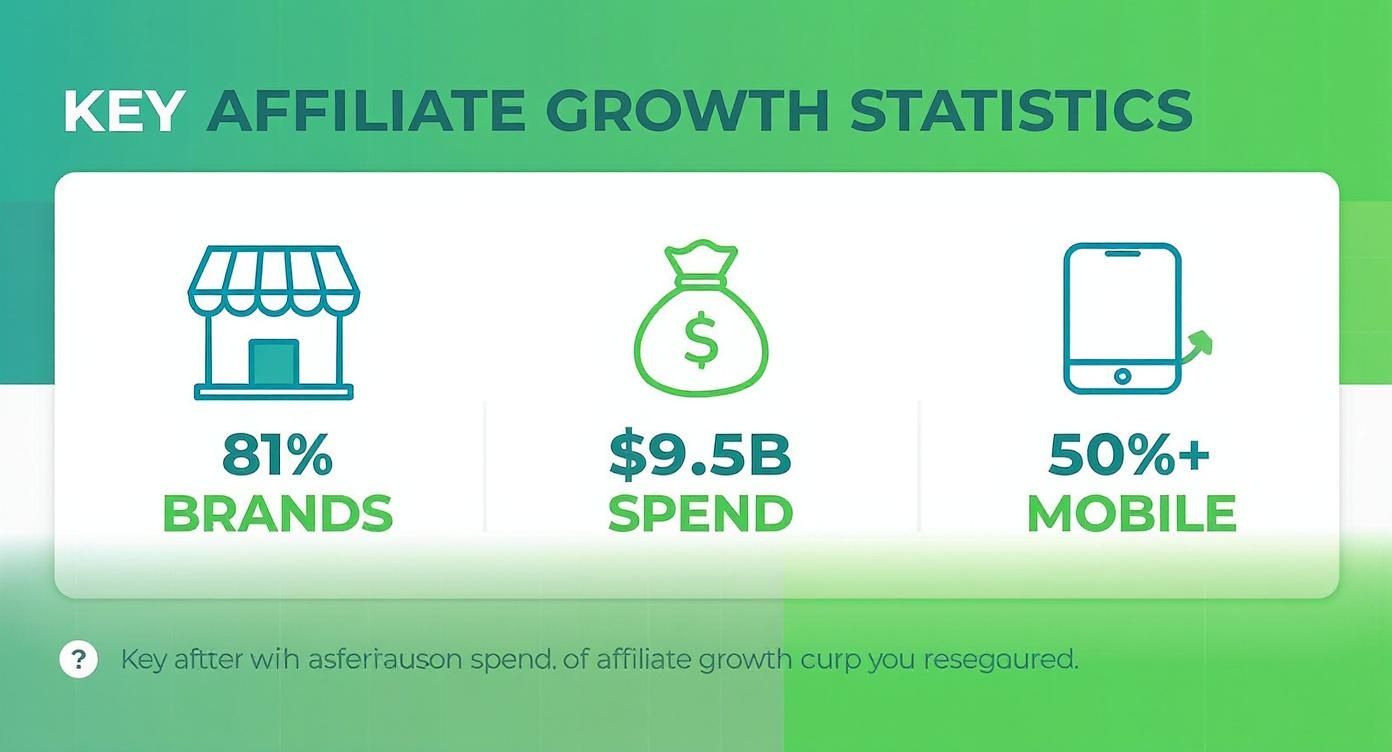
The numbers speak for themselves. With 81% of brands now running affiliate programs and over half of all affiliate traffic coming from mobile devices, the opportunity is absolutely huge.
Networks vs. Direct Partnerships
So, when you're ready to jump in, you'll find there are two main ways to get your hands on affiliate links.
Affiliate Networks: Think of these as massive marketplaces. Platforms like Amazon Associates, ShareASale, or CJ Affiliate act as the middleman, giving you access to thousands of brands from one central dashboard. They're a fantastic starting point for beginners because they make it easy to find programs and handle all the payments.
Direct Programs: On the flip side, many brands prefer to run their own affiliate programs in-house. Partnering directly with a brand can often mean higher commission rates and a closer relationship with their team. The only catch is you'll have to manage each partnership separately.
Which path is right for you? It really depends on your niche and your goals. A network gives you a ton of variety, while a direct partnership can be more profitable if you're laser-focused on promoting one specific company's products. We'll get into choosing the best fit for you in the next section.
Choosing the Right Affiliate Program for You

Before you can even think about generating links, you've got to find the right partner. This isn't just a small step; it’s the foundation of your entire affiliate strategy and will make or break your earning potential. Get this right, and your recommendations will feel authentic and genuinely helpful to your audience, not like a clumsy sales pitch.
So, where do you start? The first big fork in the road is deciding whether to join a massive affiliate network or go straight to the source and partner directly with a brand. Neither is universally "better"—it really comes down to your niche, your experience level, and what you're trying to accomplish.
Affiliate Networks vs Direct Programs
Let's break down the real-world differences between these two approaches. Think of affiliate networks as the giant department stores of the affiliate world, while direct programs are more like boutique shops.
The table below gives you a quick side-by-side comparison.
| Feature | Affiliate Networks (e.g., Amazon, CJ) | Direct Programs (e.g., Brand's Own) |
|---|---|---|
| Variety | Huge. Thousands of brands under one roof. | Limited to one brand's product line. |
| Management | Centralized dashboard for all your programs. | Separate logins and dashboards for each brand. |
| Commissions | Often lower, as the network takes a cut. | Typically higher rates; no middleman. |
| Support | Can be generic and less personal. | Direct access to a dedicated affiliate manager. |
| Payments | Consolidated payment from the network. | Individual payments from each brand. |
| Best For | Beginners, creators covering many topics. | Niche experts with a focused audience. |
Ultimately, many seasoned affiliates use a mix of both. They might use a network like ShareASale for its convenience and variety while also nurturing a few high-value direct partnerships on the side.
What Really Matters in a Program
Don't get blinded by a high commission percentage. A program's true value is hidden in the details. After years of doing this, I've learned to look past the headline number and dig into a few key areas.
Here’s my checklist for vetting any potential partner:
- The Commission Structure: Is it a one-time payout, or does it offer recurring commissions for subscription-based products? Those recurring payouts are where you can build a truly stable, predictable income.
- Cookie Duration: This is absolutely critical. It’s the window of time after someone clicks your link that you'll get credit for a sale. A generous 30-day cookie is a great sign. Anything less than 7 days, especially a 24-hour cookie (like Amazon's standard one), can seriously slash your earnings.
- Payment History and Reliability: A high commission means nothing if you never get paid. Do a quick search in affiliate forums or creator communities. You’ll find out fast if a program is known for late or missed payments.
Think of it this way: when you choose an affiliate partner, you're tying your reputation to theirs. The easiest and most sustainable way to make money is to promote products you genuinely trust and would recommend anyway.
At the end of the day, a handful of carefully selected programs that truly resonate with your audience will always outperform a scattergun approach with dozens of random brands. Once you've built this solid foundation, you’re ready to start creating links that actually convert.
How to Generate Your First Affiliate Link
Alright, let's get into the fun part: actually making your first affiliate link. Once you’ve been accepted into a program, you’ll get access to your affiliate dashboard. Think of this as your mission control for everything—creating links, checking your stats, and seeing how much you've earned.
Every program’s dashboard looks a little different, but they all serve the same core purpose. The first thing you'll want to do is hunt down the link generator. This is usually tucked away under a tab labeled "Links & Banners," "Link Generator," or just "Tools." This is where you'll turn a regular product URL into your own special, trackable link that makes sure you get credit for any sales.
Getting this right is absolutely critical. Top affiliate marketing campaigns see brands getting an average return of $15 for every $1 spent, and the channel as a whole drives about 16% of all e-commerce sales in the U.S. That’s a massive pie, and ensuring your unique affiliate ID is embedded in your links is how you claim your slice. You can dig into more stats on the impressive ROI of affiliate marketing on fluentaffiliate.com.
For a lot of people just starting out, the Amazon Associates program is their first stop. Here's a peek at what their dashboard looks like.
While this image shows a performance summary, you'd typically find what you need under a "Product Linking" tab in the main navigation. That’s where the magic happens.
Going Deeper with Link Customization
Just grabbing a basic link is fine, but if you really want to understand what's working, you need to start customizing. Two of the most powerful tools at your disposal are deep linking and Sub-IDs. Honestly, these are your secret weapons for fine-tuning your strategy.
Deep Linking: This sounds technical, but it’s simple. It just means linking directly to a specific product page instead of the generic homepage. If you’re reviewing a particular pair of running shoes, you want to send your readers straight to that product, not make them hunt for it on the brand’s site.
Sub-IDs (or Tracking IDs): This is a game-changer. It lets you add a little tag to your affiliate link to track where the click came from. For instance, you could add
&subid=WinterGearGuideto a link in a blog post and&subid=DecNewsletterto the same product link in your email. Now you can see precisely which campaign is actually converting.
Here's a pro tip I learned the hard way: always test your link before you publish it. Copy and paste it into a simple text editor and scan the URL. You should see your unique affiliate ID or username in there somewhere. A single typo can cost you all the commission from your hard work.
Strategies for Smart Link Placement and Trust
Generating an affiliate link is just the first step. The real art is getting people to actually click on it. If you just slap a link at the bottom of a page, you're pretty much guaranteeing it will be ignored. The goal is to place your links where they feel like a natural, helpful part of the conversation—not a jarring sales pitch.
The most effective way I've found to do this is by weaving contextual links directly into your content. Let's say you're writing a review of the best running shoes for trail running. As you talk about each specific shoe, that's the perfect moment to link out to it. This approach feels completely organic and gives your reader an immediate, valuable next step.
Another fantastic strategy is to build out a dedicated resource page. Think of it as a curated list of all the tools, products, or services you genuinely recommend in your niche. Your audience will often bookmark a page like this and come back to it whenever they need a solid recommendation, making it a reliable, long-term source of affiliate income.
From Messy URLs to Branded Links
Let’s be honest, long and clunky affiliate URLs crammed with tracking codes look sketchy. They can kill trust in an instant. This is exactly where link cloaking becomes your best friend. Link cloaking is simply the practice of transforming an ugly affiliate link into a clean, short, and professional-looking URL that uses your own domain.
For instance, a raw affiliate link often looks something like this:https://affiliateprogram.com/products?id=123&affiliate_id=xyz789
A much cleaner, cloaked version would be:https://yourwebsite.com/recommends/product-name
See the difference? This small change does more than just look better. It builds brand recognition and seriously boosts trust, which almost always leads to higher click-through rates. If you're on WordPress, a plugin like ThirstyAffiliates makes this incredibly easy to manage.
The Non-Negotiable Rule: Disclosure
Finally, we need to talk about the most critical piece of the puzzle: transparency. You must always tell your audience when you're using affiliate links. In the U.S., the Federal Trade Commission (FTC) has clear guidelines that legally require you to provide a clear and conspicuous disclosure.
This isn't just about staying out of legal hot water; it's about maintaining your credibility. Your audience follows and supports you because they trust your recommendations. Being upfront about your affiliate relationships reinforces that trust and shows respect for your community.
A simple, straightforward statement right at the top of your content is all it takes. Something like, "This post contains affiliate links. If you make a purchase through these links, I may earn a commission at no extra cost to you." It's honest, easy, and absolutely essential for building a lasting business.
Future-Proofing Your Affiliate Link Strategy

The world of affiliate links never sits still. What worked last year might not work next year, thanks to new tech, shifting platform rules, and a huge focus on user privacy. If you want your affiliate income to be sustainable, you have to keep your strategy fresh and ready for what’s next.
One of the biggest waves hitting the industry right now is the slow death of third-party cookies. As major browsers ditch them, the old way of tracking is becoming obsolete. The industry is moving toward more direct and transparent methods, like using first-party data and building smarter tracking right into the links themselves. This is actually a good thing—it respects user privacy while still giving creators accurate credit for their sales.
Getting Ahead of New Tech
It’s not just about tracking, either. The tools we use are getting a whole lot smarter. AI is no longer a buzzword; it’s a practical tool that can help automate link creation and even predict which campaigns will perform best.
For affiliates, this means that crafting dynamic, data-driven, and privacy-compliant links is no longer just good practice—it's a key competitive advantage in the modern affiliate marketing ecosystem.
At the same time, creators on platforms like TikTok and Instagram are relying more on specialized tools to manage their partnerships. These platforms help with everything from finding the right brands to work with to digging deep into performance analytics.
Keeping an eye on these trends isn't just for fun—it's essential for survival. Experts predict that by 2025, more advanced attribution models will be the norm, making sure affiliates get paid for every single role they play in a customer's journey. You can get a deeper dive into the future mechanics of affiliate marketing on taboola.com. Leaning into these changes now is what will keep your strategy paying off for years to come.
Answering Your Top Affiliate Link Questions
Getting started with affiliate links often feels like navigating a maze. A few key questions pop up time and time again. Let's tackle them head-on so you can move forward with confidence.
Can I Make an Affiliate Link for Any Product I Want?
It's a common assumption that you can just grab any product URL from the web and magically turn it into an affiliate link. Unfortunately, it doesn't work that way.
You can only generate links for products from companies whose affiliate programs you've been officially accepted into. You have to use the specific tools and link generators provided inside that program's dashboard. Trying to just slap your affiliate ID onto a random product link won't track your sales, and you won't get paid.
What's an Affiliate Cookie, and Why Does It Matter?
The secret sauce behind an affiliate link is the cookie duration. Think of it as a countdown timer that starts the moment someone clicks your link. This timer, set by the affiliate program, can last anywhere from 24 hours to 30 days or even longer.
If your visitor makes a purchase before that timer runs out, you earn a commission. If they wait too long and the cookie expires, you get nothing for the sale. This is why you should always check the cookie duration before joining a program—a longer window gives you a much better shot at earning.
Your audience's trust is everything. Being transparent about your affiliate links isn't just a legal requirement; it's the foundation of a loyal community. Don't risk it.
Do I Really Need to Disclose My Affiliate Links?
Yes, 100%. In the United States, the Federal Trade Commission (FTC) has strict rules that legally require you to disclose your affiliate relationships clearly and openly. This isn't optional.
This transparency is crucial for maintaining trust with your followers and steering clear of legal hot water. A simple, honest disclosure at the top of a blog post or in your video description is all it takes to do the right thing.
Ready to put your TikTok Shop growth on autopilot? The HiveHQ Affiliate Bot finds and recruits top-tier creators for your brand, handling the outreach so you can focus on the bigger picture. Start automating your creator partnerships with HiveHQ and watch your sales climb.