How to Find UGC Creators for Your Brand
how to find ugc creatorsugc creatorsfind creatorscreator sourcingcontent marketing
Finding the right UGC creator can completely change the game for your marketing, but the big question is always: where do you even start? The most successful brands I've seen use a blended strategy. They get their hands dirty with manual social media deep-dives while also using specialized creator platforms and smart automation to speed things up.
Your Modern Playbook for Finding UGC Creators
If you put all your eggs in one basket—say, only searching hashtags—you'll inevitably hit a wall. A mixed approach is the way to go. It helps you find creators who are already genuine fans of your brand and, at the same time, lets you scale your program without burning out your team.
The market for UGC platforms is exploding, on track to hit $17.5 billion by 2028. This growth means there are more tools than ever to browse creator portfolios and zero in on specific niches or audiences. For a deeper dive into this trend, check out the latest UGC statistics on Whop.com.
The chart below gives a great overview of how most brands are sourcing their UGC creators right now.
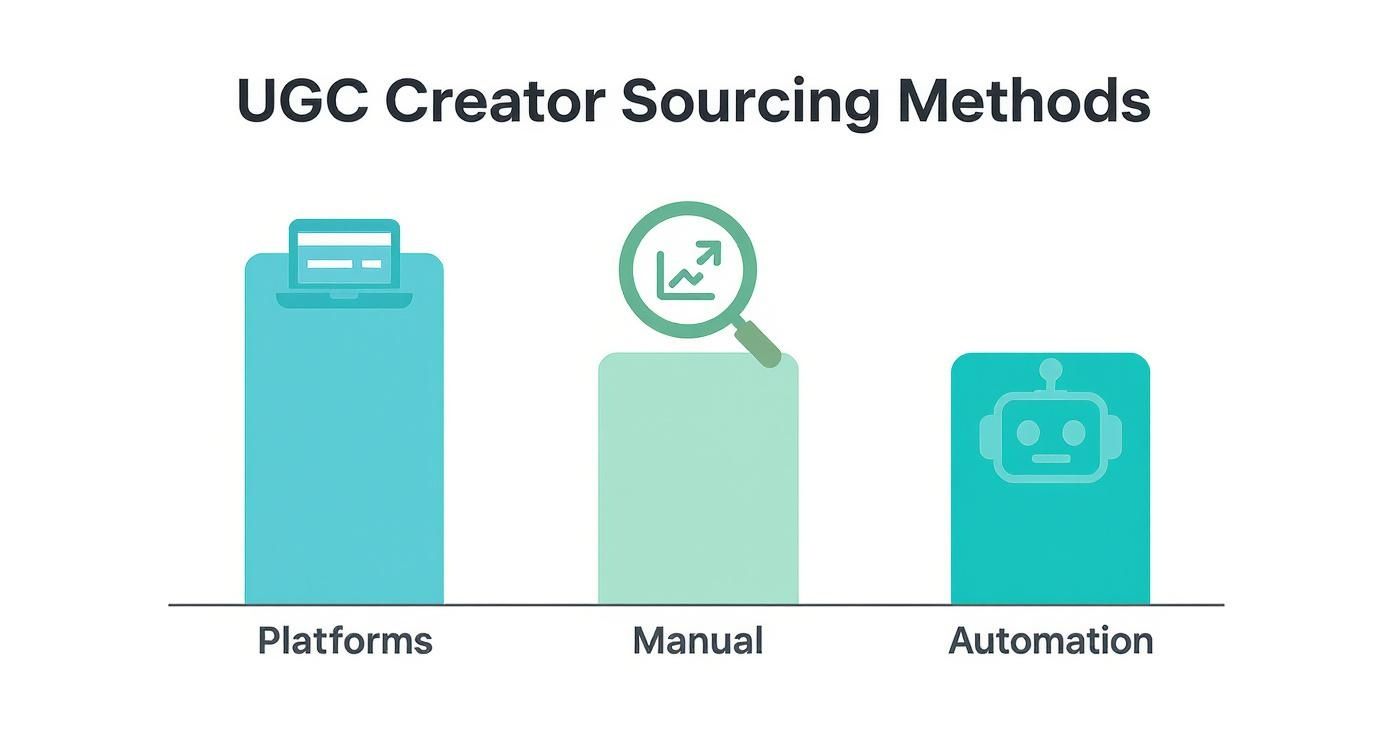
It’s clear that while manual searching is still a popular starting point, platforms and automation are crucial for anyone serious about scaling. Let's dig into the specific tactics you can use to build a steady, reliable pipeline of authentic creators for your brand.
Here’s a quick comparison of the main sourcing methods, highlighting their strengths and ideal use cases for your brand.
Comparing Methods for Finding UGC Creators
| Method | Best For | Effort Level | Scalability |
|---|---|---|---|
| Manual Searching | Finding authentic brand fans and creators with hyper-niche audiences. | High | Low |
| Creator Platforms | Quickly finding vetted creators with established portfolios and clear rates. | Medium | Medium-High |
| Automation Tools | Scaling outreach and managing a large volume of creator relationships. | Low (after setup) | High |
Ultimately, the best approach often involves a little of everything. You might start with manual searches to define your ideal creator profile, then move to platforms and automation to build out your program at scale.
Finding Creators Manually on Social Media
Before you spend a dime on fancy tools, your best source for authentic talent is probably right under your nose: your own social media feeds. This hands-on approach is, in my experience, the best way to find creators who already have a real, unforced connection to what you're doing.
Start With Your Brand's Biggest Fans
First things first, look at who's already talking about you. Keep a close eye on your brand’s mentions and tagged photos. These are your goldmine—actual customers making content simply because they love your products. It doesn't get more genuine than that.
Another savvy move is to peek at who your competitors are working with. Check out their tagged content to see which creators are delivering for them. This can give you a great shortlist of proven talent in your niche.
Get Smart With Your Search Terms
You can also go on the offensive by combining niche keywords with specific hashtags. Think about what your ideal creator is already posting. For instance, searching for a phrase like “skincare routine” and adding hashtags like #ugccreator or #gifted on TikTok and Instagram will bring up a ton of creators who are actively looking for brand deals.
Here’s what that looks like in action on TikTok. A quick search immediately pulls up a feed of potential partners.

As you can see, the results aren't just profiles; they're real people demonstrating products. This gives you an instant feel for their content style, video quality, and on-camera presence before you even click on their profile.
Finding Talent on Dedicated UGC Platforms
When you’ve exhausted manual searches and need to bring in more creators, dedicated UGC platforms are your next best friend. These are essentially marketplaces built specifically to connect brands like yours with experienced, pre-vetted creators. They become absolutely essential when it's time to scale up your creator program.

The beauty of these platforms is their powerful filtering. You can instantly narrow your search by niche, audience demographics, content style, or even a creator's specific rates. This alone saves you from the endless scroll on social media.
You get to see everything upfront—portfolios, examples of past work, and performance metrics—which gives you a clear picture of a creator’s quality before you even send that first message.
Key Takeaway: The real advantage of these platforms is how they consolidate the entire workflow. You can handle everything from discovery and negotiation to content delivery and payment all in one place.
How to Automate Your Creator Discovery
If you're serious about scaling your UGC program, you've got to move past the grind of spreadsheets and endless social media scrolling. Let's be honest, that approach just doesn't work long-term. This is where automation tools stop being a "nice to have" and become your secret weapon, turning a manual chore into a reliable system for finding top-tier creators.
Think about it: instead of you actively hunting for talent, what if the talent came to you? Imagine getting automatic alerts for new, promising creators who are already using hashtags or keywords relevant to your brand. You shift from actively searching to passively discovering people who are a natural fit.
Building Your Automated Creator Pipeline
Automation is all about handing off the repetitive, time-sucking tasks so you can focus on what actually matters: strategy and building real relationships with creators.
For example, a tool like the HiveHQ Affiliate Bot can reach out to thousands of potential partners on your behalf, completely on autopilot.
This kind of system lets you manage dozens of creator relationships at once without letting anything slip through the cracks. You can build workflows that automatically send initial messages, deliver product briefs, and even follow up on content deadlines. It keeps your program running like a well-oiled machine, freeing you up to focus on the creative side of your campaigns.
How to Vet and Evaluate Potential Creators

So you've got a list of promising creators. Great start. But a slick profile and a high follower count don't tell the whole story. Now comes the crucial part: digging deeper to make sure they're the right match for your brand.
Beyond the Follower Count
First things first, ignore the vanity metrics for a moment. Instead, look at the quality of their engagement. Are people leaving one-word comments, or are they having genuine conversations in the comment section? Real interaction is what you're after. That's a much better sign of true influence than a big, quiet audience.
The Brand Alignment Gut Check
Next, you need to do a thorough brand alignment check. This isn't just about glancing at their last few posts. Go back a few months.
- Content Consistency: Is their content quality consistent, or is it all over the place?
- Tone and Style: Does their overall vibe—their humor, their aesthetic, their values—resonate with your brand's personality?
- Past Partnerships: Who have they worked with before? If they're promoting brands that clash with your company's values, that's a serious red flag.
Pro Tip: Keep an eye out for sudden, unnatural spikes in followers or engagement. This can sometimes point to bots or bought followers, which won't do you any good. When you find UGC creators, authenticity will always deliver better results for your campaign than inflated numbers.
Your Top Questions About Finding UGC Creators Answered
Diving into the world of user-generated content for the first time can feel like learning a new language. You've got questions, and that's a good thing. Getting a handle on the basics now is what separates a successful creator program from one that stalls out.
Let's tackle some of the most common questions I hear from brands just getting started.
What’s the Real Difference Between a UGC Creator and an Influencer?
This is easily the most common point of confusion, but the distinction is critical. Think of it this way: with a traditional influencer, you're paying for access to their audience. Their value is in their distribution power.
A UGC creator, on the other hand, is all about their creative skill. You're paying them for authentic, high-quality content that your brand owns and can repurpose across your channels—like paid ads, your website, or your social media feeds.
UGC creators might not have massive followings, but they are masters at creating content that feels real and relatable. It’s less polished ad, more trusted recommendation from a friend.
How Much Should I Budget for UGC?
This is the million-dollar question, isn't it? The honest answer is: it depends. UGC rates are all over the map. A single video from a creator who's just starting out might run you $150. On the other end of the spectrum, a package with multiple videos and photos from a seasoned pro could be $1,500 or more.
A few key things move the price tag:
- Creator's Track Record: Someone with a portfolio of high-performing ads for other brands is going to charge more than a newcomer.
- The Scope of Work: How many assets are you asking for? A single photo is a world away from a package of three videos and five edited images.
- Usage Rights: This is the big one. If you plan to use the content in paid advertising, expect the cost to be significantly higher than if it's just for your organic social media. Always, always get usage rights clarified in writing.
What Makes a UGC Brief Actually Work?
A solid brief is your single most important tool for a successful partnership. It's how you align expectations and give the creator the information they need to knock it out of the park.
A great brief provides clear guardrails but still leaves room for the creator's unique style and personality to shine through. It's a roadmap, not a script.
A brief that gets results always covers these bases:
- The Essentials: A quick rundown of your brand and the product they'll be featuring.
- The Goal: What's the point of this campaign? Are you trying to drive sales, boost brand awareness, or get app downloads?
- The Audience: Who are we talking to? Give the creator a clear picture of your ideal customer.
- The Deliverables: Be specific. For example, "two 15-second TikTok-style videos and one 30-second video with a direct call-to-action."
- The Creative Guardrails: Include key messages, visual do's and don'ts (like please don't show the product upside down!), and the exact call-to-action you want them to use.
Ready to scale your creator program with less effort? HiveHQ automates your outreach, tracks performance, and gives you the data to grow smarter. Find and manage your next top-performing creators at https://hivehq.ai.