Your Guide on How to Get Free Samples from Top Brands
how to get free samplesfree productsproduct testingbrand samplesfreebies
Securing free samples is less about luck and more about a smart, repeatable strategy. It really comes down to knowing where to look and how to ask. The most successful approaches involve going straight to the brands, signing up for product review programs, and getting active on social media. It takes a little bit of savvy effort, but the reward is a consistent flow of new products showing up at your doorstep.
Your Quick Guide to Getting Free Samples
Ever wondered why companies are so eager to give their products away? It’s not just kindness; it's a calculated marketing move. Brands desperately need genuine consumer feedback and real-world buzz to attract new customers. They see these freebies as a direct investment in building brand loyalty and generating excitement.
Think about it: putting a product directly into your hands is the best advertisement they could ask for. That firsthand experience is powerful. Marketing data actually shows that up to 90% of consumers who try a sample are more likely to purchase the full-sized version later. You can dig deeper into these consumer trends to see just how effective sampling really is.
Your opinion as a consumer is a valuable asset. When you get a sample, you’re not just receiving a free product—you're playing a part in a brand's journey and helping them refine what they offer.
The Foundation for Success
To consistently land free samples, you need a solid game plan. This guide is designed to walk you through the proven methods that actually get results. We're moving past random chance and focusing on concrete, actionable steps.
So, what actually works? Let's take a quick look.
To give you a clearer picture, here's a rundown of the most effective strategies we'll be covering.
Top Methods for Sourcing Free Samples at a Glance
| Method | Description | What You Need |
|---|---|---|
| Direct Brand Outreach | Crafting personalized emails or messages directly to companies asking for samples. | A professional email address and a clear, polite pitch. |
| Product Testing Platforms | Joining websites that connect you with brands looking for honest reviewers. | A detailed profile and a willingness to provide feedback. |
| Social Media Engagement | Following brands, entering giveaways, and using specific hashtags to get noticed. | Active social media accounts on platforms like Instagram or TikTok. |
| Automated Outreach Tools | Using software like HiveHQ’s Affiliate Bot to contact brands at scale. | A subscription to the tool and a well-defined target list of brands. |
These are the pillars of a successful sample-sourcing strategy. Each one opens up a different avenue for getting products, and combining them will give you the best shot at a full mailbox.
This guide is your roadmap. We’re about to break down each of these approaches, sharing practical tips and real examples to get you started. Once you understand why brands offer samples and which methods to use, you'll be on your way to discovering some amazing new products. Let's dive into the details.
Mastering Direct Outreach to Brands
While signing up for programs is a great starting point, sometimes the most effective way to get your hands on free samples is to go straight to the source and just ask. But there's a right way and a wrong way to do this. A generic, copy-and-paste email will get you nowhere fast. The real secret is crafting a personalized message that makes a brand manager want to work with you.
This isn't about asking for a handout. It's about proposing a genuine value exchange. You need to show them you’re more than just a consumer—you’re a potential partner who can offer valuable feedback and authentic exposure.
Crafting a Compelling Request
That first email is your one chance to make a solid impression, so make it count. Forget the generic "To Whom It May Concern." Do a little detective work on LinkedIn or the company’s "About Us" page to find the name of the marketing manager or brand coordinator. Starting with their actual name is a simple touch that makes a world of difference.
From there, get specific about why you're contacting them. Mention a product you already swear by or a new line you’re genuinely excited to see. This immediately shows you're a real fan, not just someone mass-emailing for free stuff.
Keep your message short and sweet. Brand managers are busy people, and a wall of text is an instant delete. Use short paragraphs and get right to the point.
What to Include in Your Email
To make your request pop, you have to think about what's in it for them. Your entire pitch should be framed around mutual benefit. I've found that including these key elements is non-negotiable:
- A Personal Connection: Lead with a genuine compliment or share a quick story. Something like, "I've been using your organic coffee for two years, and it's the only thing that gets me through my Monday mornings."
- A Clear 'Ask': Don't beat around the bush. Be direct but polite. For example, "I saw you're launching a new skincare line, and I would love the chance to test a sample and provide some detailed, honest feedback."
- The Value Proposition: This is the most important part. What do they get out of it? Spell it out. Are you going to write an in-depth review on their site? Post about your experience on Instagram? Offer to fill out a detailed survey?
Remember, brands get bombarded with requests. You're not just asking for a free product; you're offering to be part of their marketing and development process. Simply highlighting your desire to provide thoughtful feedback will set you apart from 99% of other inquiries.
For example, a strong closing could be: "I'd be happy to provide a thorough review on your website and share my unboxing on my Instagram stories to my followers who really trust my recommendations." That’s a specific, tangible offer—way more powerful than a simple "Can I have a sample?"
When you position yourself as a collaborator instead of just another consumer, you change the entire dynamic. This small shift in perspective is what turns a simple request into a professional proposal, dramatically boosting your odds of getting that "yes" and paving the way for a long-term relationship. It's a foundational skill for anyone learning how to get free samples on a regular basis.
Using Social Media to Land Free Products
Direct outreach is a solid strategy, but don’t sleep on your social media feed. It's an absolute goldmine for freebies if you know where to look. Brands are all over Instagram, TikTok, and Facebook, constantly running contests and searching for everyday people to try their new stuff.
And here’s the best part: you don't need a massive following. What really matters is being an active, genuine member of a brand's community.
Think of your social profile as your resume. Brands want to see real people who are actually excited about what they sell, not just accounts hopping from one giveaway to the next. Your mission is to show them you’re the perfect person to give honest feedback and maybe even create some great content for them.
Optimize Your Profile for Opportunity
Before you dive in, take a few minutes to clean up your social media profiles. Trust me, brands will do a quick background check before they send anything your way, so you want that first impression to be a good one.
First things first, your profile has to be public. If they can't see your posts, they can't see your potential. Next, write a simple, friendly bio that shows off your interests. Whether you're into skincare, hiking, or gluten-free baking, a clear bio helps brands see you're their kind of person.
Finally, make sure your feed looks real. It should have a healthy mix of your own life and your interactions with brands. An account that only posts about free stuff can come across as spammy, and that’s a quick way to get overlooked.
Engage Authentically and Strategically
Alright, your profile is looking good. Now it’s time to start engaging. This is where you go from being a silent scroller to a real part of the conversation. Just dropping a few random likes won't cut it—you need to be a bit more thoughtful.
When a brand posts something, leave a comment that actually adds value. Instead of a generic "Love this!", try something more specific. For example, "This new moisturizer looks amazing! I've been searching for a product with hyaluronic acid that doesn't feel sticky." That kind of comment proves you're paying attention and you know what you're talking about.
Pro Tip: Don't just follow the brand accounts. Start following relevant hashtags like #producttester, #freesamples, and #ugccommunity. Brands and marketing agencies lurk there all the time to find people for their next campaign. A little interaction on those posts can get you on their radar fast.
Here are a few simple ways to make yourself more visible to brand managers:
- Jump into Polls and Q&As: Brands love using Instagram Stories to ask their audience questions. When you answer, you're not just showing you're engaged; you're giving them valuable feedback they can actually use.
- Tag Brands in Your Posts: Already using a product you love? Post about it and tag the company. This is the most natural way to show your brand loyalty and prove you can create quality content.
- Chat with Other Followers: Don't just talk to the brand; engage with other people in the comments. Building a sense of community around a brand makes you stand out as a positive and influential voice.
When you start doing this, your social media time transforms from a mindless habit into a smart strategy for learning how to get free samples. By becoming a valuable part of a brand's world, you make yourself exactly the kind of person they’re excited to send their products to.
Joining Product Testing and Review Programs
While reaching out to brands directly or engaging on social media are smart plays, joining a dedicated product testing program is like getting a backstage pass. These platforms act as the official middlemen, connecting you with hundreds of companies that are actively seeking honest consumer feedback. They are literally built to send you products—sometimes before they even hit the shelves—all in exchange for your thoughts.
Platforms like Influenster, BzzAgent, and PINCHme have created entire communities around this idea. It’s a classic win-win: brands get vital market research and user-generated content, and you get to try out the latest and greatest for free. If you're looking for a consistent way to get free samples, this is one of the most reliable routes you can take.
This infographic neatly summarizes the core actions—Engage, Follow, and Optimize—that are key to making this work, whether you're on social media or using a dedicated testing platform.
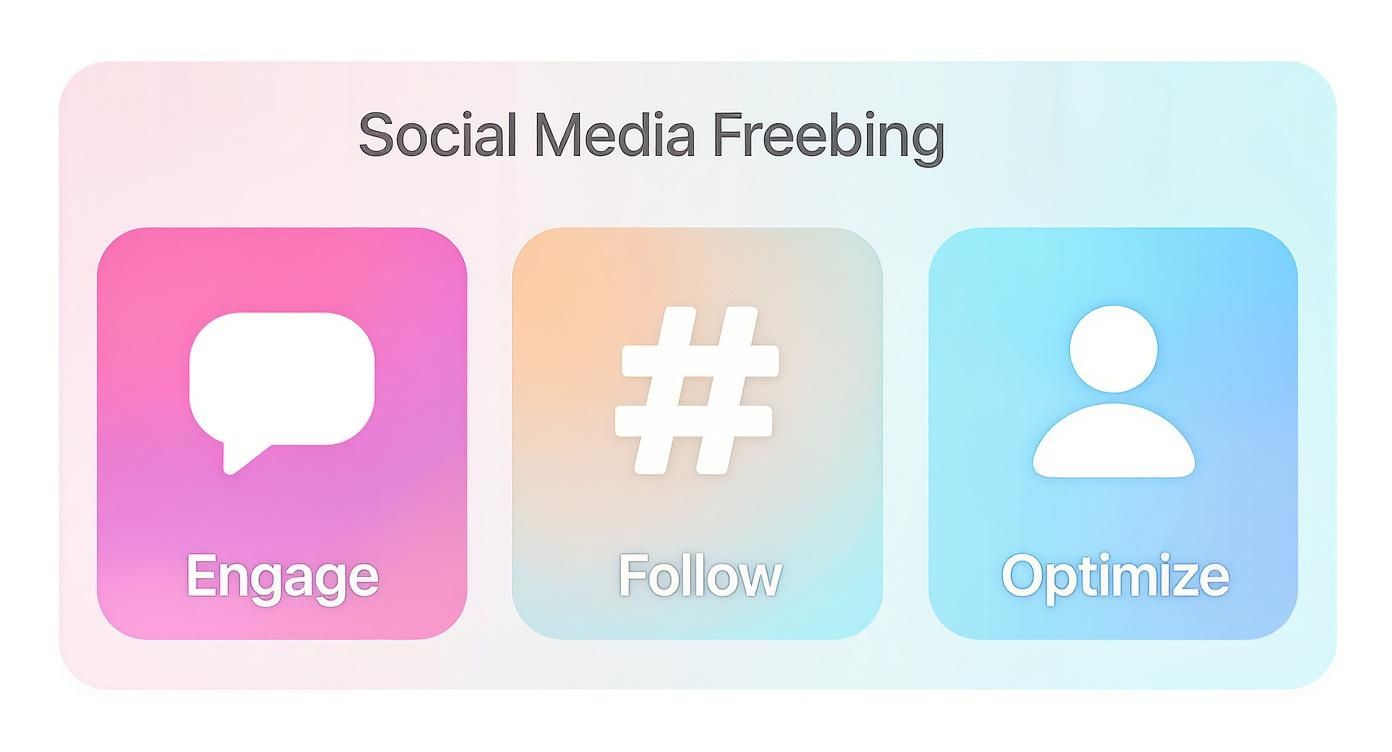
As you can see, the best results come from a blend of genuine community interaction and a well-crafted profile.
Creating a Profile That Gets Noticed
On these platforms, your profile is everything. Seriously. Think of it as your resume for getting free stuff. When a skincare brand is launching a new anti-aging serum, they're not going to send it to a 20-year-old college student. They dive into the demographic and interest data you provide to pinpoint their perfect tester.
This means you absolutely have to be thorough when signing up. Fill out every single survey and profile question they throw at you.
- Be Honest About Demographics: Your age, location, income level, and who you live with are the first things brands look at.
- Detail Your Interests: Are you a beauty junkie, a new parent, a pet owner, or a fitness fanatic? The more specific you get, the better your matches will be.
- Connect Your Socials: Linking your social media accounts is a huge plus. It shows the platform you have an audience (even a small one) to share your honest reviews with.
Your profile is the single most important tool you have. From what I've seen, a complete and accurate profile can increase your chances of being selected for a campaign by over 50%. Brands need to find specific people, and an incomplete profile basically makes you invisible to them.
To give you a better idea of how these sites operate, here are a few of the most popular options out there. Each one has a slightly different focus, so it's worth checking them out to see which aligns with your interests.
Comparing Popular Product Testing Platforms
| Platform Name | Primary Product Categories | How to Qualify |
|---|---|---|
| Influenster | Beauty, skincare, food, personal care, pet products | Complete your profile, connect social media, and actively review products you already own. |
| BzzAgent | Home goods, electronics, beauty, food & drink | Fill out detailed demographic surveys and apply to specific campaigns that match your profile. |
| PINCHme | Mostly small samples: snacks, beauty, personal care | Answer a series of profile questions. Samples are released on "Sample Tuesday" for eligible members. |
| The Pink Panel | Exclusively beauty: skincare, makeup, hair care | Primarily for women in the US. You apply for specific product tests that have very targeted demographics. |
| Home Tester Club | Groceries, household cleaning, personal care, baby | Sign up, complete your profile, and apply for products to test. A global community focused on home products. |
Signing up for a few of these platforms is a great strategy to cast a wider net. You'll quickly get a feel for which ones send you the most relevant and exciting products based on your lifestyle.
Writing Reviews That Lead to More Opportunities
Getting the product is only half the battle. Once that box arrives, your job has just begun. The quality of your review is what separates one-time testers from those who get picked for bigger, better, and more frequent campaigns. A lazy, one-sentence "It was good" review just won't cut it.
Brands are hungry for detailed, thoughtful, and genuine feedback. They want the good, the bad, and the ugly. High-quality photos or even a short video of you using the product will make your review pop and show you're taking it seriously.
To write a review that gets noticed, try to cover these points:
- First Impressions: What did you think of the packaging? The scent or texture?
- The User Experience: Walk them through how you used it. Was it easy? Confusing? Enjoyable?
- The Results: What happened after you used it for a week? Did it live up to its claims?
- Final Thoughts: Would you recommend it? Who do you think this product is perfect for?
When you consistently provide top-notch feedback, you build a reputation as a reliable and insightful tester. This is how you climb the ranks and become a go-to person for the most exclusive campaigns, turning a fun hobby into a steady stream of awesome new products.
Smart Habits for Consistent Success
Turning your hunt for freebies from a casual hobby into a steady stream of products is all about building the right habits. It's not just about knowing where to look; it’s about having a system. These are the little things that separate the pros from the beginners, the difference between occasional luck and a mailbox that’s always got something new to unbox.
The absolute first thing you need to do? Set up a dedicated email address just for this. Trust me, if you use your personal or work email, you'll drown in a sea of promotional newsletters, and you’ll miss the important stuff like shipping confirmations. A separate account keeps everything neat and ensures you never miss a real opportunity.
Stay Organized and Professional
Think of this dedicated email as your mission control. Every request, confirmation, and follow-up message lives here, creating a clean, easy-to-manage system. This simple move not only makes you way more efficient but also makes you look more professional to the brands you’re contacting.
Once you start signing up for newsletters and brand programs, the marketing emails will start rolling in. A separate inbox acts as the perfect filter, keeping your primary email clean while you can quickly scan your "samples" inbox for the good stuff.
Organization is the foundation of consistency. When a brand sees a clear, professional email address and gets a prompt reply from you, it signals that you’re a serious and reliable product tester they can count on for future campaigns.
The Power of Patience and Politeness
Look, not every request is going to get an instant "yes." In fact, some of the best samples I’ve ever received came from brands that took weeks, sometimes even months, to respond. Patience is a superpower when you're learning how to get free samples consistently. Brands often collect requests and then fulfill them all at once when a new campaign kicks off.
So, what if you haven't heard back in a while? A gentle and polite follow-up can work wonders after four to six weeks. It's not about being pushy; it's about showing you're still genuinely interested.
Here’s a simple template that works for me:
- Acknowledge they're busy: I always start with something friendly like, "I know you're likely very busy, but I just wanted to quickly follow up on my previous email."
- Remind them why you're a fan: Briefly restate your interest. For example, "I'm still a huge fan of your new product line and would love the opportunity to provide some feedback."
- End on a high note: Always finish with gratitude. "Thank you for your time and consideration" is perfect.
This approach keeps the relationship positive and puts you back on their radar without burning any bridges. By making these simple but powerful habits part of your routine, you’ll build a reputation as a dependable and appreciative person—exactly the kind of fan brands are excited to work with again and again.
Common Questions About Getting Free Samples
Jumping into the world of freebies is exciting, but let's be honest—it can also feel a little confusing. A lot of questions pop up, and knowing the answers is the key to avoiding scams and putting your energy where it'll actually pay off.
We've pulled together the most common questions we hear and answered them directly, so you can navigate this space like a pro.
Is It Genuinely Possible to Get Samples Without Paying for Shipping?
Yes, 100%. Legitimate companies and well-known product testing platforms like PINCHme and Influenster have a marketing budget for this. Getting the product into your hands, free of charge, is part of their strategy.
The moment an offer asks for your credit card to cover a "small shipping fee," alarms should go off. This is almost always a tactic to lock you into a hidden subscription you never wanted.
The golden rule is simple: real free samples are 100% free. You should never have to pull out your wallet. If there's a request for money, no matter how small, it's a signal to walk away.
How Can I Avoid Scams and Fake Free Sample Offers?
The best way to stay safe is to stick to official channels. Go straight to the brand's website or their verified social media pages. That's your safest bet. Reputable testing programs are also a secure route.
Be wary of random third-party sites, especially if they ask for too much personal information or make you jump through endless survey hoops. A real offer is usually straightforward.
Do I Need a Big Social Media Following to Get Free Products?
Not at all. While brands definitely work with big-name influencers, many are actually looking for feedback from everyday people. They want authentic, relatable opinions.
For these companies, genuine engagement and thoughtful content are often more valuable than a massive follower count. And on product testing sites, what really matters is your demographic profile and the quality of your past reviews, not your social stats.
How Much Time Should I Expect to Spend to See Results?
Expect to invest a couple of hours upfront to get everything in place. This means filling out your profiles on testing sites in detail and maybe drafting a few outreach email templates. Think of it as a one-time investment that will save you time later.
Once you're set up, the ongoing effort can be as little as 30 minutes a week. That’s usually enough time to scout for new offers, apply to relevant campaigns, and interact with a few brands on social media.
- Initial Setup: Block out 1-2 hours to build solid profiles and templates.
- Weekly Check-ins: Spend about 30 minutes looking for new opportunities.
- Product Reviews: Allot 15-20 minutes for each product to write a thoughtful review.
Consistency is what really moves the needle here. A little focused effort each week will build momentum and keep a steady stream of samples coming your way.
Ready to automate your brand outreach and connect with top creators on TikTok Shop? HiveHQ’s Affiliate Bot discovers and recruits the right partners for your brand, so you can focus on growth while we handle the outreach. Learn more about HiveHQ and start scaling your partnerships today.