8 Social Commerce Trends Transforming TikTok Shops in 2025

social commerce trendsTikTok Shope-commerce marketinglive sellinginfluencer marketing
Welcome to the future of e-commerce, where your social feed is the new storefront. The line between social interaction and online shopping has all but disappeared, creating a dynamic, engaging, and highly profitable landscape known as social commerce. For brands and sellers, particularly on fast-paced platforms like TikTok Shop, mastering this fusion is no longer optional; it's the core of a modern growth strategy.
Understanding the most impactful social commerce trends is critical for anyone looking to convert followers into loyal customers. This isn't about just keeping up; it's about getting ahead. From the immersive experience of live shopping to the personalized recommendations driven by AI, the opportunities to connect with consumers at the point of discovery are expanding rapidly.
This article cuts through the noise to deliver a clear, actionable guide. We will break down the eight most powerful trends reshaping retail today. For each trend, you will find practical examples, key data points, and specific implementation advice tailored for TikTok Shop sellers. Prepare to learn precisely how to integrate these strategies to not only boost your sales but also build a resilient brand that thrives in a socially-driven marketplace. Let's explore the tactics that will define success.
1. Trend #1: The Live Commerce Revolution
Live commerce is one of the most dynamic social commerce trends, transforming passive scrolling into an active, engaging shopping experience. This approach blends live-streaming video with e-commerce, allowing brands and creators to showcase products in real time. Viewers can interact directly with the host, ask questions, and make purchases instantly without ever leaving the broadcast.
This trend effectively merges entertainment with retail, creating a "shoppertainment" format that builds community and drives urgency. Major platforms like Amazon Live, TikTok Shop, and Instagram have heavily invested in this feature, with brands like Walmart and Glossier leveraging it to launch products and host exclusive sales events. The format’s success is rooted in its ability to replicate the personalized, consultative experience of in-person shopping in a digital environment.
Why It Works for TikTok Shop
For TikTok Shop sellers, live commerce is a native fit. The platform's algorithm already prioritizes engaging, authentic video content, and live streams capitalize on this by fostering a direct, unfiltered connection with your audience.
Key Insight: Live commerce shortens the customer journey from discovery to purchase down to a few clicks, capturing impulse buys driven by the stream's excitement and exclusivity.
This immediacy is a powerful conversion tool. Offering live-only discounts, limited-stock alerts, and real-time product demonstrations creates a sense of FOMO (Fear Of Missing Out) that encourages immediate action.
The following bar chart visualizes key metrics that underscore the scale and platform adoption of live commerce.
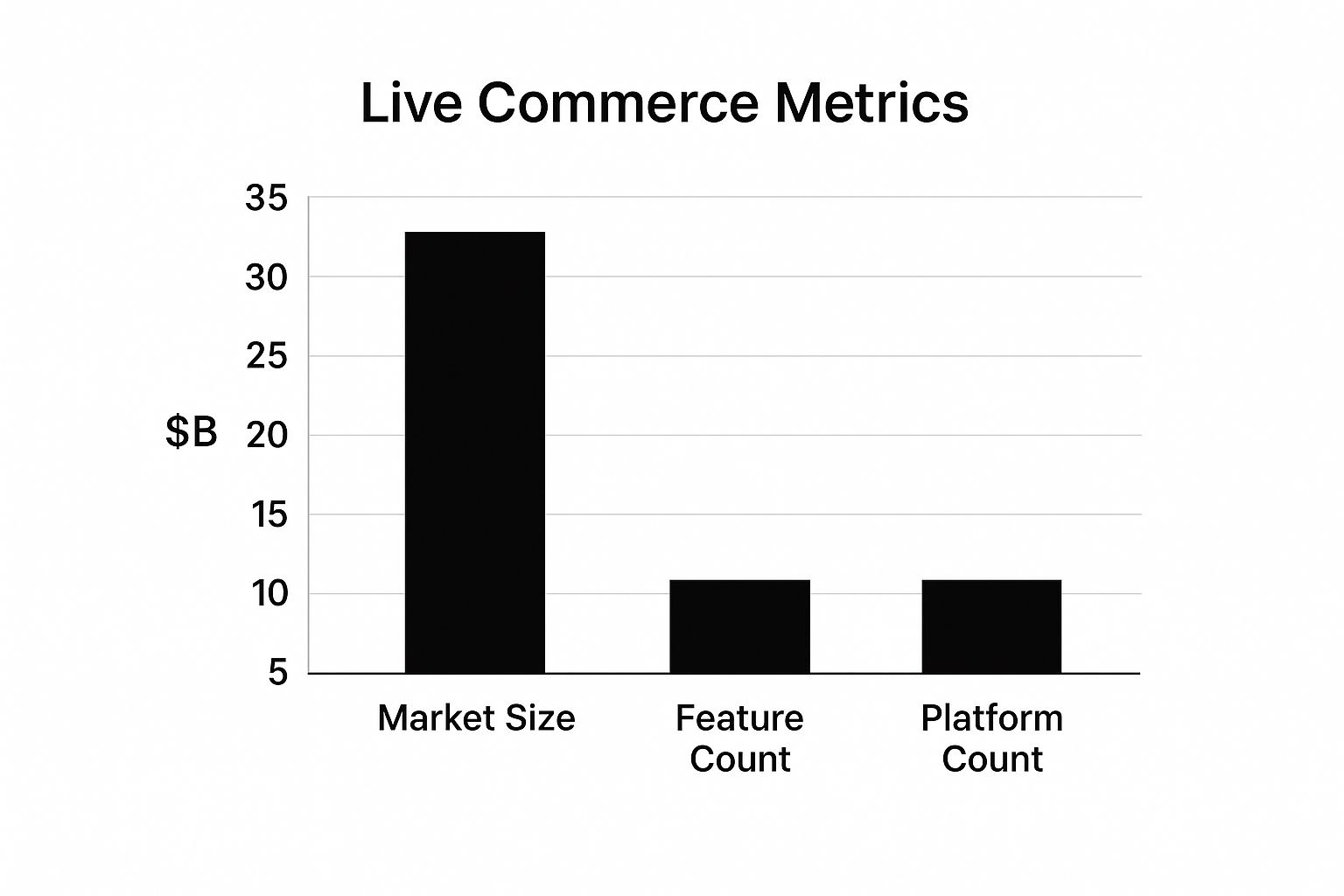
The chart highlights the substantial market size and broad platform support, indicating that live commerce is a well-established and growing trend, not a fleeting fad.
Actionable Tips for Implementation
- Prepare and Test: Invest in good lighting and a clear microphone. Always test your tech setup before going live to avoid glitches that can derail your broadcast.
- Engage Actively: Don't just present; interact. Acknowledge viewers by name, answer their questions in real time, and use polls or Q&A features to keep them engaged.
- Create Exclusivity: Offer promotions that are only available to live viewers. This could be a special discount code, a free gift with purchase, or first access to a new product.
2. Trend #2: Shoppable Content
Shoppable content is a cornerstone of modern social commerce trends, seamlessly transforming standard social media posts into direct purchase opportunities. This approach involves embedding clickable product tags and purchase links directly into images, videos, and stories. It effectively closes the gap between product discovery and purchase, allowing consumers to buy items they see without ever leaving their social feed.
This trend eliminates friction from the customer journey by creating an integrated, intuitive shopping experience. Platforms like Instagram, Pinterest, and TikTok have mastered this by allowing brands like Nike and Adidas to tag products in their posts. This turns inspirational content, such as an athlete wearing new gear, into an immediate storefront, capitalizing on the user's initial interest at its peak.
Why It Works for TikTok Shop
For TikTok Shop sellers, shoppable content is a natural extension of the platform's video-first format. By tagging products directly in your short-form videos, you allow viewers to move from entertainment to checkout in seconds. This creates a frictionless path to purchase that is native to the user experience.
Key Insight: Shoppable content merges the point of inspiration with the point of sale, converting passive viewers into active customers by making the "I want that" moment instantly actionable.
This immediacy is crucial on a platform driven by trends and impulse decisions. When a user sees a product they love in a viral video, a shoppable tag allows them to purchase it on the spot, before the moment of interest fades.
Actionable Tips for Implementation
- Create Lifestyle Context: Don't just show the product; show it in use. Create authentic, lifestyle-oriented videos that help viewers visualize how the product fits into their own lives.
- Optimize Product Details: Ensure your product titles, descriptions, and images are clear and compelling within the TikTok Shop interface. Use high-quality visuals that are well-lit and true to color.
- Promote Across Channels: Announce on your other social platforms when you post new shoppable content on TikTok. This drives traffic and signals to your wider audience where they can make direct purchases.
3. Social Proof Integration
Social proof integration is one of the most foundational social commerce trends, leveraging user-generated content (UGC), reviews, and ratings directly within the shopping interface. This trend harnesses the power of community validation and peer recommendations to build trust and significantly influence purchase decisions, effectively digitizing word-of-mouth marketing at scale.
This approach involves embedding authentic customer feedback, such as photos, videos, and detailed reviews, into product pages. Brands like Sephora and Glossier excel at this by showcasing customer photos in product galleries, allowing potential buyers to see how products look on real people, not just models. This transparency reduces purchase anxiety and answers questions that product descriptions alone cannot.

Why It Works for TikTok Shop
On TikTok, authenticity is paramount, and social proof is the ultimate form of authentic marketing. TikTok Shop sellers can leverage this by encouraging customers to create video reviews or "unboxing" content, which can then be featured on their product pages or in their feed.
Key Insight: Social proof acts as a powerful shortcut in the decision-making process. Seeing others like them enjoying a product provides a strong signal of quality and trustworthiness, which is crucial for converting hesitant shoppers.
This is especially effective for new or less-established brands. When a potential customer sees genuine positive feedback from previous buyers, it builds instant credibility that would otherwise take months or years to establish through traditional advertising.
Actionable Tips for Implementation
- Encourage UGC: Actively prompt customers to share photos and video reviews after purchase. Consider running contests or offering small incentives for high-quality content that you can feature.
- Respond to All Feedback: Engage professionally with both positive and negative reviews. Responding to criticism shows you value customer feedback and are committed to improving your products and service.
- Showcase Diversity: Make a conscious effort to feature user-generated content from a diverse range of customers. This helps a wider audience see themselves using your product, making it more relatable.
4. Influencer Storefronts
Influencer storefronts represent a significant evolution in creator marketing, moving beyond simple shoutouts to establish dedicated, curated retail spaces. This trend involves creators launching their own branded shops or personalized sections within larger platforms, filled with products they genuinely endorse. It provides a seamless shopping experience where followers can browse and buy recommended items directly from a trusted source.
This model transforms influencers from advertisers into direct retailers, deepening their connection with their audience. Platforms like Amazon, LTK, and Instagram have leaned into this by providing tools for creators to build their own digital boutiques. For instance, fashion influencers like Chiara Ferragni have built empires from this model, while the Amazon Influencer Program allows creators of all sizes to curate shoppable lists, making this one of the most scalable social commerce trends.
Why It Works for TikTok Shop
For TikTok Shop sellers, collaborating on influencer storefronts creates a persistent, long-term sales channel. Unlike a fleeting Story or a single in-feed video, a storefront is an always-on destination that captures sales long after the initial promotional push. It positions your products within a creator's trusted ecosystem, lending them inherent credibility.
Key Insight: Influencer storefronts turn transactional affiliate links into a cohesive, branded shopping experience, increasing conversion rates by reducing friction and building on the trust the creator has already established.
This strategy is particularly effective because it aligns your brand with a creator's personal brand. When a product is featured in a curated storefront, it receives a powerful endorsement that feels more like a personal recommendation than a paid advertisement.
Actionable Tips for Implementation
- Maintain Authenticity: Partner with influencers whose audience and values align with your brand. The product selection in their storefront should feel natural and genuine to their personal brand.
- Disclose Transparently: Ensure all partnerships and affiliate relationships are clearly disclosed. Transparency is crucial for maintaining follower trust, which is the foundation of the storefront's success.
- Track Performance: Use affiliate links and platform analytics to track key metrics like click-through rates, conversion rates, and sales per influencer. Use this data to optimize your product mix and identify your most effective creator partners.
5. Trend #5: AI-Powered Personalization
AI-powered personalization is a pivotal social commerce trend that moves beyond generic marketing to deliver hyper-relevant shopping experiences. This approach uses machine learning algorithms to analyze vast amounts of data, including user behavior, past purchases, and social signals, to tailor product recommendations, content, and ads to each individual. This creates a more intuitive and engaging customer journey.
This trend transforms the digital storefront into a personal shopper for every user. Tech giants like Amazon with its "Customers who bought this also bought" feature and Netflix with its content recommendation engine have proven the model's effectiveness. In social commerce, this translates to dynamic ad creative on Facebook or curated product feeds that feel uniquely assembled for the user, driving higher engagement and conversion rates.
Why It Works for TikTok Shop
For TikTok Shop sellers, AI-powered personalization is a game-changer. The platform’s "For You" page is already a masterclass in AI-driven content delivery, and applying the same logic to product discovery creates a seamless and compelling shopping experience. By understanding user preferences, you can showcase the most relevant items from your catalog.
Key Insight: AI-powered personalization makes customers feel understood, transforming a transactional relationship into a loyal one by consistently showing them products they genuinely want or need.
This deep level of relevance reduces decision fatigue and boosts the likelihood of a sale. When a user’s feed is filled with products that align perfectly with their demonstrated interests, the path from discovery to checkout becomes almost frictionless, capturing sales that might otherwise be lost.
Actionable Tips for Implementation
- Start with Smart Segmentation: Use TikTok's ad tools to create custom audiences based on engagement, such as users who have watched specific videos or interacted with your shop. Serve them personalized ads based on those behaviors.
- Ensure Data Transparency: Be clear with your audience about how you use their data to personalize their experience. Building trust is crucial, so maintain a transparent privacy policy.
- A/B Test Your Strategies: Experiment with different personalization tactics. Test personalized video ad creative against more general ads to measure which approach yields a higher return on investment.
- Combine AI with Human Insight: Use AI to identify trends and preferences, but apply your human expertise to curate final product selections or campaign themes. This ensures your brand’s voice remains authentic.
6. Social Marketplace Integration
Social marketplace integration is a pivotal social commerce trend where platforms evolve into complete, self-contained shopping ecosystems. This approach embeds a full-funnel e-commerce experience directly within the social media app, allowing users to discover, browse, and purchase products without ever needing to navigate to an external website. It transforms social platforms from traffic drivers into all-in-one destinations for both entertainment and commerce.
This trend is powered by platforms like Facebook Shops, Instagram Shopping, and, most notably, TikTok Shop. These integrations create a seamless journey where a user can see a product in a video, tap to view its details, and complete the purchase using stored payment information, all within a few seconds. For brands, this drastically reduces friction and capitalizes on the high-intent moments generated by engaging social content.
Why It Works for TikTok Shop
TikTok Shop is the prime example of a fully integrated social marketplace. It eliminates the need for users to "link in bio," keeping the entire shopping experience native to the platform where discovery happens. This closed-loop system provides sellers with rich data on what content drives conversions.
Key Insight: A fully integrated marketplace turns every piece of content into a potential point of sale, maximizing conversion opportunities by making the path to purchase as short and simple as possible.
By embedding the storefront directly into your profile and linking products to videos and live streams, you remove barriers that cause potential customers to drop off. The entire ecosystem is designed to convert impulse interest into immediate sales.
Actionable Tips for Implementation
- Optimize Your Shop Profile: Treat your TikTok Shop tab like a digital storefront. Ensure all product listings have high-quality images, detailed descriptions, and accurate information.
- Tag Products Everywhere: Consistently tag relevant products in all your short-form videos and live streams. Make it a habit to ensure every piece of content is shoppable.
- Leverage Platform-Specific Ads: Use TikTok's advertising tools, such as Video Shopping Ads, to drive targeted traffic directly to your integrated shop and products.
7. Voice Commerce Integration
Voice commerce integration is a forward-thinking trend that bridges the gap between spoken commands and online shopping. This technology allows consumers to use voice assistants on smart speakers or mobile devices to search for products, get recommendations, and complete purchases directly within a social or e-commerce ecosystem. It streamlines the shopping process, making it hands-free and highly convenient.
This trend is rising as voice assistant adoption, powered by Amazon Alexa and Google Assistant, becomes mainstream. Brands are capitalizing on this by enabling voice-activated ordering and support. For example, Walmart allows customers to add items to their cart using Google Assistant, while Domino's has successfully implemented voice ordering across multiple platforms, simplifying the reordering process for loyal customers.
Why It Works for TikTok Shop
While direct voice purchasing on TikTok is still emerging, preparing for it positions your brand for the future of frictionless commerce. Sellers can optimize their listings and content for voice search, which often mirrors the conversational queries people use on TikTok's search bar. Aligning your product data with natural language makes your shop more discoverable through both text and future voice-enabled features.
Key Insight: Voice commerce meets consumers in their natural environment, turning everyday conversations with devices into transactional opportunities and removing the friction of typing and clicking.
Optimizing for voice is about accessibility and speed. As users become more comfortable with voice commands for daily tasks, they will expect the same convenience from their shopping experiences, making early adoption a significant competitive advantage.
Actionable Tips for Implementation
- Optimize for Voice Search: Use long-tail keywords and natural, conversational language in your product titles and descriptions. Think about how a customer would ask for your product out loud.
- Create Audio Content: Develop audio-focused content like short product explainers or tips that can be easily repurposed for voice platforms. This helps build brand presence in an audio-first format.
- Prioritize Simple Product Names: Use clear and easy-to-pronounce product names that a voice assistant can readily understand. Avoid complex or ambiguous terms that could lead to search errors.
8. Trend #8: Augmented Reality Try-On
Augmented Reality (AR) try-on is a transformative social commerce trend that closes the gap between digital and physical retail. This technology allows customers to virtually test products like makeup, clothing, accessories, or even furniture using their smartphone cameras. By overlaying a digital product onto the user's real-world environment, AR provides a tangible, interactive preview that builds buying confidence.
This immersive approach removes a major barrier to online shopping: uncertainty about how a product will look or fit. Major brands like Sephora (Virtual Artist), Warby Parker (virtual glasses fitting), and IKEA (IKEA Place app) have successfully used AR to enhance the customer experience. This technology integrates seamlessly into social platforms, turning a standard product post into an engaging, personalized interaction.

Why It Works for TikTok Shop
On a visually driven platform like TikTok, AR try-on features are a natural extension of the user experience. TikTok already has a massive library of AR filters and effects, and brands can create their own branded effects that allow users to “try on” products directly within the app.
Key Insight: AR try-on minimizes purchase friction by answering the customer's biggest question: "How will this look on me?" This reduces return rates and increases conversion by giving shoppers a personalized preview.
This functionality not only boosts sales but also creates highly shareable user-generated content. When a user tries on your virtual lipstick or sunglasses and shares the video, they are effectively creating a personalized ad for your brand, driving organic reach and social proof.
Actionable Tips for Implementation
- Ensure Realism: Invest in high-quality AR development to ensure accurate color representation, sizing, and texture. A poor-quality filter can be more damaging than no filter at all.
- Make It Intuitive: The AR experience should be easy to access and use. A single tap from a product page or video should launch the filter without complicated instructions.
- Integrate a 'Shop Now' CTA: The goal is conversion. Make sure your AR filter includes a clear and prominent call-to-action that links directly to the TikTok Shop product page for a seamless purchase.
Social Commerce Trends: 8-Point Comparison
| Item | Implementation Complexity 🔄 | Resource Requirements ⚡ | Expected Outcomes 📊 | Ideal Use Cases 💡 | Key Advantages ⭐ |
|---|---|---|---|---|---|
| Live Commerce | High – requires planning & tech | Moderate to high – equipment & hosts | High engagement, immediate purchases | Real-time demos, flash sales, product launches | Builds trust, drives urgency, cost-effective |
| Shoppable Content | Moderate – tagging & integration | Moderate – content creation ongoing | Increased conversions by 20-30% | Social posts & videos with product tags | Reduces friction, seamless shopping experience |
| Social Proof Integration | Moderate – content moderation | Low to moderate – UGC and tools | Up to 270% conversion increase | Building trust via reviews & ratings | Builds credibility, improves SEO |
| Influencer Storefronts | Moderate to high – curation & partnerships | Moderate – influencer collaboration | Higher conversion, diversified revenue | Monetizing influencer audiences | Authentic recommendations, targeted marketing |
| AI-Powered Personalization | High – complex algorithms & data | High – AI tools & data management | 10-30% sales lift, better targeting | Personalized shopping journeys | Scalable, real-time optimization |
| Social Marketplace Integration | Moderate – platform setup | Moderate – branding & ads | Tripling social commerce sales by 2025 | Integrated native shopping on social platforms | Eliminates friction, viral marketing potential |
| Voice Commerce Integration | High – voice tech & security | Moderate to high – development & optimization | $40B sales projection by 2025 | Hands-free, accessible shopping | Convenience, faster purchase |
| Augmented Reality Try-On | High – AR development & maintenance | High – tech & ongoing updates | Reduces returns by up to 40% | Virtual try-ons for apparel & beauty | Enhances experience, reduces returns |
From Trend to Triumph: Activating Your Social Commerce Strategy
The landscape of social commerce is no longer a distant frontier; it is the bustling, dynamic marketplace where modern brands are built and scaled. The fusion of community, content, and commerce has created a powerful new paradigm, and the trends we've explored are the foundational pillars of this new era. From the real-time engagement of Live Commerce to the trust-building power of integrated Social Proof, each element represents a critical opportunity to connect with customers on a deeper, more authentic level.
For ambitious TikTok Shop sellers and e-commerce leaders, simply knowing about these social commerce trends isn't enough. The key to unlocking sustainable growth lies in strategic implementation. The shift is from passive observation to active participation, transforming fleeting trends into core components of your business model. This means embracing the interactive potential of Shoppable Content, leveraging the curated appeal of Influencer Storefronts, and harnessing the precision of AI-Powered Personalization to create experiences that feel both seamless and uniquely individual.
Synthesizing the Trends for Maximum Impact
The true power of these strategies emerges when they are combined. Imagine a customer journey that begins with an AI-powered ad, leads to an AR Try-On experience for a product, is validated by authentic social proof directly on the page, and culminates in a purchase during an exciting live shopping event. This isn't a futuristic fantasy; it's the integrated, multi-touchpoint reality that today's leading brands are building.
To execute this vision, you must prioritize the following:
- Authenticity at Scale: Influencer Storefronts and user-generated social proof are your most valuable assets. They build the trust that algorithms cannot replicate.
- Immersive Experiences: Move beyond static images. Use AR, video, and live streams to let customers experience your products, not just view them.
- Frictionless Purchasing: Integrate your shop across social marketplaces and optimize for one-click checkouts to capture impulse buys and reduce cart abandonment.
- Data-Driven Personalization: Use AI to understand customer behavior and deliver tailored recommendations, turning one-time buyers into loyal advocates.
Your Next Move: From Strategy to Execution
Mastering these social commerce trends is what separates market leaders from the rest. It requires a potent mix of creative content, strategic partnerships, and robust technological infrastructure. The future of retail is not about choosing one trend but about weaving them together into a cohesive, customer-centric strategy. By doing so, you don’t just participate in the evolution of e-commerce; you become a driving force in defining its future.
Ready to turn these social commerce trends into a scalable revenue engine? HiveHQ automates your TikTok Shop creator outreach and affiliate management, letting you build a powerful network of partners effortlessly. Stop managing spreadsheets and start building an empire by visiting HiveHQ to see how our platform can transform your growth strategy.