What Is UGC Content? A Guide to Boosting TikTok Sales

what is ugc contentUGC marketingTikTok Shopcreator contente-commerce sales
You've probably heard the term User-Generated Content (UGC) thrown around, but what does it actually mean? Put simply, UGC is any kind of content—videos, photos, reviews, you name it—created by everyday people, not the brand itself. It's the modern-day version of word-of-mouth marketing, giving potential customers an unfiltered look at a product from someone who has actually bought and used it.
Think of it this way: UGC is like getting a recommendation from a friend you trust, while a traditional ad is more like seeing a polished billboard on the highway. One feels personal and real; the other feels like a sales pitch.
What Is UGC and Why Does It Feel So Real?

At its heart, UGC is one of the most powerful forms of social proof a brand can have. It works because we've all grown a bit cynical about traditional advertising. We’re tired of the perfect, glossy ads and crave something more authentic. We want to see how a product holds up in the real world before we click "buy."
UGC gives us exactly that. It shows products being used in genuine, everyday settings. This is especially true on platforms like TikTok, where raw, relatable content is king. A slick, corporate-style video can stick out like a sore thumb next to a customer’s quick unboxing video filmed in their bedroom. The bedroom video just feels more trustworthy because it’s not trying to sell anything—it’s just someone sharing their honest experience.
The Power of Authenticity
Authenticity is the new currency in marketing, and UGC is flush with it. When potential buyers see real people—not paid actors—genuinely enjoying a product, it builds an instant layer of trust that brand-made content often struggles to achieve. This kind of genuine endorsement is incredibly persuasive.
And the numbers back this up. Research shows that a whopping 6 in 10 consumers feel that UGC is the most authentic type of marketing content out there. What’s more, people are 2.4 times more likely to say UGC is more authentic than content created directly by brands. That’s a massive credibility boost. (Discover more user-generated content statistics for 2025).
To really get why UGC is so different, it helps to see how it stacks up against other types of content. Let's break it down.
User-Generated Content isn't just content; it's a conversation. It transforms customers from passive consumers into active brand storytellers, creating a cycle of trust and community that advertising alone cannot replicate.
UGC vs. Branded Content vs. Influencer Marketing at a Glance
While branded content and influencer marketing definitely have their place in a marketing strategy, UGC stands apart because of its roots in genuine customer advocacy.
The table below offers a quick comparison to highlight the key differences. This should make it crystal clear why UGC is such a game-changer for brands trying to build a loyal community and drive sales through real connections.
| Attribute | UGC (User-Generated Content) | Branded Content | Influencer Marketing |
|---|---|---|---|
| Creator | Real customers, fans, or employees | In-house marketing team or agency | Hired social media creators |
| Primary Goal | Build trust and social proof | Drive brand messaging and awareness | Reach a new, targeted audience |
| Authenticity | Very high, feels unfiltered and honest | Low to moderate, feels polished and promotional | Varies, can feel authentic or staged |
| Cost | Low to none (often organic) | High production and distribution costs | Varies widely based on influencer's reach |
| Control | Low creative control for the brand | Full creative control | Collaborative, with some brand input |
As you can see, each content type serves a different purpose. UGC’s unique strength lies in its unmatched authenticity and cost-effectiveness, making it an essential tool for any modern brand.
Powerful UGC Formats That Win on TikTok Shop

Knowing the definition of UGC is one thing, but seeing it work its magic on TikTok is another. Not all content is created equal on this platform. Some formats just click with TikTok’s fast-paced, "show me, don't tell me" culture, and they can make a huge difference for your TikTok Shop sales.
Winning on TikTok Shop isn't about chasing one viral hit. The real goal is to get a steady flow of genuine content from real customers that connects with people on the fence about buying. Let’s move past the buzzwords and look at the specific video styles that actually build trust and get people to tap "add to cart."
Authentic Unboxing and First Impressions
Unboxing videos are a classic for a very good reason. They bottle up that pure, unfiltered excitement a customer feels when a package finally arrives. That raw, real-time reaction is social proof at its most powerful.
Viewers get to see your product exactly as another customer would—from the shipping box to the item itself. This format immediately answers the nagging questions every online shopper has: What does it actually look like? Is the quality as good as it seems in the ads? A great first impression caught on camera can be incredibly convincing.
These videos work because we all love the vicarious thrill of opening something new. For your brand, it's an instant, trustworthy thumbs-up that feels more like a shared moment than a slick advertisement.
Honest Product Reviews and How-Tos
If unboxings deliver the initial "wow," then product reviews and how-to videos build lasting confidence. This is where a customer gets to really live with the product and share their honest opinion after putting it to the test.
These videos are gold for showing your product’s real-world value. Imagine a skincare customer sharing their 30-day results in a before-and-after clip, or a creator making a quick "how-to" guide for your new kitchen gadget.
This type of user-generated content is incredibly valuable because it educates potential buyers and overcomes purchase hesitation. It’s a customer essentially saying, "Here's how this works, and here's why you need it."
This style of video builds trust and positions your product not just as a "thing," but as a genuine solution.
Creative Integrations and Trends
Often, the best UGC on TikTok doesn't even feel like a promotion. It’s when a customer effortlessly weaves your product into a popular trend, challenge, or just their everyday life.
Some of the most effective formats are baked right into the TikTok experience:
- "Get Ready With Me" (GRWM): A creator naturally uses your makeup or clothing item while getting ready for their day, showing how it fits into a real routine.
- Duets and Stitches: Users jump on a brand's video or challenge, adding their own creative twist and massively expanding its reach.
- Problem/Solution Videos: A creator presents a relatable problem (like a disorganized desk) and showcases your product as the perfect, simple fix.
These formats are so effective because they are native to TikTok's culture of creativity and participation. When you encourage customers to feature your products in these trending formats, you end up with a library of diverse, engaging, and sales-driving content that genuinely resonates with your audience.
Seeing It in Action: UGC Success Stories
Knowing the theory behind UGC is one thing, but seeing it drive real results is what really clicks. The best way to get a feel for its power is to look at how real brands—both big and small—have used authentic customer content to fuel their growth. These stories show exactly how UGC turns into sales and builds lasting loyalty.
Let's step away from the abstract and into some practical examples.
Picture a new, independent skincare brand just getting started on TikTok Shop. They send out a few samples to some micro-creators. One of them posts a completely unscripted review, showing a raw "before and after" of their acne-prone skin just two weeks later.
The video isn't polished. The lighting is far from perfect. But it's real, and that authenticity connects with people instantly.
The Viral Review That Built a Brand
That single video blows up, hitting millions of views in a week. All of a sudden, the brand isn't just another product on the shelf; they're offering a solution vouched for by a real person with a real story. And sales don't just go up—they explode. The brand sees a 300% surge in monthly revenue, all sparked by one piece of powerful UGC.
This kind of thing happens all the time on TikTok Shop. A single, genuine review can build more trust than a six-figure ad campaign ever could because it delivers the ultimate social proof.
When a potential customer sees someone just like them getting incredible results, that "I want that, too" feeling is almost impossible to ignore. This is the magic of great UGC.
From Customer Tutorials to Lower Costs
Now, think about an electronics company with a popular gadget that’s a little tricky to set up. They keep getting the same questions over and over in their support tickets. Instead of filming another polished corporate tutorial, they find a customer-made "how-to" video on TikTok that explains everything perfectly in under 60 seconds.
After getting permission, the brand features the video on their product page and starts using it in their marketing. The impact is immediate and easy to track:
- Fewer Support Tickets: Inquiries about setup drop by 40%, which frees up the customer service team to handle more complex issues.
- More Confident Buyers: Shoppers see how simple the product is to use, which removes a huge hesitation point.
- Higher Conversion Rates: The product page converts better because the UGC acts as a helpful pre-purchase guide, reassuring anyone who was on the fence.
In this scenario, UGC didn't just drive sales—it made the entire business run smoother and improved the customer experience from top to bottom. These examples show that user-generated content is much more than a marketing tactic; it’s a strategic asset for any brand serious about growth.
How to Find and Partner With Authentic UGC Creators
Finding the right creators isn’t about chasing huge follower counts. It’s about discovering people who are already genuine fans of your brand. The most compelling user-generated content comes from individuals who truly love what you sell, and your job is to find them and give them a reason to create.
Believe it or not, this is easier than it sounds. Your best partners are often hiding in plain sight. Start by looking at who’s already tagging your brand, using your product hashtags, or leaving stellar reviews on your TikTok Shop page. These are your champions, and they’re the perfect people to start building real, lasting relationships with.
Tapping Into Your Existing Community
Your customer base is an absolute goldmine of potential UGC creators. They've already bought your product, which means they're invested. The next step is to turn these happy customers into active storytellers for your brand.
Here are a few proven ways to find and engage them:
- Monitor Your Mentions and Hashtags: Keep a close eye on who’s posting about your products. Jump into the conversation by liking, commenting, and sharing their content. A little bit of acknowledgment can be all it takes to encourage them to post again.
- Engage with Product Reviews: When a customer leaves a detailed, glowing review, reach out to them directly. Thank them for their feedback and ask if they’d be open to creating a short video testimonial.
- Run a Contest or Giveaway: A simple contest asking customers to share a video showing how they use your product can unleash a flood of high-quality, authentic UGC.
Brands are catching on to just how valuable this is. The global UGC market was valued at around $5.36 billion in 2025 and is projected to explode to $32.6 billion by 2030. This growth is happening because authentic content simply works better. On platforms like TikTok, UGC campaigns have been found to be 22% more effective than traditional branded content. You can discover more insights about the UGC market on amraandelma.com.
Crafting the Perfect Creator Brief
Once you’ve found a few potential creators, you need to give them clear direction without killing their creative spark. Think of a great creator brief as a framework, not a script.
Your brief should guide creators on the "what" and "why," but give them total freedom on the "how." The magic of UGC is in its authenticity, and that vanishes the second it feels forced or over-produced.
A solid brief should clearly lay out these key points:
- Campaign Goal: What’s the point of this content? Is it to drive sales for a new product, explain a specific feature, or just get your name out there?
- Key Messages: If a viewer only remembers one or two things about your product from the video, what should they be?
- Call to Action: What do you want people to do after watching? (e.g., "Click the link in my bio," "Shop now on TikTok Shop").
- Creative Freedom: Make it crystal clear that you want their honest, authentic style to come through. Encourage them to be themselves.
By actively seeking out your fans and giving them clear, flexible guidance, you can build a powerful network of creators who produce content that feels real, connects with viewers, and ultimately drives sales.
Measuring the Real ROI of Your UGC Efforts
It's easy to get caught up in likes and views, but let's be honest—those are vanity metrics. They feel good, but they don't pay the bills. When you're running a business, the real question is whether your user-generated content is actually making you money.
To get to the heart of your UGC's return on investment (ROI), you have to connect the dots between a creator's video and a sale in your TikTok Shop. We need to go beyond the surface and focus on the hard numbers that show a direct financial impact. Is that authentic-looking unboxing video actually convincing people to click "buy"? That's the question we need to answer.
Moving Beyond Vanity Metrics
The only way to prove the true value of your UGC is to track metrics that tie directly to revenue. This changes the entire conversation from "how many people liked it?" to "how many sales did that video drive?"
Here are the key performance indicators (KPIs) that truly matter:
- Conversion Rate: This is the big one. What percentage of viewers who clicked a creator's affiliate link or used their discount code actually completed a purchase? A high conversion rate means the content is incredibly persuasive.
- Average Order Value (AOV): Are the customers coming from UGC spending more than your typical shopper? A higher AOV is a fantastic sign that creator content is attracting serious, high-intent buyers.
- Customer Lifetime Value (CLV): You're not just looking for one-time sales. Do the customers you acquire through UGC stick around and buy again? A healthy CLV proves you're building a loyal following, not just chasing quick wins.
- Sales Attributed to Unique Codes: There's no clearer proof of impact than tracking sales tied to a specific creator's discount code. This gives you undeniable data on how much revenue each partner is generating.
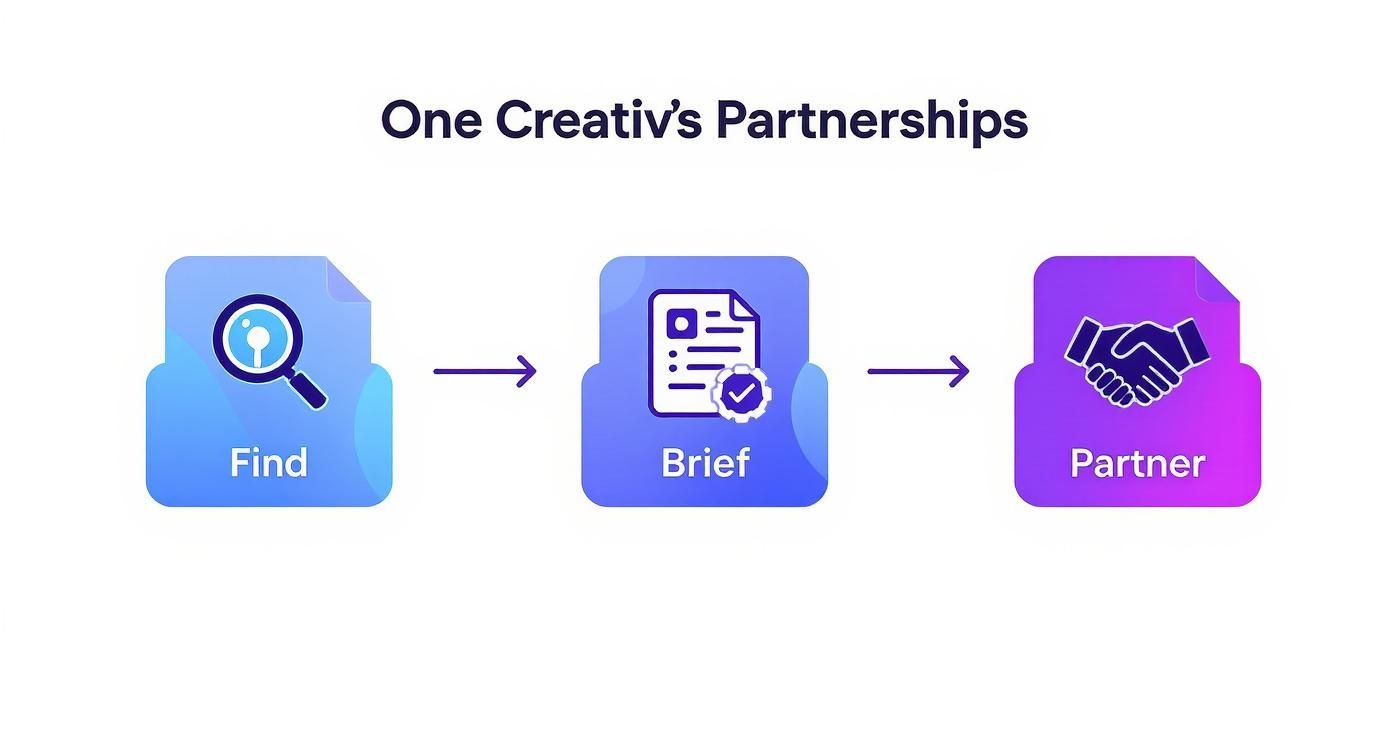
Thinking about your creator partnerships as a structured process—from finding the right people to briefing them effectively—is the key to getting these kinds of results. It’s a deliberate workflow, not just random acts of content.
Mapping Goals to Specific KPIs
Not every UGC campaign has the same objective, so why would you measure them all the same way? A campaign designed to get your brand name out there will have very different metrics for success than one laser-focused on clearing out inventory on your TikTok Shop.
The secret is to decide what winning looks like before you even start. When you match your KPIs to your business goals from day one, you can build a powerful, data-backed story about how UGC is growing your bottom line.
Think about it: if you want to boost brand awareness, you'll be watching things like reach, impressions, and new followers. But if the goal is direct sales, you better be glued to your conversion rates and the revenue pouring in from creator codes.
This is where a clear framework comes in handy. You need a simple way to connect what you want to achieve with how you're going to measure it. The table below is a great starting point for mapping your goals to the right metrics, ensuring you can always prove the tangible value your UGC program brings to the table.
Mapping UGC Goals to Key Performance Indicators
| Campaign Goal | Primary Metric to Track | Secondary Metric | Tool for Measurement |
|---|---|---|---|
| Increase Brand Awareness | Reach and Impressions | Share Count and Follower Growth | TikTok Analytics |
| Drive Direct Sales | Conversion Rate from Affiliate Links | Revenue from Discount Codes | HiveHQ Profit Dashboard |
| Boost Product Credibility | Number of Positive Reviews | Engagement Rate on Testimonials | TikTok Shop Backend |
| Build Community | Number of Submissions | Comments and Mentions | Creator Tracking Platform |
By using a map like this, you move from hoping your UGC works to knowing exactly how and why it does. You’re not just creating content; you’re building a predictable, measurable engine for growth.
The Rules of the Road: Navigating UGC Rights and Disclosures
So you’ve found a fantastic TikTok video from a customer raving about your product. It’s authentic, it’s engaging, and you’re itching to repost it. Before you hit that share button, let's talk about the ground rules.
Using someone's content without their blessing isn't just poor form—it can seriously damage your brand's reputation and even land you in legal hot water. The number one, non-negotiable rule of UGC is this: always get explicit permission.
A customer tagging your brand or using your campaign hashtag is a great sign, but it’s not a blank check. That’s what we call implied consent, and building a marketing strategy on it is like building a house on sand. Solid, long-term relationships with creators are founded on respect, and that starts by asking first.
Getting the Green Light: Proper Permission and Usage Rights
The best way to get permission? Just ask. A friendly, straightforward DM to the creator is often all you need to get the ball rolling.
For more formal or ongoing collaborations, it’s smart to have a simple usage rights agreement in place. This doesn’t have to be a 30-page legal document drafted by a team of lawyers. It just needs to clearly and simply state the terms of your agreement.
Make sure it covers these key points:
- Where will it live? Be specific. Is it just for your TikTok feed? Your website homepage? Paid ads on Meta?
- How long is the lease? Define the timeframe. Are you using it for a 3-month holiday campaign, or do you want rights for a full year?
- Can you tweak it? If you plan on adding your own text, cutting it into a montage, or making other edits, make that clear upfront.
Getting these rights in writing doesn't just cover you legally; it shows creators you respect them and their work. It turns a one-off transaction into a real partnership where everyone wins.
Staying on the Right Side of the FTC
Now, let's talk about transparency. If there's any kind of exchange between you and the creator—whether it's cash, free products, or an affiliate commission—that relationship must be disclosed. The Federal Trade Commission (FTC) has very clear guidelines on this to protect consumers from being misled.
And no, burying a vague #sp or #collab at the end of a long list of hashtags doesn’t cut it. The FTC demands that disclosures be clear and easy to spot.
Here are the gold standards for disclosure hashtags:
- #ad
- #sponsored
- #GiftedBy[YourBrandName]
These need to be placed right at the beginning of the video’s caption where they can’t be missed. Following these rules isn’t just about avoiding a hefty fine. It’s about preserving the very authenticity that makes UGC so incredibly effective in the first place. Your audience will thank you for it.
Scaling Your UGC Strategy for Maximum Growth
So you've dipped your toes into UGC and it’s working. Great. But how do you go from a few good videos here and there to a full-blown content machine that consistently drives sales? The answer isn't just "do more of the same."
To truly scale, you need to ditch the chaotic spreadsheets and endless DMs. It’s time to stop chasing individual creators and start building a predictable, efficient engine for user-generated content that practically runs itself.
Think of it like this: you can't run a professional kitchen using a single hot plate and a notepad. To serve hundreds of customers a night, you need a system—industrial ovens, a proper ordering process, and a team that knows their role. Scaling your UGC program is no different; you need the right tools to manage creator relationships, track performance, and automate the grunt work.
The industry is already moving in this direction, and fast. The global market for UGC platforms was valued at $7.10 billion in 2025 and is on track to explode to $43.87 billion by 2032. This isn't just a trend; it's a fundamental shift in how brands and creators work together. Learn more about the growth of UGC platforms on fortunebusinessinsights.com.
From Manual Chaos to Automated Growth
An all-in-one platform becomes the mission control for your entire UGC operation. Imagine trying to create and track hundreds of unique discount codes for every creator by hand. It's a nightmare. An Affiliate Bot can generate thousands of custom links and codes in an instant, making it dead simple to see exactly who is driving sales.
This kind of automation frees you from the administrative quicksand, letting you focus on the big picture.
The goal of scaling isn't just to do more; it's to build a system that achieves better results with less manual effort. It’s about creating a repeatable process that turns authentic content into predictable revenue.
A Creator Tracker brings all your communication, content approvals, and performance metrics under one roof. No more digging through ancient email threads to see if a creator has posted their video. And when you pair that with a unified Profit Dashboard, you get a live, honest look at your campaign's financial health—from revenue generated to commissions paid out—so you can make smart decisions on the fly.
Ready to build a UGC engine that actually scales? HiveHQ gives TikTok Shop sellers the complete toolkit to make it happen. With our Affiliate Bot, Creator Tracker, and Profit Dashboard, you can automate your outreach, manage everything in one place, and finally measure your true ROI. Start scaling your creator partnerships today with HiveHQ.