Affiliate Program Definition And How It Powers E-Commerce Growth
affiliate program definitionaffiliate marketingtiktok shopcreator partnershipsecommerce marketing
An affiliate program is really just a modern take on a classic referral system. It's a marketing partnership where you pay external partners—we call them affiliates—a commission for sending you customers or sales.
These affiliates promote your products using a unique, trackable link. You only pay them for the results they actually deliver. Simple as that.
What Is An Affiliate Program? A Simple Definition
Let's break it down with an offline example. Imagine you own a popular coffee shop and want more foot traffic. Instead of dropping cash on a billboard, you strike a deal with local tour guides: for every customer they bring in, you give them a small cut of the sale.
The guides start mentioning your shop on their tours, and you only pay them when someone actually buys a latte. That’s the core idea of an Affiliate Program, just brought online.
In the digital world, the tour guides are your affiliates, and your shop is the brand. Instead of a verbal shout-out, affiliates use a special link to promote your products on their blogs, TikTok channels, or newsletters. This low-risk, high-reward approach has become a go-to strategy for e-commerce brands everywhere.
Why Brands Embrace Affiliate Programs
The biggest draw? You pay for performance, not potential. With traditional ads, you pay upfront for clicks or views, crossing your fingers for a return. An affiliate program flips that on its head. You only pay a commission after a sale happens, which makes it an incredibly efficient way to spend your marketing budget.
This model shines on creator-led platforms like TikTok Shop, where genuine recommendations are what truly drive sales. When a creator they trust loves a product, their endorsement acts as powerful social proof that a slick ad just can't match.
It’s no wonder this channel is so popular. Over 80% of brands globally now run affiliate programs, and they account for about 16% of all e-commerce sales in the U.S. alone. These industry findings speak for themselves.
Key Takeaway: An affiliate program turns your biggest fans and creators into a results-driven sales team, letting you scale marketing based on actual sales, not just ad spend.
How The Core Components Of An Affiliate Program Work Together
To really get what an affiliate program is all about, you have to see how all the moving parts fit together. It’s a system that depends on three key players working in sync, all connected by some smart technology.
Think of it as a triangle: the Brand, the Affiliate, and the Customer. Each one plays a critical role in making the whole thing tick.
The Key Players In The Affiliate Ecosystem
At its heart, affiliate marketing is about relationships. Let's break down who does what and why it works.
The Brand: This is you—the company selling a product or service. Your goal is to reach more people and drive sales without just throwing money at ads. You provide the products, handle the orders and customer service, and, of course, pay your partners for the sales they bring in.
The Affiliate: This is your partner—the blogger, TikTok creator, or industry expert with a built-in audience that trusts them. Their goal is to earn an income from their content. They do this by weaving your products into their own content in a way that feels natural and provides real value to their followers.
The Customer: The customer is the most important piece of the puzzle. They're the person who follows the affiliate, trusts their recommendation, clicks the link, and makes a purchase. Without their action, there's no sale and no commission.
When it works well, everyone wins. The brand gets a new customer, the affiliate earns a commission, and the customer finds a great product from a source they already trust. It's a truly symbiotic relationship.
The Technology That Connects Everything
So, how does a brand know a sale came from a specific TikTok video or blog post? That's where the technology comes in. Two pieces are absolutely essential for making sure every referral is tracked and every partner gets paid correctly.
First up is the unique tracking link, which most people just call an affiliate link. Every single affiliate gets their own special URL. When someone clicks it, the link places a tiny file called a cookie on their browser.
That cookie is basically a digital breadcrumb. It tells your website, "Hey, this person was sent here by Affiliate X." This little marker sticks around for a set amount of time (known as the "cookie duration"), so your partner still gets credit even if the customer waits a few days to buy.
The second piece is an affiliate platform. This is the command center for your entire program. This software is what tracks all the clicks, conversions, and commissions in one place, giving both you and your affiliates a clear view of performance. For any brand, solid affiliate program management is impossible without a good platform to automate payments and analyze what’s working. It’s the engine that keeps everything running smoothly and ensures everyone is paid accurately and on time.
How Do Affiliate Commissions And Payment Models Work?
The commission structure is the engine of your affiliate program. It’s what defines how, when, and how much your partners get paid for the business they send your way. Getting this right is critical.
While you've got a few options, one model has become the clear winner for e-commerce and DTC brands, especially in fast-moving spaces like TikTok Shop. Your choice here will directly shape how attractive your program is to potential affiliates and, just as importantly, how profitable it is for you.
Let's quickly look at the basic flow. An affiliate promotes your product, a customer clicks their link and buys something, and you pay the affiliate a commission. Simple, right?
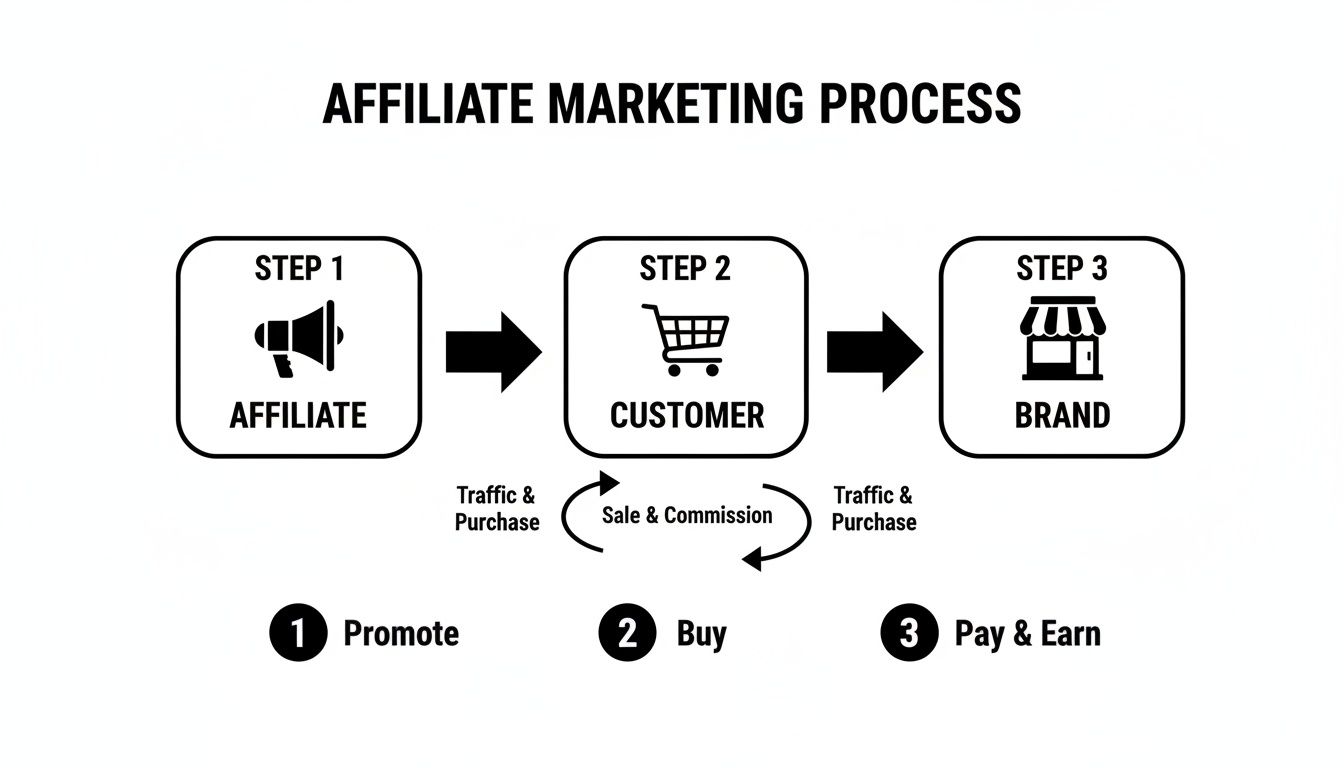
This diagram shows that the affiliate's effort is the first domino to fall, leading directly to a sale and then their payout.
The Most Common Commission Models
Different affiliate actions are valued differently, which is why a few distinct payment models have emerged over the years. Each one rewards a specific outcome and comes with its own level of risk for the brand.
To make sense of it all, here’s a quick breakdown of the most common commission structures you'll encounter.
Comparison Of Common Affiliate Commission Models
| Commission Model | How It Works | Best For | Brand Risk |
|---|---|---|---|
| Pay-Per-Sale (PPS) | The affiliate earns a percentage of the total sale value only when a customer makes a purchase through their unique link. | E-commerce, DTC brands, and any business selling products directly online. | Low |
| Pay-Per-Lead (PPL) | The affiliate is paid a flat fee for each qualified lead they generate, such as a form submission, a free trial signup, or a newsletter subscription. | B2B, SaaS, service-based businesses, and companies with a longer sales cycle. | Medium |
| Pay-Per-Click (PPC) | The affiliate earns a small fee for every visitor who clicks their link and lands on the brand's website, regardless of what happens next. | Large-scale brand awareness campaigns where impressions and traffic are the main goals. | High |
As you can see, each model is built for a different business objective, but for anyone selling physical or digital products, one stands out.
Why Pay-Per-Sale Is King In E-Commerce
For brands on TikTok Shop or running their own DTC store, the Pay-Per-Sale (PPS) model isn't just a good choice—it’s the only one that really makes sense. It creates a perfect partnership where your goals (more sales) are perfectly aligned with your affiliate's motivation (earning commissions).
It’s completely performance-based. You only pay for a sale that's already in the bank. This direct link between marketing spend and revenue makes your budget predictable and your growth scalable.
Key Insight: The Pay-Per-Sale model completely de-risks your marketing investment. You're paying out a percentage of revenue you've already collected, turning a marketing expense into a cost of goods sold.
PPS commission rates can be all over the map, usually landing somewhere between 5% to 30%. This depends on your product margins, what’s standard in your industry, and the affiliate's reach. A software company with almost no fulfillment cost can offer a much higher cut than a brand selling low-margin physical goods.
Payment timing matters, too. Most programs pay out monthly, but making sure those payments are on time is essential for keeping your affiliates happy. Some brands are even exploring a daily payment affiliate program as a competitive advantage to attract top talent who prefer quicker access to their earnings. The goal is to find a sweet spot that keeps your partners motivated while protecting your own cash flow.
Affiliate Programs Vs Influencer Marketing: What Is The Difference
In the creator economy, it’s easy to get "affiliate" and "influencer" mixed up. They both promote products, right? Yes, but how they partner with brands couldn't be more different. Getting this distinction right is crucial for building a creator strategy that actually grows your business.
Think of influencer marketing as a sprint. It’s all about short-term brand awareness. A brand typically pays an influencer a flat fee upfront for a specific package of content—say, one Instagram post and three stories—all delivered within a week. The goal here is to create immediate buzz and get in front of a lot of people, fast.
An affiliate program, however, is a marathon. This is a long-term sales partnership where affiliates are paid a commission after they drive a sale through their unique link or code. The focus isn't just on exposure; it's about generating direct, measurable revenue.
Key Takeaway: Influencer marketing pays for reach (a flat fee for potential eyeballs), while affiliate marketing pays for results (a commission for actual sales).
Goals, Payment, And Relationships
The real contrast between these two approaches shines through when you look at their goals, how people get paid, and the nature of the partnership. One is built for a quick splash, the other for sustainable performance.
To make it crystal clear, let's break down how each model works in the real world.
Key Differences: Affiliate Programs Vs Influencer Campaigns
| Characteristic | Affiliate Program | Influencer Campaign |
|---|---|---|
| Primary Goal | Drive direct sales and trackable revenue over the long term. | Generate immediate brand awareness and social proof in the short term. |
| Payment Structure | Performance-based commission (e.g., a percentage of each sale). | Fee-based payment (a flat fee paid upfront for content creation). |
| Relationship | Long-term, ongoing partnership focused on consistent sales performance. | Short-term, campaign-based collaboration with specific deliverables. |
| Focus Metric | Return on Ad Spend (ROAS), Conversion Rate, Sales Volume. | Reach, Impressions, Engagement Rate, Follower Growth. |
This table shows two distinct paths, but the smartest brands are now finding a way to merge them.
The Hybrid Model: Where Influencers Become Affiliates
The most powerful strategy today often combines the best of both worlds. This is where an influencer, who might start with a typical fee-based campaign, transitions into a long-term affiliate partner. This hybrid model is especially potent for platforms like TikTok Shop.
Here’s a practical look at how it works: A brand might pay an influencer a smaller upfront fee to cover the initial cost of creating content. But from that moment on, the influencer earns a commission on every single sale they drive through their affiliate link.
This approach is a win-win. The creator gets the security of an initial payment, which motivates them to create high-quality content. The brand gets to turn a one-off awareness play into a consistent, performance-driven sales channel. It perfectly aligns everyone's goals around what matters most: generating revenue.
Weighing The Benefits And Drawbacks Of An Affiliate Program
Let's be real: no marketing strategy is a magic bullet, and that goes for affiliate programs too. While they offer a powerful, performance-based way to grow, you have to go in with a clear-eyed view of both the rewards and the realities. The brands that really knock it out of the park understand this balance from day one.
The biggest win is obvious: you pay for results, not just potential. Think about it. With traditional ads, you're paying upfront for clicks or eyeballs, crossing your fingers that they convert. An affiliate program flips that script entirely, making it a pay-for-performance model. This is huge because it fundamentally de-risks your marketing budget, turning a speculative expense into a predictable cost of goods sold.
Beyond the money, affiliates give you incredible market reach and the kind of authentic social proof that ads just can't buy. When a creator you trust recommends a product, it feels like a tip from a friend, not a corporate sales pitch. That genuine endorsement builds brand credibility and opens the door to new, highly engaged audiences you might not have reached otherwise.
Navigating The Potential Challenges
Of course, running a successful affiliate program isn't a "set it and forget it" kind of deal. One of the biggest hurdles is simply the time and effort it takes for dedicated management. You've got to find the right partners, give them the tools they need to succeed, keep a close eye on their performance, and build strong relationships. Without someone actively steering the ship, even the most promising program can stall out.
Another real risk to watch out for is affiliate fraud. This can be anything from partners using shady tactics to get a sale to more sophisticated scams with fake clicks or leads. Having clear terms of service and proactively monitoring for weird activity is absolutely essential to protect both your brand and your budget.
You're essentially entrusting a piece of your brand's reputation to external partners. Ensuring every affiliate's content and promotional methods align with your brand values is an ongoing, but critical, responsibility.
Amplifying Rewards And Minimizing Risks
The good news? These drawbacks are completely manageable if you have the right strategy and tools in your corner. Modern automation platforms were practically built to solve these exact problems. They can help you discover and recruit the right creators, automate all the performance tracking, and even flag suspicious activity to cut down on fraud.
This proactive approach lets you crank up the rewards while keeping the risks in check. And for companies that put in the effort to manage their programs well, the payoff is massive. The affiliate marketing software market is projected to be valued at approximately $2.1 billion in 2025, and for many businesses, this single channel drives an estimated 15-20% of total sales. You can dive deeper into these industry-wide impacts on The Performance Marketing Association.
At the end of the day, a well-run affiliate program is an incredible way to scale your revenue efficiently. By understanding both the bright spots and the potential pitfalls, you can build a program that doesn't just drive sales but also makes your brand stronger in the creator economy.
How To Automate And Scale Your TikTok Shop Affiliate Program

Trying to manage dozens, or even hundreds, of creator partnerships by hand is a recipe for burnout. As your TikTok Shop affiliate program takes off, the day-to-day work—finding creators, sending emails, shipping samples, and tracking who sold what—can easily spiral out of control. This is where you have to move from just understanding the concept to actually putting a scalable system in place.
The real goal here is to build an affiliate engine that’s powerful, efficient, and profitable, all while running mostly on its own. By figuring out where you’re wasting the most time and automating those tasks, you get to focus on the big picture instead of getting lost in spreadsheets.
Pinpointing Common Scaling Bottlenecks
Before you can automate anything, you need to be honest about where things are breaking. Most brands hit a wall when they try to manually handle these four areas:
- Creator Recruitment: It’s a huge time sink. Manually digging through thousands of TikTok profiles to find creators who actually match your brand's vibe is a massive undertaking.
- Personalized Outreach: Generic, copy-pasted DMs are a one-way ticket to being ignored. But writing a unique, personal invitation to hundreds of potential affiliates? That’s just not realistic to do by hand.
- Sample Fulfillment and Follow-Up: Keeping track of who got what product, when it arrived, and if they’ve even posted about it becomes a logistical mess. Fast.
- Performance Tracking and ROI: Trying to manually calculate the GMV, commission payouts, and the actual return on investment for every single affiliate is not only slow but also full of potential errors.
These manual tasks don't just slow you down; they actively cap your program's growth potential.
Introducing Automation As The Solution
This is where specialized tools like HiveHQ come into play. They’re built specifically to smash through these bottlenecks. Instead of just giving you a basic affiliate program definition, these platforms provide the entire framework to run it at a serious scale. Automation transforms your creator management from a chaotic, manual chore into a smooth, streamlined system.
For example, an Affiliate Bot can sift through a massive pool of creators and vet potential partners for you, using filters to find exactly who you need. You can pinpoint affiliates with a proven history of driving sales in your niche, getting you a much better fit right from the start.
Key Insight: Automation isn't about getting rid of the human touch. It’s about clearing out the administrative grunt work so you can invest your time in building stronger, more strategic relationships with your top-performing creators.
This approach lets you run outreach campaigns that feel personal but are sent to thousands of creators at once. You can even set up smart systems that automatically send a content brief when a sample is delivered or nudge a creator with a reminder if a post is late. To make the most of your efforts, it helps to understand the broader strategies to monetize your TikTok account that creators use.
When everything from recruitment to payments is in one place, you get a crystal-clear, real-time picture of your program's ROI. This means you can confidently double down on what’s working, cut what isn’t, and make smart decisions based on data, not guesswork. By automating these core jobs, any brand can build a powerful affiliate engine that drives real, sustainable growth. For a deeper dive, check out our guide on managing affiliate programs effectively.
Common Questions About Affiliate Programs
Alright, we've covered the what and the why. But you probably still have some practical questions about getting an affiliate program off the ground. Let's tackle some of the most common ones I hear from brands.
How Much Does It Cost To Start An Affiliate Program?
This is a great question, and the answer is usually a pleasant surprise. Compared to sinking a ton of cash into traditional ads, starting an affiliate program can be incredibly cost-effective. Your biggest costs aren't upfront; they're tied directly to performance.
Think of it this way. The main expenses are:
- Affiliate Platform Fees: You'll need some software to track clicks, sales, and manage payouts. This is a fixed, predictable cost.
- Commissions: This is your biggest variable cost, but it's a good one to have! You only pay commissions after an affiliate makes a sale for you. No sale, no fee.
- Creative Assets: You might invest some time or a small budget into creating banners, product photos, and swipe copy to make it easier for your affiliates to promote you.
So, while you're not paying affiliates until they drive revenue, you should plan for the software and any creative support you want to provide from the get-go.
How Do I Find The Right Affiliates For My Brand?
Finding partners who genuinely fit your brand's vibe is everything. The goal isn't just to get clicks; it's to build authentic connections. Start by looking for creators whose audience is a dead ringer for your ideal customer. Who are they already following and trusting in your niche?
You can also tap into affiliate networks or platforms designed for creator discovery. These tools let you sift through databases of creators, filtering by their niche, audience size, and past performance. A solid strategy often involves a mix of both: reaching out directly to creators you already love and using discovery tools to unearth hidden gems.
Key Tip: Don't overlook your own backyard. Your best and most authentic affiliates are often your current customers. They already bought and loved your product, so their recommendation comes from a real place. Setting up a simple program to turn happy customers into brand advocates can be pure gold.
Is My Business A Good Fit For An Affiliate Program?
Affiliate programs are a fantastic match for businesses that have a solid product and a smooth online checkout process. If you run an e-commerce store, sell software (SaaS), or offer digital products, you're likely a prime candidate.
To know for sure, ask yourself a few honest questions:
- Are my profit margins healthy enough to handle paying out commissions?
- Is my website easy to use and set up to convert visitors into buyers?
- Do I have the bandwidth to build and maintain relationships with my affiliate partners?
If you're nodding your head "yes" to these, then an affiliate program could be an absolute game-changer for your growth.
How Long Does It Take To See Results?
Here’s where you need to play the long game. Affiliate marketing is about building relationships and trust, not flipping a switch for overnight sales. While you might see a few sales trickle in during the first month, it realistically takes about three to six months to really build momentum and see consistent, meaningful revenue.
That time allows your affiliates to create thoughtful content, for their audience to discover it, and for the trust they've built to translate into sales for you. Focus on steady, sustainable growth and nurturing strong partnerships—that’s the recipe for long-term success.
Ready to stop guessing and start scaling your TikTok Shop affiliate program with data-driven automation? HiveHQ provides the tools you need to discover top creators, automate outreach, and track profitability with unmatched precision. Explore HiveHQ today and build a creator program that drives real results.