Finding Micro Influencers for Your TikTok Shop
finding micro influencerstiktok shop affiliatescreator recruitmentinfluencer outreachecommerce marketing
Finding the right micro-influencers for your TikTok Shop isn't just about chasing follower counts. It’s about finding true partners whose authentic voices can actually drive sales. This strategy is built on genuine audience connection, which is the magic ingredient for building trust and getting the conversions you need to grow your shop.
Why Micro-Influencers Are Your Unfair Advantage
On TikTok Shop, the old playbook of using big-name celebrity endorsements is losing its punch. Today's shoppers are savvy—they crave authenticity and are more likely to trust creators who feel like friends, not paid advertisers. This is where micro-influencers shine. They have smaller, but incredibly dedicated, communities.
That personal connection is the foundation of their power.
When a micro-influencer recommends a product, it lands like a genuine tip from a friend, not a slick, scripted ad. This trust is a massive psychological driver for purchasing decisions. Sure, a macro-influencer's post might rack up millions of views, but a micro-influencer's video often sparks real, meaningful conversations in the comments, which is what actually leads to better conversion rates. To really make this work, you need to get clear on the key differences between Affiliate Marketing vs Influencer Marketing.
The Numbers Don't Lie
This isn't just a hunch; the data shows a huge market shift. A recent analysis revealed that nano and micro-influencers now make up a staggering 87.68% of the entire creator base on TikTok.
And brands are taking notice. About 73% now actively choose to work with micro-tier creators instead of shelling out huge budgets for macro-influencers. They're seeing better results for a fraction of the cost.
I saw this firsthand with a sustainable apparel brand. They partnered with 12 micro-influencers and ended up generating 340% more engagement and 2.8x higher conversion rates than they ever did with just two big-name influencers. The efficiency is undeniable.
Authenticity That Actually Sells on TikTok
The image below captures the essence of what makes this strategy so effective: a creator making real, relatable video content.
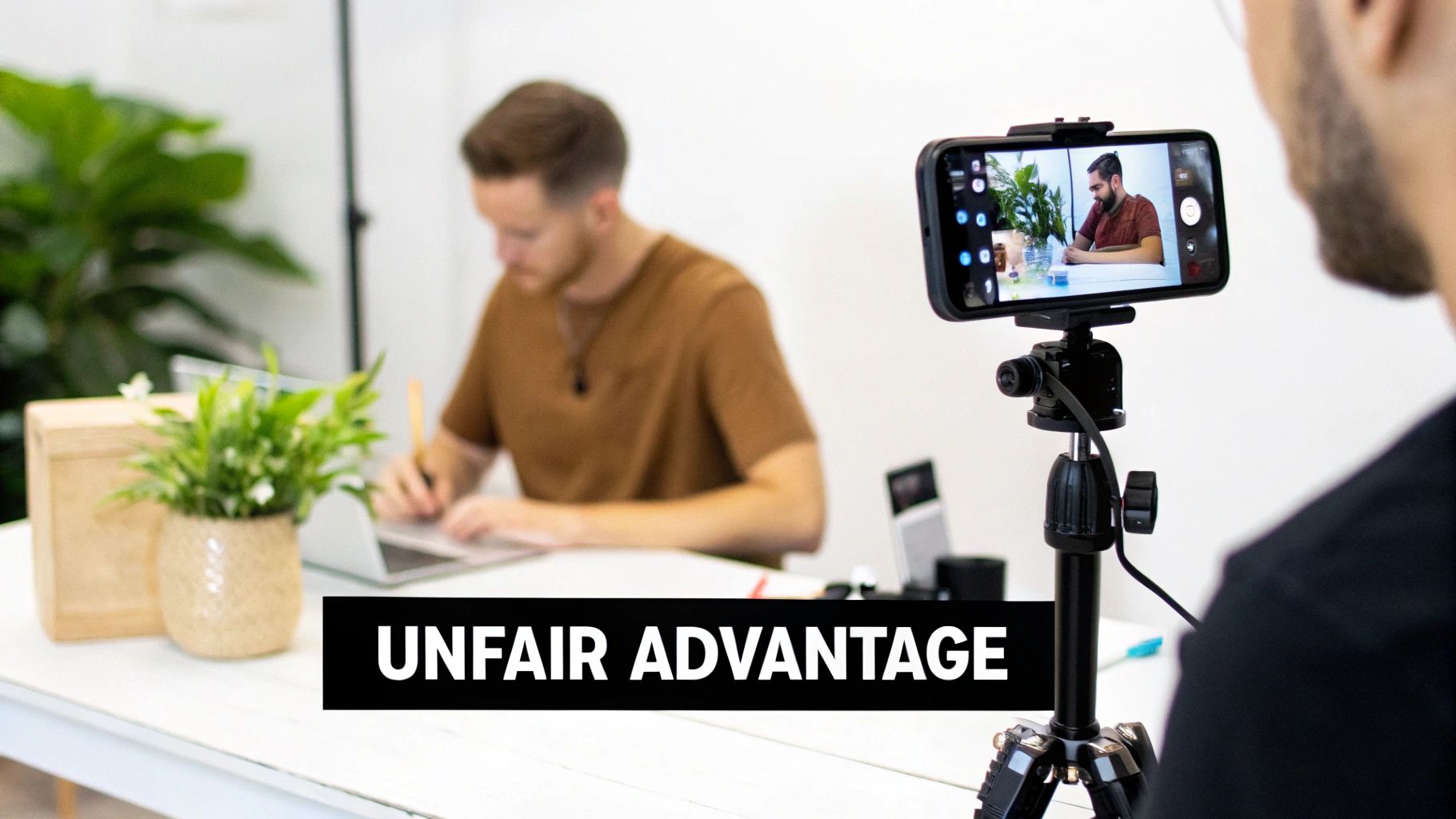
This kind of simple, honest setup is exactly what allows micro-creators to produce content that feels native to TikTok. It doesn't scream "advertisement," and that's precisely why it works so well to drive genuine interest and, ultimately, sales.
Where to Find Your Next Top Affiliates
Let's get straight to it. Building a solid pipeline of high-potential micro-influencers is the bedrock of any successful affiliate program. Forget the generic advice about endlessly scrolling through hashtags; a smarter, more targeted approach will save you a ton of time and land you much better partners.
Your search should always begin where your customers are hanging out: on TikTok. The platform's own search bar is surprisingly effective if you know how to wield it. Instead of just plugging in broad terms like #skincare, get granular. Think like your customer and use the long-tail keywords they would, like #sensitiveskinroutine or #acneproneproducts. This immediately surfaces creators who are already specialists and trusted voices in your specific niche.
Beyond just keywords, the official TikTok Creator Marketplace is another good starting point. It has some decent filters for niche, follower count, and audience demographics. But honestly, the real gold is usually found by looking at what’s already working for your direct competitors.
Reverse Engineer Your Competitors' Success
Don't just make a list of who your competitors are working with—dig deeper to see who is actually performing for them. Find a few of their affiliate videos that are clearly doing well and put the creator under a microscope.
- What's their content style? Are they funny? Do they create tutorials? Are their videos raw, authentic testimonials?
- How’s the engagement? Read the comments. Are people just saying "love this!" or are they asking specific questions about the product? Genuine product interest is the signal you’re looking for.
- Is their audience your audience? While tools can help with this, a quick manual check of their followers and the people commenting will give you a pretty solid gut feeling.
This tactic hands you a pre-vetted list of creators. They’ve already proven they can get results for a product just like yours.
The secret is to find creators who are just one step ahead of your brand but still feel accessible. If someone is already successfully promoting a similar product, they've warmed up an audience that's perfect for your offer. You're not reinventing the wheel—you're just finding a better car to put it on.
Look for Your Existing Brand Fans
Some of your best future affiliates are probably already talking about you. It's time to scour your tagged posts, mentions, and even the comments section. Look for creators who are posting about your products simply because they love them, with no financial incentive.
These are your true brand advocates. Their passion is real, and any content they create for you will feel incredibly authentic to their audience. They’ve already done half the work for you. Reaching out with a formal affiliate offer is often the easiest "yes" you'll get. To learn more about building this network, check out our guide on creating a TikTok influencer database.
For a more comprehensive look at performance-based partnerships, this guide on affiliate marketing is a fantastic resource. It’ll help you grasp the details of structuring a program that genuinely motivates creators to drive sales. By blending these different methods—smart native search, competitor sleuthing, and nurturing your existing fans—you create a powerful, multi-channel strategy for finding the micro-influencers who will become your biggest assets.
How to Vet Creators and Spot Red Flags
Finding a long list of potential creators is just the starting line. The real work—the part that separates a winning campaign from a wasted one—is the vetting process. Spending a few minutes digging into a creator's profile now can save you from a partnership that eats up your budget and delivers nothing.
Your job here is to look past the shiny, surface-level numbers. A creator with 20,000 followers might seem like a great find, but if most of those followers are bots or completely disengaged, you're just paying to talk to an empty room. You need to put on your detective hat and look for the clues that reveal the true health and influence of a creator’s community.
This decision tree gives you a bird's-eye view of the different paths you can take to source affiliates. It all starts here, before you dive deep into vetting.
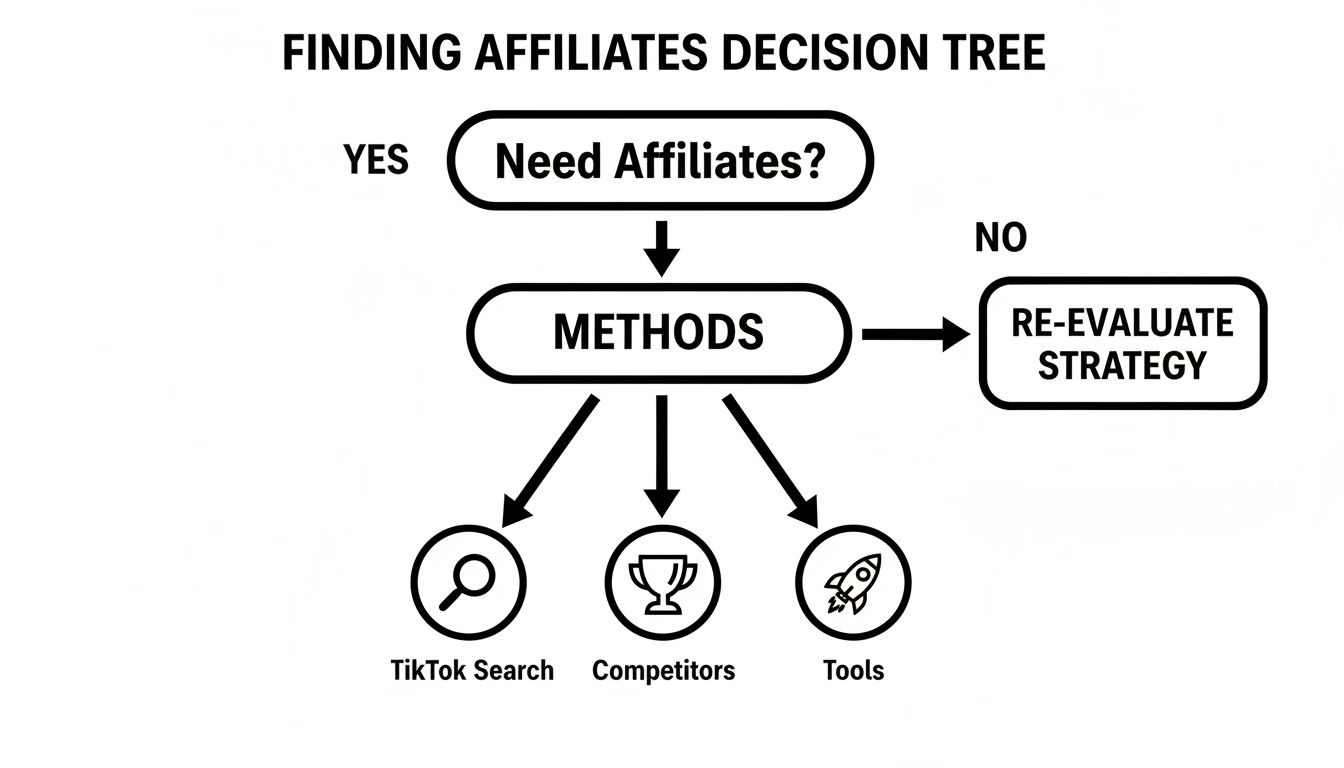
Whether you’re scrolling through TikTok’s search results or analyzing a competitor’s top affiliates, the next move is always a meticulous quality check.
Look Beyond the Engagement Rate
An engagement rate is a decent starting point, but that number alone tells you almost nothing. A "good" rate on TikTok is often considered anything over 8%, but this metric can be easily manipulated. The real story is in the quality of that engagement.
Don't just glance at the comments on their recent videos—read them. Pay special attention to sponsored posts. Are the comments full of generic, one-word replies like "nice" or a long string of fire emojis? That’s often a sign of bot activity or, at best, a very low-quality audience.
The gold is in the details. Look for comments where people are asking specific questions about the product, tagging their friends, or sharing their own related experiences. That's genuine purchase intent, and it’s the clearest sign that a creator has built real trust with their followers.
Spotting Fake Followers and Bot Activity
Fake followers are the silent killer of influencer marketing. A creator might have bought followers to pad their stats, meaning your message is being sent out into the void, never to reach a real person.
Here are a few tell-tale signs of a bogus following:
- Sudden Follower Spikes: A sudden, massive jump in followers without a viral video to back it up is highly suspicious.
- Empty Follower Profiles: Click on a random sample of their followers. Are they real people with profile pictures, bios, and their own content? Or are they blank accounts with a string of numbers for a username?
- Mismatched Comments: If a video is a detailed review of a skincare product but the comments are full of generic praise like "Great post!" or "So cool!", it’s a huge red flag.
Evaluate Content Quality and Brand Fit
Finally, take a step back and look at their entire content library. Does their aesthetic, video style, and personality actually align with your brand? A creator who only posts chaotic comedy skits probably isn't the right partner for a high-end, minimalist home goods brand, no matter how high their engagement is.
Check out their past brand deals. Have they worked with brands that are in a similar niche or price range? If their feed is full of promotions for cheap, dropshipped products, it might mean they’re more interested in a quick paycheck than authentic endorsements. That can damage their credibility—and yours by association. The best micro-influencers are selective about who they partner with, and that's a great sign for you.
To help you keep track, here’s a quick reference table for the most important vetting metrics.
Key Vetting Metrics for Micro-Influencers
| Metric/Filter | What to Look For | Red Flag |
|---|---|---|
| Engagement Quality | Comments with questions, friend tags, and real conversation. | Generic comments ("nice," "cool," emojis only) or spam. |
| Follower Demographics | Audience seems to align with your target customer. | Random, empty, or international profiles with no clear theme. |
| Follower Growth Pattern | Steady, organic growth over time, with occasional spikes from viral content. | Abrupt, massive follower jumps with no corresponding viral video. |
| Content Authenticity | A genuine, personal style that feels unscripted and trustworthy. | Overly polished, corporate-style content that lacks personality. |
| Brand Alignment | Past partnerships with brands in a similar niche or with a similar ethos. | A history of promoting low-quality or scammy-looking products. |
| Video Performance | Consistent view counts across non-sponsored videos. | A few viral hits surrounded by dozens of videos with very low views. |
Think of this table as your pre-flight checklist. Running a creator through these points before you even think about reaching out will filter out 90% of the partnerships that would have gone nowhere, saving you a massive amount of time and money.
Crafting Outreach That Actually Gets a Reply
You've done the legwork—you've found and vetted a list of fantastic micro-influencers who feel like a perfect match. Now comes the moment of truth: the first contact.
Here's a dose of reality: the best creators are absolutely swamped with generic, low-effort DMs every single day. If your message sounds like it was copied and pasted to a hundred other people, it's getting deleted without a second thought.
To stand out, your outreach has to feel personal, professional, and valuable from the very first word. This isn't just about making a request; it's about starting a real relationship. Forget mass messaging and think of it as extending a personal invitation to a potential business partner.
Personalize Beyond Just Their Name
Just dropping a creator's first name into a template isn't going to cut it anymore. The bar for personalization is much higher now. You have to prove you've actually watched their videos and understand what makes them tick.
Generic compliments like "I love your content!" are totally meaningless. They hear it all the time.
Instead, get specific. Mention a particular video, a joke that made you laugh, or a review they posted that genuinely caught your attention. This tiny bit of effort instantly shows you see them as an individual creator, not just another name on a spreadsheet.
For example, a great opening line could be something like:
- "Your recent video on sustainable kitchen swaps was brilliant—especially the tip about beeswax wraps. We noticed you're passionate about eco-friendly products..."
This immediately builds a bridge and shows you've done your homework. It frames the conversation around a shared interest, making your product pitch feel like a natural next step for their content.
Your goal is to make the creator feel seen and understood. The more your message reflects their specific style and audience, the more they'll believe a partnership with your brand is a genuinely good fit.
Structure Your Offer with Absolute Clarity
Once you've broken the ice with a personal touch, get straight to the point. Creators are running a business, and they appreciate proposals that are clear, concise, and respect their time. Vague DMs like "let's collab!" are a huge turn-off.
Your message should clearly lay out the key parts of the potential partnership:
- The "What": Briefly introduce your brand and the exact product you want them to feature.
- The "Why": Explain why you think their audience, specifically, would love this product. Connect it back to their content.
- The "How": Be upfront about the collaboration model. Is it a commission-based affiliate deal? Are you just sending a free product? A hybrid?
- The "Next Step": End with a simple, low-pressure call to action. Asking if they'd be open to receiving a sample is a great, easy "yes."
This structure removes all the guesswork and shows that you're a professional and organized brand. You're not just asking for a shoutout; you're presenting a legitimate business opportunity. For more ideas, our guide on influencer outreach email templates offers several examples you can adapt.
Scale Your Outreach Without Sounding Like a Robot
Okay, let's be real. Manually personalizing hundreds of messages is a recipe for burnout. This is where smart automation becomes your best friend.
Tools like HiveHQ’s Affiliate Bot let you build customized message templates that automatically pull in specific details for each creator. You can even set up automated follow-up sequences that trigger based on certain actions, like when a sample gets delivered.
This ensures you’re staying in touch consistently without having to manage every single message by hand. The trick is to blend this automated efficiency with those moments of genuine, personal interaction. It’s how you get the power to scale your affiliate program to dozens, or even hundreds, of creators at once.
Measuring Performance and True ROI
You’ve found some great micro-influencers and they’re posting content. That's a huge step, but the job is far from over. Honestly, this is where the real work begins. To build an affiliate program that actually makes you money, you have to look past the flashy numbers like views and likes and focus on what truly impacts your bottom line.
Success on TikTok Shop isn't about going viral; it's about generating sales. Period. This means you need a bulletproof system for tracking performance and figuring out your actual return on investment. From here on out, every decision you make should be based on cold, hard data, not just a gut feeling about who’s doing well.
Moving Beyond Vanity Metrics
The only numbers that should keep you up at night are Gross Merchandise Value (GMV), conversion rates, and your cost per acquisition. These are the metrics that tell you if your influencer program is a money-maker or a money pit. Your number one priority has to be tying every single sale back to the specific creator who made it happen.
This is non-negotiable, and it means you have to be diligent with TikTok Shop's backend tools and unique affiliate links. Every creator needs their own tracked link. Without it, when a customer buys from their video, you have no idea who gets the credit. You’re just flying blind, and you can't optimize what you can't measure.
Don't fall into the trap of rewarding creators based on video views alone. I've seen creators with 500,000 views drive zero sales, while a creator with just 10,000 views on a highly-targeted video drives thousands in GMV. The only metric that matters is the one that puts money in your bank account.
Centralizing Data for Clear Insights
Trying to manually download reports from TikTok and stitch them together in a spreadsheet is a nightmare. It’s slow, tedious, and a surefire way to make mistakes. This is exactly why integrated tools are a game-changer for any serious seller. A centralized dashboard pulls all your important data into one spot, giving you a clear, immediate picture of your program’s health.
This is precisely what platforms like HiveHQ’s Creator Tracker and Profit Dashboard were built for. They automatically sync performance data for every affiliate, so you can see exactly how much GMV each person is bringing in without lifting a finger.
Having all your data in one place lets you instantly spot your top performers and identify those who aren't quite hitting the mark.
This clarity is what separates the pros from the amateurs. You can see which creators are your true superstars and double down on those relationships. Maybe that means offering them a higher commission rate, giving them exclusive access to new products, or even bringing them on for a longer-term partnership.
On the flip side, you can also see who's underperforming. You can then decide if it's worth coaching them with new creative ideas or if it's time to part ways. Truly understanding the ROI on influencer marketing is the secret to scaling your program effectively. This constant loop of tracking, analyzing, and optimizing is how you build a powerful, profitable affiliate engine for your TikTok Shop.
Answering Your Top Questions About Micro-Influencers
Even the best-laid plans run into questions once you start putting them into practice. As you dive into building your micro-influencer program, a few common uncertainties always seem to pop up. Let's tackle the ones we hear most often from TikTok Shop sellers.
How Many Micro-Influencers Should I Start With?
It's tempting to want to recruit a huge army of creators right away, but that's usually a mistake. Instead of fixating on a big number, think about what you can realistically manage right now.
My advice? Start small. Really small. Bring on a dedicated group of 5-10 creators to begin with. This isn't about limiting your growth; it's about perfecting your system. This first group is your sandbox for figuring out what works—from how you onboard them to how you brief them on content and, most importantly, how you measure success.
Once you’ve built a smooth, repeatable process with this initial cohort and can point to a clear ROI, that’s your green light to scale. And that’s when automation tools become your best friend, helping you manage a much larger team without letting the quality of your relationships slip.
What’s a Fair Commission Rate on TikTok Shop?
This is the million-dollar question, isn't it? The sweet spot for TikTok Shop affiliate commissions usually lands somewhere between 10% and 20%. Where you fall in that range really comes down to your product margins and the creator you’re working with.
Here’s a simple way to think about it:
- For products with lower margins: A 10-12% commission is a perfectly reasonable starting point.
- For higher-margin items (or top-tier creators): Bumping that up to 15-20% makes your offer much more competitive and gives your best partners a real reason to prioritize your products.
A great strategy is to start everyone at a standard rate—say, 15%—and then introduce performance tiers. If a creator is consistently crushing their sales goals, reward them with a higher commission. It’s a powerful way to keep your top performers motivated and show them they're a valued part of your team.
For micro-influencers, a commission-only or product-seeding deal is the name of the game. It’s a win-win. They get free products and earn money when they drive sales, and you only pay for actual results. This performance-based model keeps your upfront risk incredibly low while rewarding the creators who genuinely move the needle.
Should I Pay a Flat Fee on Top of Commission?
For most micro-influencers, a commission-only model works beautifully. It's the industry standard for a reason.
However, there are times when offering a small flat fee plus commission can be a smart move. Think of it as a tool to lock in a creator who has a stellar track record and a super-engaged, niche audience that’s a perfect fit for your brand. If you decide to go this route, you have to be disciplined about tracking the ROI on that fee. Make sure it's an investment that pays for itself, not just another marketing cost.
Ready to stop guessing and start scaling? With HiveHQ, you can automate your outreach, track every sale, and get the data you need to build a profitable affiliate program on TikTok Shop. See how it works at hivehq.ai.