Your Guide to Using a TikTok Influencer Database for E-commerce
tiktok influencer databasetiktok shopcreator marketingecommerce growthinfluencer outreach
At its core, a TikTok influencer database is a software platform that gathers creator profiles, performance data, and audience analytics all in one place. This allows brands to find and recruit partners without all the usual headaches. Think of it less like a spreadsheet and more like a super-smart search engine or CRM built just for TikTok creators. It’s the tool that helps you move beyond one-off collaborations and actually scale an affiliate program.
Why a Database Is a Non-Negotiable Tool
Imagine trying to find the perfect new hire for your company by manually sifting through every single social media profile in the country. It sounds absurd, right? Incredibly chaotic, inefficient, and basically impossible.
Well, that's exactly what trying to find good TikTok Shop affiliates feels like without a proper database. With over 100,000 influencers on the platform, manual searching isn't just difficult—it's a fundamentally broken strategy.
A TikTok influencer database brings order to that chaos, creating a structured, data-driven workflow. This is so much more than a static list of names. A real database is a living, breathing platform that’s constantly being updated with the information you actually need.
From Static Lists to Dynamic Strategy
The big difference between a simple list and a database comes down to functionality and the depth of the data. A spreadsheet might tell you a creator's name and maybe their follower count. A database, on the other hand, gives you the context you need to make smart, profitable decisions.
So, what should you expect from a quality database?
- Performance Metrics: Real-time data on things like engagement rates, average video views, and how their recent content is performing.
- Audience Demographics: Actual insights into a creator’s followers—their age, gender, and where they live.
- Contact Information: Verified email addresses and links to social profiles so you can actually reach out.
- Advanced Filtering: The power to search by niche, follower count, audience location, keywords in their bio, and so much more.
This kind of detail solves the biggest problem for e-commerce brands: finding partners who are actually a good fit for your brand, and doing it efficiently. Instead of just guessing, you can plug in your exact criteria and instantly get a curated list of high-potential affiliates. For anyone exploring strategies for growing an e-commerce business, seeing how a database fits into that plan is a game-changer.
A TikTok influencer database isn't just a list; it’s a strategic tool. It turns the overwhelming scale of TikTok into a manageable and profitable channel by replacing manual guesswork with data-backed precision.
By centralizing all this creator data, a database makes the massive world of TikTok feel a whole lot smaller and more accessible. It’s the foundational tool that lets brands shift from one-off partnerships to building a predictable, scalable affiliate revenue stream. It's a similar concept to a creator marketplace, but a database gives you direct control over your own sourcing and outreach.
Looking Under The Hood: How To Read Creator Data
Finding the right creator for TikTok Shop is about so much more than just a big follower count. Let's be honest, a huge audience doesn't mean much if no one is actually listening or, more importantly, buying. A good TikTok influencer database lets you get past those flashy "vanity metrics" and dig into the data that actually points to sales potential.
Think of it like being a talent scout. You wouldn't sign an athlete just because they're tall, right? You'd look at their stats, their consistency, and how they connect with the team. It's the same idea here—you need to look at both the hard numbers and the softer signals to find a creator who can actually move the needle.
The Numbers Game: Quantitative Metrics
First, let's talk about the hard data. These are the numbers that give you a baseline understanding of a creator's reach and the health of their audience.
- Engagement Rate: This is your holy grail metric. It's the percentage of an audience that actively likes, comments, and shares a creator's content. A high engagement rate is a huge green flag, showing that the audience is genuinely invested and trusts what the creator has to say.
- Average Video Views: Don't get distracted by a one-hit-wonder viral video. You want to see what a creator's typical video gets for views. Consistency here tells you that they can reliably get your product in front of a solid number of people.
- Audience Demographics: This is where you find out who's really watching. A database can show you the age, gender, and location of a creator's followers, so you can make sure you're not trying to sell anti-aging cream to a bunch of 16-year-olds.
To get a clear, unbiased view, a TikTok Engagement Rate Calculator can be a great tool. It helps you compare apples to apples when you're looking at multiple creators.
The Vibe Check: Qualitative Signals
Numbers only tell half the story. The other half is about brand fit—the "vibe," if you will. This is where you go from being a data analyst to a detective, figuring out if a creator’s personality and community truly align with your brand.
A creator with 10,000 die-hard, niche followers who hang on their every word is infinitely more valuable for sales than a creator with 100,000 passive followers who just scroll on by. It's all about quality over quantity.
Here’s what to look for:
- Content Niche and Style: Is their content funny, educational, or super aesthetic? Does that style mesh with your brand? A weird mismatch can come across as forced and turn off their audience instantly.
- Audience Sentiment: The comments section is a goldmine. Are people positive and supportive? Are they asking smart questions? This is how you gauge the real health of the community.
- Previous Partnerships: Take a look at other brands they've worked with. If they’ve been promoting sketchy drop-shipped junk, that's a massive red flag. You can also get a deeper look at audience data by using visualization techniques, like we cover in our guide on how to make a heat map.
To make it more concrete, let's break down the key data points you should be looking at when you're scrolling through a database.
Key Creator Metrics At-a-Glance
| Metric Category | Data Point | Why It Matters for TikTok Shop |
|---|---|---|
| Performance Data | Engagement Rate | The #1 indicator of audience trust and likelihood to act on a recommendation. |
| Performance Data | Average Video Views | Shows consistent reach, not just a one-time viral spike. You want reliable exposure. |
| Audience Insights | Follower Demographics | Ensures you're reaching your ideal customer (age, gender, location). |
| Audience Insights | Audience Sentiment | Reveals the health and loyalty of the community. Positive comments mean a receptive audience. |
| Content Alignment | Content Niche & Style | Guarantees their content feels like a natural home for your product, making the promotion feel authentic. |
| Brand Safety | Past Brand Collaborations | Helps you vet their professionalism and ensure they haven't worked with low-quality or off-brand companies. |
Ultimately, putting all these pieces together is what leads to a successful partnership.
Imagine a high-end skincare brand trying to pick a partner. Creator A has 150,000 followers, but their engagement is low and they promote everything from phone cases to gas station snacks. Creator B only has 20,000 followers, but 90% of their audience are women aged 25-34 in the US, their comments are full of skincare questions, and their engagement rate is fantastic.
It’s a no-brainer. Creator B is the clear winner. Their audience is primed and ready to buy. This is the power of a good database—it helps you look past the noise and find the partners who will genuinely build trust and drive sales for your brand.
Finding and Recruiting TikTok Affiliates at Scale
Let's be honest: scrolling through your "For You" page, hoping to magically discover the perfect creator for your brand, isn't a strategy. It's a lottery ticket. For brands that are serious about growth, manual sourcing is a dead end.
To build a real affiliate army, you need a system—a repeatable, scalable process. And that system always starts with a top-notch TikTok influencer database. This is how you shift from passively hoping for the best to proactively hunting for the perfect partners. You’re turning an overwhelming ocean of creators into a curated pool of high-potential candidates who are a dead-on match for your brand.
The growth here is staggering. The platform is now home to more than 100,000 influencers with at least 1,000 followers. For anyone selling on TikTok Shop, this is a massive opportunity, but it's also a huge challenge. The sheer volume makes a powerful database absolutely essential. Check out these TikTok statistics from Buffer to get a sense of just how big this playground has become.
Define Your Ideal Creator Persona
Before you even think about logging into a database, you need to do the most important work first: figure out exactly who you're looking for. Without a clear target, you'll just be swimming in circles, wasting hours on profiles that will never convert. This target is your Ideal Creator Persona (ICP).
Think of your ICP as the compass for your entire recruitment effort. It guides every filter you set and every profile you analyze, making sure you're always heading in the right direction.
Get specific and ask yourself:
- Niche Alignment: What do they actually talk about? For a skincare brand, this isn't just "beauty." It might be "acne-positive routines," "clean ingredients," or "advice from a dermatologist's perspective."
- Audience Demographics: Who's watching their videos? You need to know the age, gender, and location of their followers to ensure it lines up with your customer base.
- Content Style: What's their vibe? Is it super polished and professional, or is it more raw, funny, and authentic? It has to feel like a natural fit for your brand's own voice.
- Engagement Level: Are you after micro-influencers with small but fiercely loyal communities, or do you need the massive reach of a bigger creator?
Once you have this picture crystal clear in your mind, you can use a database to instantly slice through millions of creators and get a shortlist of your top prospects.
Master Advanced Database Filters
A great TikTok influencer database is all about the filters. They’re what let you take your ICP and execute a search with surgical precision. Forget a vague search for "beauty creators"—it's time to layer on filters to find exactly who you need.
This is the core of smart creator analysis: you're looking at their metrics, their niche, and their content all at once.
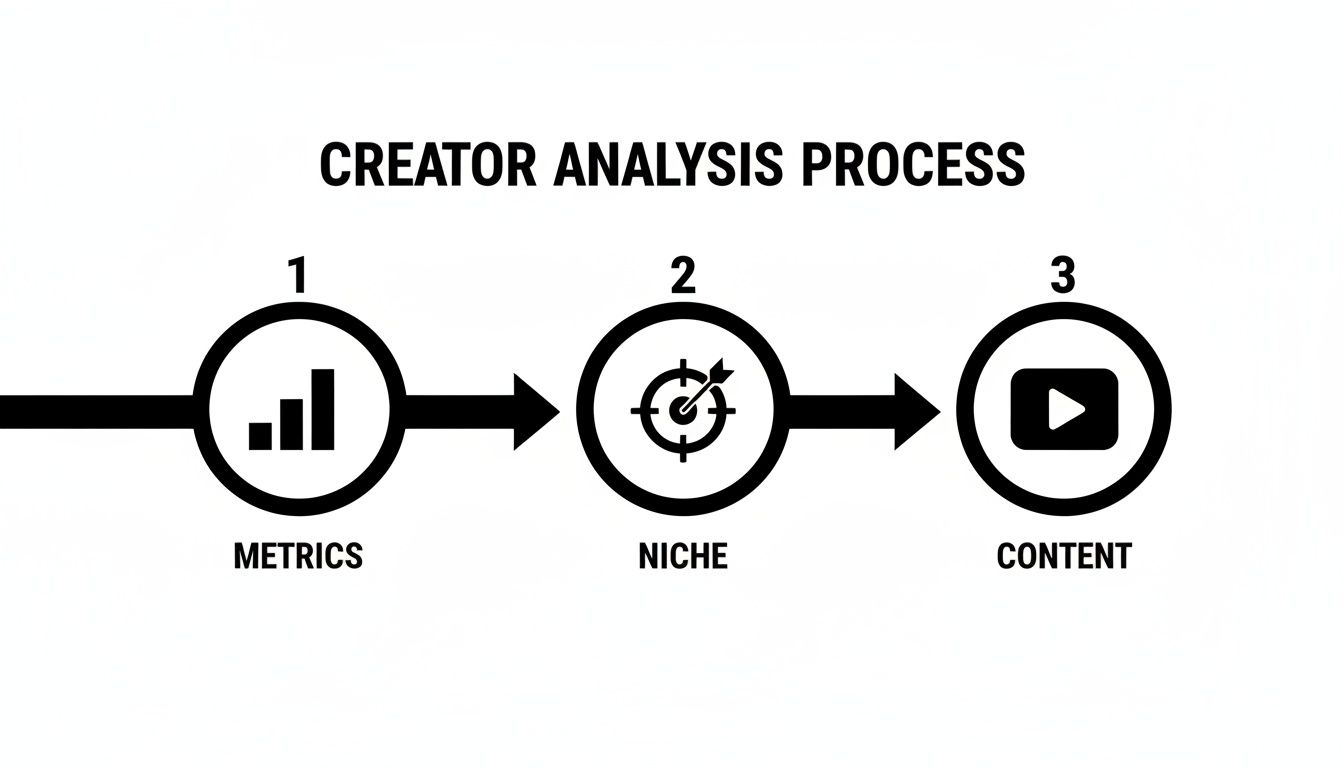
This process shows how the best partnerships come from a mix of hard data (quantitative) and brand fit (qualitative).
Here are a few of the advanced filters you should be using:
- Keyword and Bio Search: Zero in on creators who mention specific terms like "vegan," "gamer," or "mom life" right in their bio.
- Audience Location: Target creators whose followers are primarily in your key sales markets, like the US or UK.
- Performance Metrics: Filter out the noise by setting minimums for engagement rates or average video views.
- Hashtag Usage: Find influencers who are already active in your space by searching for relevant hashtags.
When you start combining these filters, the database stops being a simple directory and becomes a powerful recruitment engine.
Automate Outreach and Fill Your Pipeline
Okay, so you’ve found a list of amazing creators. Now what? The real bottleneck for most brands is the outreach. Sending one-off DMs and emails just doesn’t scale. This is where automation changes everything.
The goal isn't just to find creators—it's to build a continuous, automated pipeline that consistently brings new, high-quality affiliates into your program without constant manual effort.
Modern platforms let you put this entire process on autopilot. You can create personalized message templates that automatically pull in a creator's name and other details, so every message feels like it was written just for them. This means you can reach out to hundreds of ideal creators a day, not just a handful. Our guide on affiliate marketing for TikTok dives deeper into the strategies for setting up a program that works.
With a high-volume, targeted approach, your partnership pipeline will never run dry. As some creators move on, you'll always have a fresh stream of vetted candidates ready to jump in. That's how you build a resilient, ever-growing army of brand advocates who drive real sales on TikTok Shop.
How to Vet Creators and Avoid Common Red Flags
The numbers in a TikTok influencer database can paint a pretty convincing picture. You see high engagement, a perfect audience match, and steady views—it all looks fantastic on paper. But data alone doesn't tell the whole story, and it certainly doesn't guarantee a successful partnership. The last, and most critical, step is a qualitative gut check to make sure the creator is a genuine, safe, and effective voice for your brand.
Think of it like this: the database gets you to the final round of interviews, but this manual vetting process is the interview. It's where you look past the resume to see if there's real character, authenticity, and a true brand fit. Skipping this step is like hiring someone without ever speaking to them—a gamble that can waste your time, your money, and even damage your brand's reputation.
This hands-on audit is what protects your budget and ensures your partnerships are built on a solid foundation of trust.
Spotting Inauthentic Engagement
One of the biggest traps you can fall into is partnering with a creator whose metrics are puffed up by fake followers or bots. Their numbers might look amazing in a database, but the engagement is hollow and won't drive any real sales. Thankfully, the signs are usually pretty obvious once you know what to look for.
Your best friend here is a quick scroll through their comments section. Be on the lookout for red flags like:
- Generic Comments: Is the feed flooded with one-word comments like "Nice," "Cool," or just a string of fire emojis? Real, invested followers leave thoughtful comments and ask questions related to the video.
- Mismatched Profiles: Take a second and click on a few of the profiles leaving comments. If you find accounts with no posts, zero followers, and a generic username full of numbers, you're almost certainly looking at bots.
- Repetitive Phrases: See the exact same comment posted over and over by different accounts? That's a dead giveaway of an inauthentic engagement pod or a bot network at work.
Auditing Content for Quality and Consistency
Next up, you need to put on your content critic hat for a few minutes. A creator’s recent feed tells you everything you need to know about their current standards, their bond with their audience, and their overall professionalism. A single viral video from six months ago means very little if their content quality has fallen off a cliff since then.
Your content audit can be a simple, three-point check of their last 10-15 posts:
- Assess Production Value: Is the video and audio quality up to your brand's standards? If their quality is all over the place, it suggests a lack of professionalism that might spill over into your campaign.
- Evaluate Audience Connection: How do they actually interact with their community? You want to see creators who are in the trenches replying to comments and genuinely engaging with their followers. That’s a sign of a loyal audience that trusts their recommendations.
- Review Past Partnerships: Have they promoted a lot of low-quality, drop-shipped products in the past? A creator who will shill for just about anything probably doesn't have the credibility needed to sell your product effectively.
An authentic creator's feed tells a consistent story. If their content quality, tone, and audience interaction feel erratic, it’s a warning that your brand partnership could be just as unpredictable.
This manual check is your final line of defense against a bad partnership. It takes the data you found in the TikTok influencer database and confirms that the creator isn't just a good fit on paper, but the right partner in practice. Taking an extra 15-20 minutes to do this for each potential creator is a tiny investment that prevents huge headaches and protects the integrity of your brand.
Structuring Creator Partnerships for Success
Finding the right creator for your brand is a huge win, but it's really just the starting line. The real magic happens when you build a partnership that’s clear, motivating, and designed from the ground up to actually drive sales. Without a solid framework, even the most promising collaboration can fall flat.
Think of it like building a house. You wouldn't just start throwing up walls without a blueprint. A well-structured partnership is your blueprint for success, outlining exactly what everyone is responsible for and what the end goal looks like. And for TikTok Shop, that goal is almost always turning authentic content into measurable revenue.
This means we have to move past old-school payment models and get serious about structures that directly tie a creator's pay to their performance.
Choosing the Right Compensation Model
The best partnerships on TikTok Shop are built on shared success. While flat-fee payments have their place, a commission-based structure is usually the smartest way to align your goals with a creator's incentives. When a creator earns a percentage of every sale they drive, their focus shifts from just posting a video to creating content that genuinely converts.
This performance-based approach creates a powerful win-win. You only pay for actual results, which minimizes your upfront risk, while the creator has unlimited earning potential tied directly to how well their content lands with their audience.
Here are the most common compensation structures we see for TikTok Shop affiliates:
- Commission-Only: The creator earns a percentage of the revenue from their unique affiliate link or code. This is perfect for scaling a program with lots of creators because it carries zero financial risk.
- Commission + Flat Fee: This is a hybrid model. You pay a smaller upfront fee to secure the creator's time and supplement it with a commission on sales. It’s a great way to attract more established creators who might be hesitant to work purely on performance.
- Commission + Free Product: A very popular model where the creator gets free products to feature, plus a commission on any sales they generate. It's a cost-effective way to get your product into the hands of many creators at once.
The key is to find a model that fits your budget while still being a compelling offer for the talent you want to attract. A pure commission structure makes your program scalable and financially sound.
Knowing the going rate for partnerships is also critical. Luckily, pricing for TikTok influencers has become more predictable. For example, nano-influencers with 1K-10K followers might charge $50-$300 per post. On the other end, macro-influencers with over 500K followers can command $5,000-$20,000 or more for a single video. You can dive deeper into these influencer tiers and pricing in this 2026 guide on TikTok partnerships.
Crafting the Perfect Creator Brief
Once you've settled on compensation, the next step is providing a crystal-clear creator brief. This document is your campaign's single source of truth—it eliminates guesswork and ensures the final video is exactly what you envisioned. A vague brief leads to off-brand content, but a detailed one empowers the creator to do their best work.
Your brief should be thorough but not a straightjacket. You want to provide clear guardrails while giving the creator enough freedom to be authentic. After all, that's why you hired them.
Essential Elements of a Strong Creator Brief:
- Key Talking Points: Give them 2-3 must-have messages about your product. What makes it special? What problem does it solve?
- Clear Deliverables: Be specific about the number of videos, the format (e.g., tutorial, unboxing), and any hard deadlines.
- Call to Action (CTA): Tell them exactly what you want their audience to do, like "Tap the orange shopping cart to buy now!"
- FTC Disclosure Rules: Remind them of the legal requirement to clearly disclose the partnership using hashtags like #ad or #sponsored.
Finally, having a system to manage all the moving parts is non-negotiable. Using a centralized tool to track everything—from sample shipments and content due dates to performance metrics—turns a potentially chaotic program into a well-oiled machine. This organizational backbone ensures nothing falls through the cracks and lets you focus on what really matters: building strong, profitable creator relationships.
Measuring Creator Performance and ROI
This is where the rubber meets the road. Finding and partnering with creators is just the setup; measuring their real financial impact is how you build a profitable, long-term program. It’s time to connect your affiliate efforts directly to your bottom line and move past surface-level metrics like views or likes.
For a TikTok Shop, success isn't just about brand awareness—it’s about sales. A solid tracking system is your only way to understand the true return on investment (ROI) from your creator partnerships. You need clear, undeniable data showing you exactly which creators are driving revenue and which ones aren't.
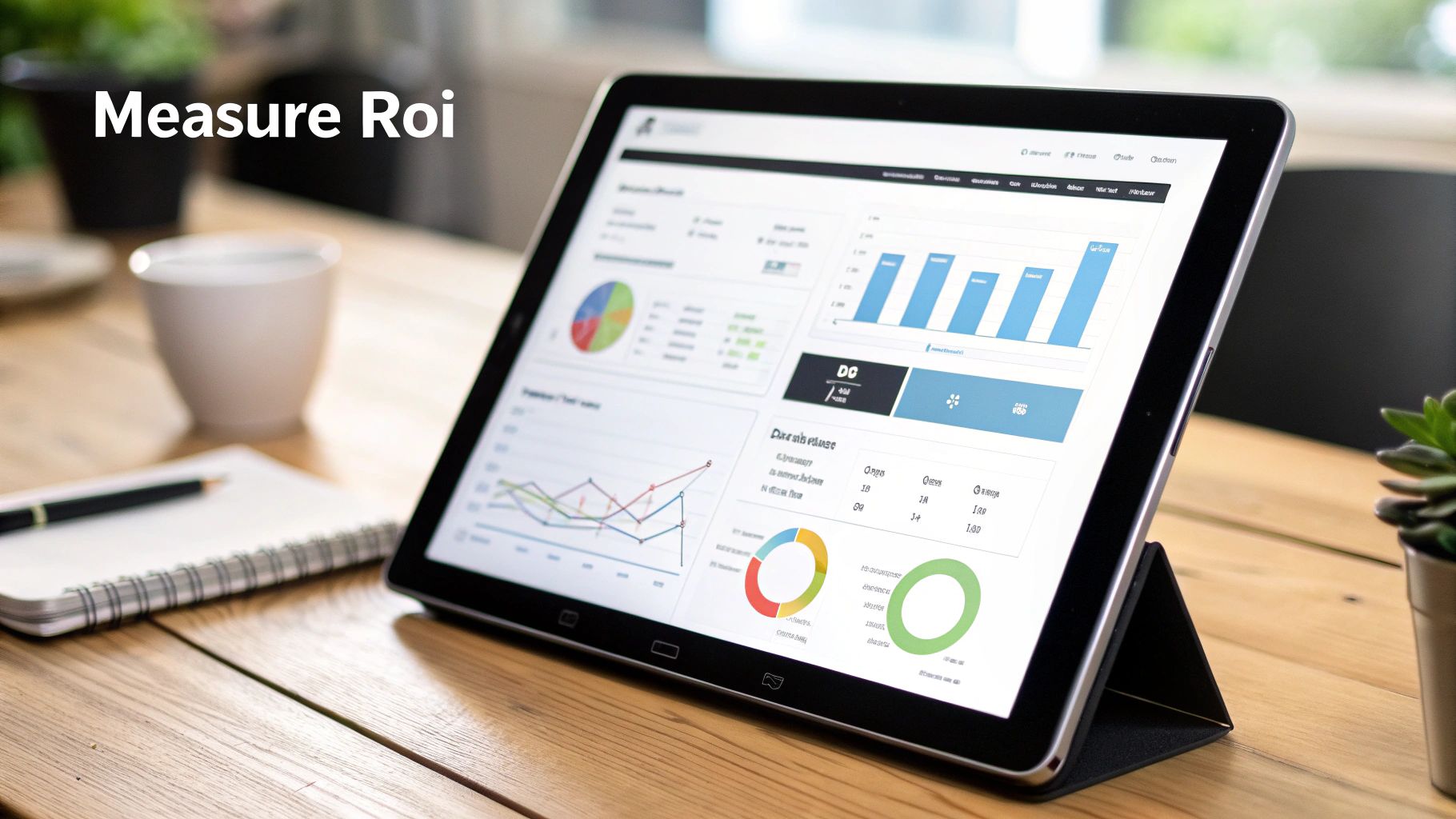
Think of a centralized dashboard as your command center. Instead of trying to piece together spreadsheets and reports, you get a real-time view of your financial performance, letting you make smart decisions on the fly.
Key Metrics That Actually Matter
To get a real grip on performance, you have to focus on the key performance indicators (KPIs) that actually mean something for e-commerce. It's time to forget vanity metrics and zero in on the numbers that hit your profit margins.
These are the core metrics you should be tracking for every single creator in your program:
- Gross Merchandise Value (GMV): This is the big one—the total value of sales generated by a specific creator. It’s the clearest indicator of their ability to turn their audience into your customers.
- Commission Costs: You need to know exactly how much you’re paying out in commissions to each affiliate. This is the direct cost of the partnership.
- Total Orders: Beyond just the dollar value, how many individual orders did a creator drive? This helps you understand purchase frequency and customer acquisition volume.
- Return on Investment (ROI): This is the ultimate measure of success. Calculate it by taking the total profit generated and dividing it by the total cost (commissions, samples, fees).
A creator who drives $10,000 in GMV with a 10% commission is far more valuable than one who drives $5,000 with a 20% commission. Understanding this per-creator profitability is the key to scaling efficiently.
A good TikTok influencer database might include some tracking features, but specialized tools like HiveHQ's Profit Dashboard and Creator Tracker are built specifically for this kind of deep financial analysis. They automatically pull in all your shop data, giving you a clear view of these KPIs without any manual work.
Turning Data into Actionable Strategy
Tracking these numbers isn't just about keeping score; it's about actively steering your strategy. Once you have this data, you can start making smart, proactive decisions to grow your program profitably.
With a clear dashboard, you can instantly see who your top performers are. This allows you to double down on what’s working by investing more in the creators delivering the best results. Maybe you offer them higher commission rates, exclusive product access, or longer-term contracts.
On the flip side, you can also spot the underperformers. This doesn’t always mean cutting them loose. The data might reveal that a specific product isn't resonating with their audience, giving you a chance to pivot the strategy or provide more coaching. This data-driven feedback loop is how you continuously improve and scale your affiliate program.
Frequently Asked Questions
Jumping into TikTok Shop partnerships always brings up a few questions. Let's tackle some of the most common things brand operators ask when considering a TikTok influencer database.
How Much Does a TikTok Influencer Database Cost?
The price tag can swing wildly. You might find basic tools for a few hundred dollars a month, while enterprise-level platforms with all the bells and whistles can run into the thousands.
For most brands, the real question isn't the subscription cost, but the value it brings. Think about the hours you'll save on manual sourcing and the potential revenue you'll gain by finding the right creators faster. It often pays for itself very quickly.
Can a Small Business Benefit from a Database?
Definitely. I'd argue a database is even more valuable for a small business. When you have a lean team and a tight budget, you can't afford to waste time scrolling through TikTok for hours on end.
A good database lets you pinpoint perfect micro-influencers in your niche in minutes. This means you can build a powerful, sales-driving affiliate program without needing a massive marketing department to manage it all.
For small brands, a TikTok influencer database isn't a luxury; it's a force multiplier. It levels the playing field, enabling you to compete with larger companies by finding and activating niche creators at scale.
Is It Better to Find Creators Manually or Use a Tool?
Look, you might stumble upon a hidden gem by manually scrolling your For You Page, but it’s not a strategy you can build a business on. It's just not scalable or predictable.
A database gives you the data and filters to build a program that works consistently. Think of manual sourcing as a supplement—a way to spot-check trends or find a one-off creator—not your main game plan for building an entire affiliate army.
Ultimately, using a tool shifts your strategy from guesswork to data-backed decisions. You stop relying on a "gut feeling" and start systematically building a roster of creators who you know align with your brand and will actually move the needle on sales.
Ready to stop guessing and start scaling your TikTok Shop with data-driven creator partnerships? HiveHQ combines a powerful creator database with automated outreach and real-time profit tracking. Discover your next top-performing affiliate with HiveHQ today.