How to Sell on TikTok Shop for Beginners: Step-by-Step 2026
tiktok shopsell on tiktoktiktok shop for beginnershivehqtiktok affiliate
TikTok Shop is already operating at real scale, not trial scale, with about $50.3 billion in global GMV in the first half of 2026 and $11.8 billion from the U.S. alone, according to independent industry coverage of the market's rapid growth source. That changes the answer to how to sell on TikTok Shop for beginners, because the job is no longer to chase a lucky post, it's to build a repeatable, profitable system from day one.
The first mistake beginners make is reading GMV as profit. It isn't. A shop can look busy while margins get crushed by product cost, commissions, ads, returns, and bad fulfillment, which is exactly why a seller needs net profit visibility, not just sales visibility.
Table of Contents
- Why TikTok Shop Is Not Just a Viral Lottery Anymore
- Registering and Setting Up Your TikTok Shop Account
- Choosing Products and Optimizing Your Listings
- Leveraging Creator Partnerships and Affiliate Programs
- Managing Fulfillment and Avoiding Seller Penalties
- Tracking Profitability with HiveHQ Profit Dashboard
- Frequently Asked Questions About Selling on TikTok Shop
Why TikTok Shop Is Not Just a Viral Lottery Anymore
Projected $123.5 billion in global GMV for full-year 2026 shows how far TikTok Shop has moved beyond a short-lived experiment source. That scale creates room for repeatable product testing, creator seeding, and planned assortment decisions. It also raises the operating standard for every seller entering the channel.
A viral post can create demand faster than a new shop can handle it. Inventory runs out, fulfillment slows, returns rise, and advertising or commission costs can erase the apparent win. A seller needs processes that still work after the first traffic spike fades, including stock planning, fulfillment checks, and order-level profit tracking.
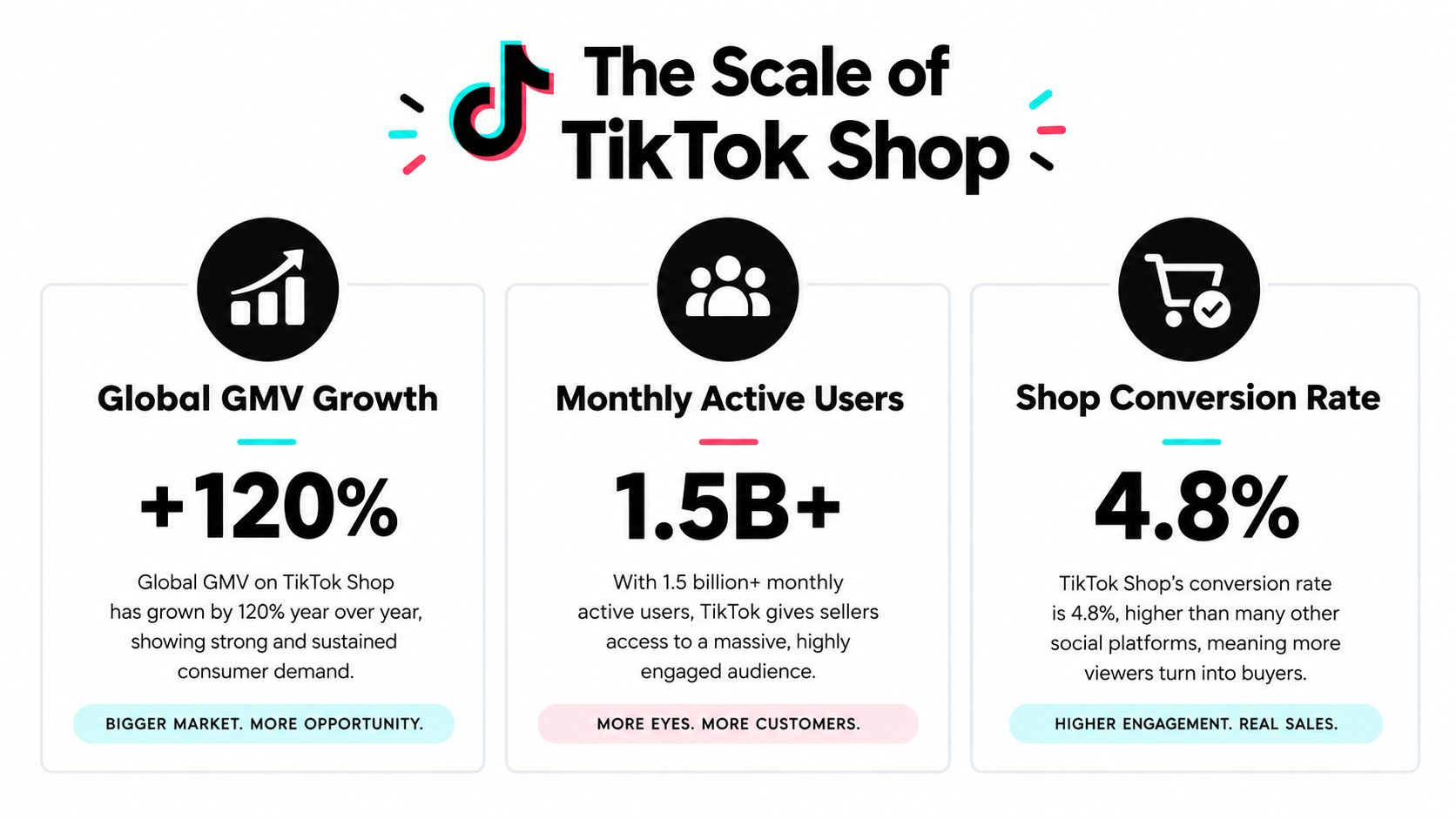
What that scale changes for a beginner seller
Crowded discovery makes vague content, generic offers, and careless pricing expensive mistakes. Start with one clear product thesis, a fulfillment route you can support, and a defined margin target. Views and GMV show activity. They do not show whether each order contributes to net profit after product cost, shipping, commissions, advertising, returns, and refunds.
Content should move buyers through a simple path. Short-form videos create initial interest, LIVE sessions can answer objections, and the product page and checkout must remove unnecessary friction. Use 10 TikTok content ideas to explore native formats, then measure which formats produce profitable orders rather than rewarding reach alone.
Practical rule: if you cannot calculate margin after product cost, shipping, commissions, and returns, you are measuring traffic, not running a profitable business.
Set up profit tracking before increasing stock or creator activity. HiveHQ's analysis of TikTok Shop's e-commerce economics reflects the operational issue sellers face: GMV can grow while net profit weakens. A profit dashboard gives the launch a useful checkpoint, showing whether the offer, traffic source, and fulfillment model deserve more investment.
The goal is a store that can absorb demand without turning sales growth into operational losses. Viral reach may start the process, but disciplined execution determines what remains in the bank.
Registering and Setting Up Your TikTok Shop Account
Account approval depends on clean documentation, not just completing the form. Use a phone number or email address that has not been registered to another shop. Your password must contain 6 to 20 characters, including numbers, letters, and special characters. Select the correct shop country at registration, because the seller must reside in the country chosen for the shop. Review the full TikTok seller registration requirements before submitting the application.
For U.S. individual sellers, TikTok requires applicants to be 18 or older, live in the U.S., and provide matching identification, address, tax, and bank details. In the UK, sole traders must also be 18 or older and provide a passport or driver's licence, a domestic address with proof of address, and inventory stored in the registration country. Corporate sellers must be legally incorporated in the country where they register.
Keep every identity field aligned
Treat the application as a payout and verification check, not routine admin. Your name, address, tax record, and banking details should match across the submission. Inconsistencies can slow review and create problems when the platform checks verification or releases funds.
Match your shop country, identity documents, and payout details before submitting. Correcting those details after approval takes more time and can interrupt cash flow.
TikTok Shop states there is no setup fee to join, while the platform takes a 6% commission on each sale in the UK source. Entry may be inexpensive, but each order still needs to cover product costs, fulfillment, commissions, refunds, and other selling expenses. Set up a basic profit view before adding inventory or creator activity, then use the HiveHQ TikTok Shop seller requirements guide to keep the operational checklist visible.
Seller requirements for TikTok Shop
Choosing Products and Optimizing Your Listings
Product selection sets the ceiling for performance. A strong TikTok Shop offer is easy to understand within seconds, simple to demonstrate on camera, and immediately relevant to a buyer's routine. Start with one SKU, one promise, and one clear use case. A crowded catalog makes it harder to identify what drives orders and what merely generates views.
Let format fit drive your testing plan
Benchmark data shows around 3% to 6% conversion for standard organic creator videos, 5% to 12% for LIVE shopping, and 5% to 8% for in-app checkout source. Use a short-form product demo for the first test. If the product and offer perform, expand the winning SKU into LIVE and creator-led distribution after checking the margin.
| Format | Typical conversion range | Best use case |
|---|---|---|
| Organic short video | 3% to 6% | Validate the product and message |
| LIVE shopping | 5% to 12% | Answer objections and close faster |
| In-app checkout | 5% to 8% | Reduce friction after demand is proven |
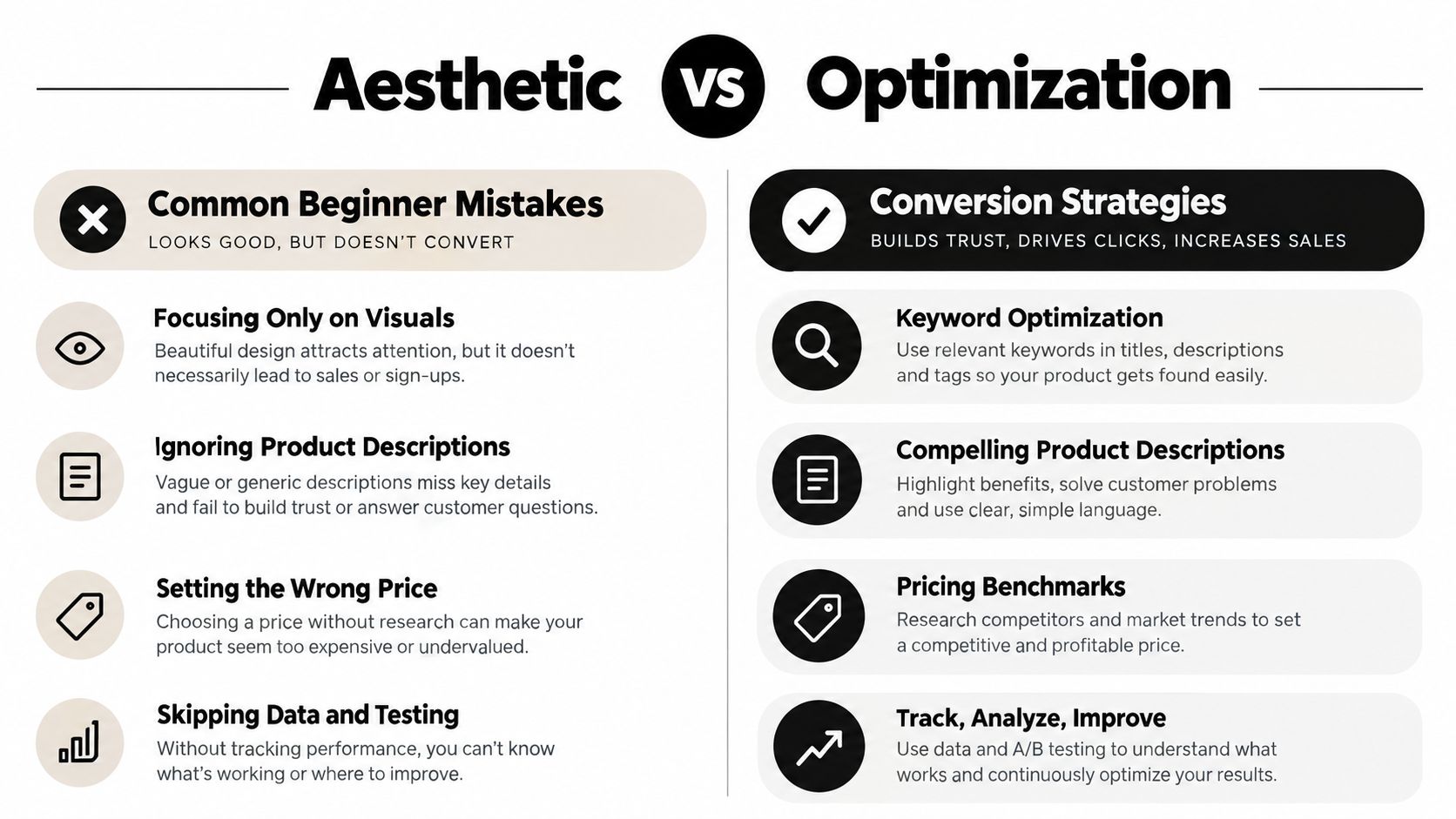
A listing has to be searchable, credible, and easy to understand visually. Put the product name and primary problem it solves in the title. Use images that show the item in use, then explain the expected result clearly in the description. Vague copy leaves buyers uncertain about the product, its use, and its value, which weakens conversion even when traffic is strong.
The best listings answer a practical need quickly. Show a kitchen item in a kitchen, demonstrate a beauty item through its application, and make a lifestyle product's benefit visible within one scroll. Visual quality shapes first impressions. Tools like an AI anime video upscaler show how dramatically upscaling can change perceived production value, but your shop still needs authentic product proof, accurate demonstrations, and credible claims to convert.
Track more than GMV or view count during testing. Compare clicks, add-to-cart activity, completed orders, refunds, fees, and fulfillment costs so a high-volume product does not hide weak net profit. TikTok Shop product performance analytics can help keep product-level performance visible while you refine the listing and offer.
Leveraging Creator Partnerships and Affiliate Programs
Creator partnerships can generate orders, but only when the commission fits the product's actual margin. TikTok Shop lets sellers set different affiliate rates for one product, a product group, or the full catalog. Standard commission can apply to organic sales while Shop Ads use another rate, with eligible commissions ranging from 1% to 80%, according to TikTok Shop affiliate commission guidance.
That flexibility changes the profit calculation for each traffic source. TikTok's example compares 10% standard commission with 5% Shop Ads commission, showing that the same product can produce different results depending on how the customer reaches the listing. Price the commission, product cost, fulfillment, refunds, and ad spend before inviting creators. GMV and views can rise while net profit falls.
Outreach quality beats creator volume
Open collaboration gives you reach, but acceptance and posting rates can remain low. One benchmark reports about 12% to 18% accept-to-active-post rates for open collaboration, while targeted creators in the 10K to 100K follower range with roughly 3% to 5% engagement may produce more useful sales volume source. Treat those figures as planning context, not a guarantee. Product fit, audience intent, video quality, and creator reliability still determine whether views become profitable orders.
| Approach | What it favors | Common risk |
|---|---|---|
| Open collaboration | Volume and broad access | Low-quality posts and weak follow-through |
| Targeted outreach | Fit, engagement, product relevance | Slower sourcing, better control |
Start with a short list of creators whose audience already matches the product. Send clear commission terms, sample expectations, approved claims, and tracking requirements. Review orders, cancellations, refunds, and contribution margin by creator rather than rewarding reach alone.
For broader planning context, see TikTok Shop creator partnerships 2026. A TikTok Shop profit dashboard breakdown can also help separate creator-driven revenue from the net profit that remains after channel costs.
Managing Fulfillment and Avoiding Seller Penalties
Most beginner guides skip the part that kills shops. TikTok Shop enforces fulfillment and compliance rules tightly, and sellers need to watch them daily because penalties don't care how good the content was. The platform requires a Seller Flex Cancellation Rate, or SFCR, at or below 2.5%, and late-dispatch enforcement resumed in April 2026, with late-dispatch rates above 10% potentially triggering action source.
The return side changed too. As of August 2026, TikTok Shop standardized refund handling and return-address rules, including requiring owned or authorized return addresses source. That matters because a store can have decent sales and still get squeezed by cancellations, delayed dispatch, and messy returns.
Daily checks that prevent account damage
A beginner should watch the operations queue with the same discipline used for ad spend. If inventory is thin, turn off demand before it creates cancellations. If a shipment will miss the window, fix the issue before it becomes a platform-level problem.
- Cancellation rate: keep it under the platform threshold and investigate every spike immediately.
- Dispatch speed: treat late shipping as a revenue problem, not a warehouse detail.
- Return readiness: keep return addresses approved and consistent before scaling volume.
- Inventory depth: don't launch a product you can't replenish fast enough.
Viral demand is dangerous when operations are thin. The fastest way to lose a promising shop is to sell more than your warehouse can actually handle.
Reliable fulfillment protects the store's future more than a flashy week of GMV ever will.
Tracking Profitability with HiveHQ Profit Dashboard
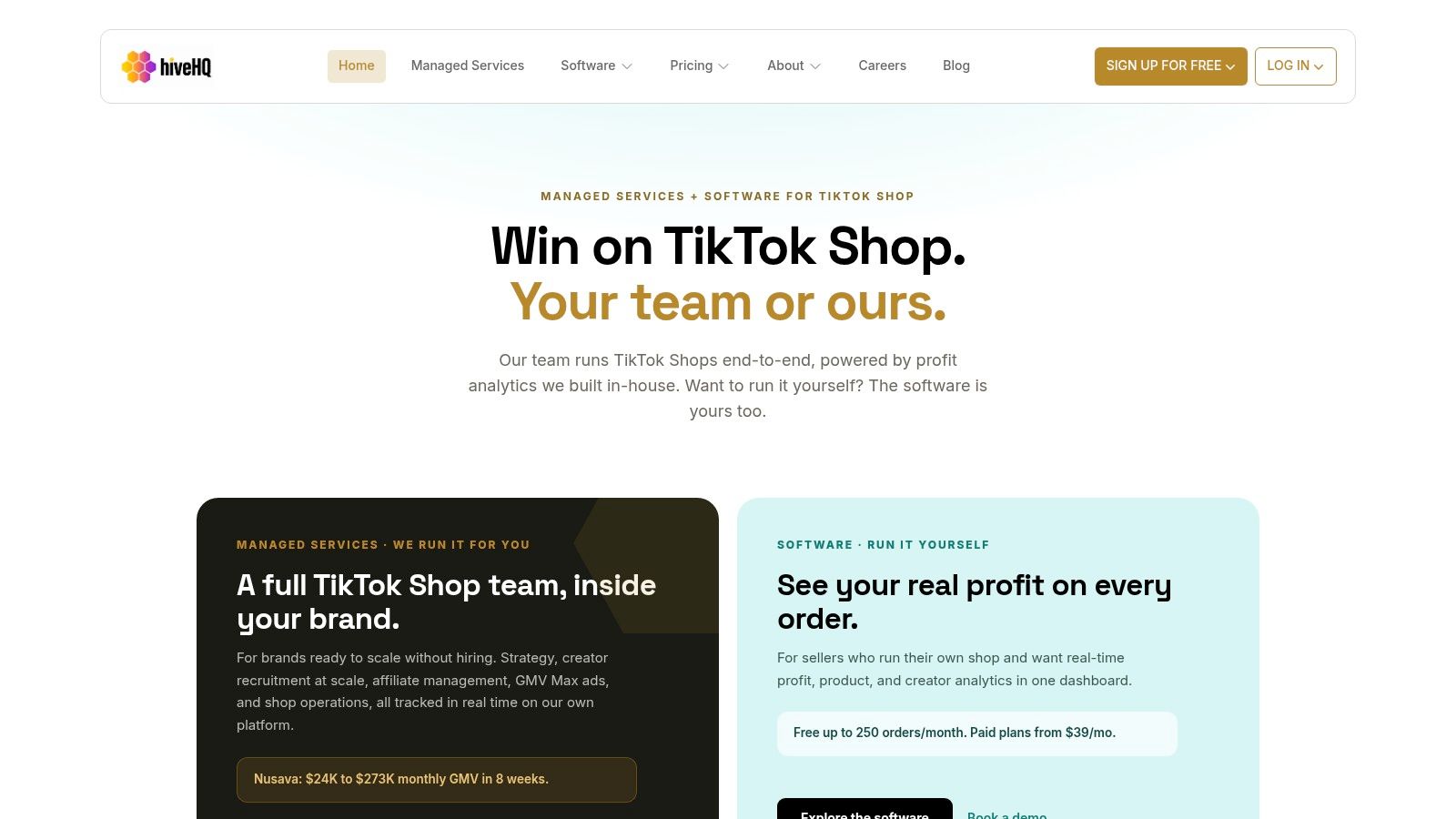
GMV can rise while the business loses money. The HiveHQ Profit Dashboard gives TikTok Shop sellers a real-time view of net profit, product-level performance, and customer analytics, so decisions are based on retained profit rather than sales volume alone. Product cost, commissions, advertising, refunds, and other order costs can turn a popular SKU into a liability if they are not measured together.
A dashboard that combines those figures helps expose problems before they become expensive. A $19.99 SKU may show a 40% gross margin, then lose money after an 8% commission and $6 return shipping cost. That is the kind of product you should fix or cut before increasing ad spend. HiveHQ is self-serve software, so sellers can review the numbers without waiting for a separate data team.
What to track before you scale spend
Start with revenue, cost of goods sold, commissions, and ad spend in the same view. Compare those costs with product-level performance and returning customer behavior. A SKU that generates strong sales but weak contribution margin needs a pricing, offer, or fulfillment decision before it receives more traffic.
A practical profit workflow should answer three questions quickly:
- Which products make money now?
- Which orders look profitable until every cost is included?
- Which customer segments purchase again, and which do not?
The goal is better decisions, not a larger spreadsheet. Use the TikTok Shop Profit Dashboard for a closer look at how real-time profit visibility can keep sellers from relying on vanity metrics.
Frequently Asked Questions About Selling on TikTok Shop
Do you need a big following to start?
No. TikTok Shop can put products in front of shoppers through discovery, so follower count is only one input. A smaller account with a strong offer, reliable fulfillment, and useful content can outperform a larger account with poor product fit.
Is affiliate selling enough for a beginner?
Affiliate selling can create reach without requiring you to produce every video, but it does not replace sound operations. Set your commission, product cost, shipping, return allowance, and expected net profit before accepting creator traffic.
What should I track first, GMV or profit?
Track net profit first, then use GMV to understand demand. Sales volume can rise while profit falls after commissions, shipping, product costs, discounts, refunds, and returns are included.
What is the biggest beginner mistake?
Treating TikTok Shop as a content experiment. A viral video means little if inventory runs out, orders ship late, or each sale loses money. Review product-level margin and operational performance before chasing more views.
How fast should you scale after a good launch?
Scale only after the product ships consistently and remains profitable across more than a short spike. Increase traffic gradually while checking stock, cancellation rates, returns, and contribution margin.
The practical sequence is simple: make the offer work, confirm fulfillment, then add content and creator partnerships. Check net profit, SKU performance, and repeat customer behavior regularly. HiveHQ Profit Dashboard brings those measures together so you can manage the business behind the GMV. Visit HiveHQ to review your TikTok Shop performance before increasing spend.